Councillors clash over SOCA vision
Parties debate the state of the metro, pace of delivery, and whether the mayor’s vision stacks up to the reality on the ground.
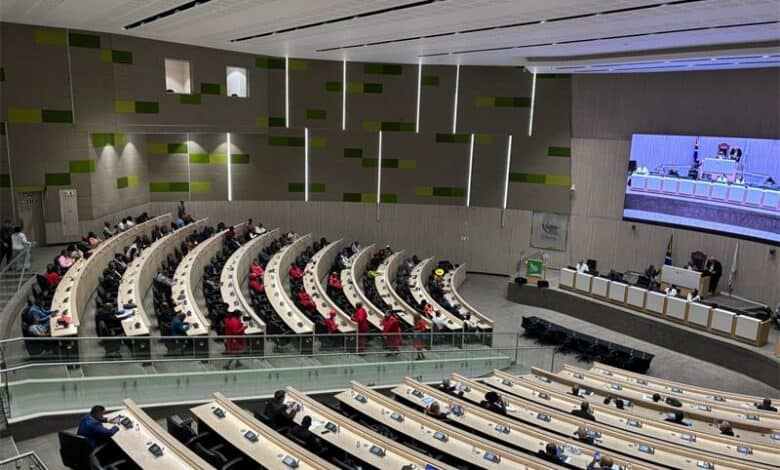
Tshwane mayor Dr Nasiphi Moya’s maiden State of the Capital Address (SOCA) on April 10, has sparked vigorous debate among her fellow councillors in the capital.
Parties clashed over the “true” state of the metro, pace of delivery, and whether her vision matches the reality on the ground.
The address, themed “Our Capital. Our Pride”, focused on six key priorities including financial stability, economic revitalisation, infrastructure development, social services, safety, and good governance.
Moya painted a picture of a metro on the mend, citing projected financial improvements, service delivery gains, and landmark projects aimed at restoring confidence in Tshwane.
Opposition councillors challenged the substance of her speech, arguing that she failed to address key shortfalls.
Tshwane DA caucus leader Alderman Cilliers Brink said the SOCA was an important opportunity for the mayor to set out her vision and agenda for the metro, instead of just relying on things that were done in the past.
“She used to be deputy mayor, and she was part of the adoption of several strategies in the form of mayoral charters on financial rescue, energy independence, and improving basic service delivery that achieved significant success.
The difficult decision of not increasing councillor and staff wages enabled the city to save R600 million and reach a settlement with Eskom,” said Brink.
He said the mayoral charters have not been recited by the new mayoral committee.
“I am worried that a lot of the administration’s plans depend on taking the benefit of a new valuation roll, higher property rates, which is, of course, a legislative process, and then introducing a new tax in this budget.
I’m worried because that is the easy way out, where consumers are already under pressure, already struggling to pay their existing bills. I’m also worried about what the mayor does with the benefit of the improved financial situation,” he said.
Brink said the mayor mentioned Wonderboom Airport, but didn’t say anything.
“It’s only with private investment and expertise that we can unlock the potential of that facility and help it to boost the local economy.
The mayor also discussed the effect of losing duty-free access to U.S. markets on the metro. The loss is going to affect BMW in Rosslyn, our motor sector and the jobs of thousands of people in Pretoria North and Ga-Rankuwa.
Whatever economic strategy you have, means nothing unless it takes into account those changing circumstances.”
Floyd Thema of the ANC said the mayor’s speech was not only a report on the progress over the past year, but also a beacon… a guiding light towards a good future.
“As the administrative heart of South Africa, the City of Tshwane holds a unique position not only in the role as the City of Government, but also as a vibrant reflection of our nation’s diversity, challenges, and aspirations.
“The themes discussed in the SOCA significantly influence the residents’ perception of their local government in several and many ways. When the mayor highlighted the achievements, challenges, and plans transparently, which promoted trust and belief among the residents,” said Thema.
Thema said that when leaders discuss initiatives that encourage public participation, citizens feel more connected to their local government and are motivated to contribute and participate.
“The metro is cruising nicely because the current administration is doing outstanding work and is already improving residents’ quality of life.”
LISTEN:
Economic Freedom Fighters’ Godwin Ratikwane said the presentation of SOCA made the party realise that the metro is in the crucial stage of defending, rebuilding, and advancing the administration in order to provide services within the city in an open, transparent, and accountable manner.
“The city’s financial outlook is improving with a projected cash reserve of about R2.86 billion in the 2025/2026 financial year, and efforts to reduce the debtor’s book and implement the targeted debt relief for residents are underway.
“The extension of the debt relief scheme until the end of May is a highlight of the commitment to always give and manifest care to our residents. Debt relief is a lifeline for the household, especially in the townships, and businesses in need,” said Ratikwane.
FF Plus councillor Peter Meijer said a lot can be put on paper, but it’s worthless if it is not substantiated by dedicated actions.
“We want to know how much revenue is collected, and what percentage the debt being is written off is of that revenue.
“The cash flow position of the metro has not improved because I believe that more of the reduction in the debt is due to the debt-relief scheme,” said Meijer.
LISTEN:
Republican Conference of Tshwane’ councillor Lex Middelberg said Moya’s speech is no different from the speeches of the previous mayors in the capital.
“Pretoria West will not generate a single kilowatt of electricity until it is demolished. Rooiwal, likewise, will never generate electricity.
Every year, we have to listen to a the mayor claiming wonderful things about new business opportunities, expectations of economic growth and how many jobs will be created.
Nothing will be better in the next year because what the mayor said.
Service delivery will not improve, more streetlights will go dark, our roads will deteriorate further, and there will be more power outages,” he said.
Also read: Tshwane mayor’s SOCA charts ‘bold path’ for future
Do you have more information about the story?
Please send us an email to bennittb@rekord.co.za or phone us on 083 625 4114.
For free breaking and community news, visit Rekord’s websites: Rekord East
For more news and interesting articles, like Rekord on Facebook, follow us on Twitter or Instagram or TikTok.