Tshwane takes step to support informal traders, township businesses
Residents and traders are encouraged to join the public meetings to help shape Tshwane’s new by-law on informal trading and township economic development.
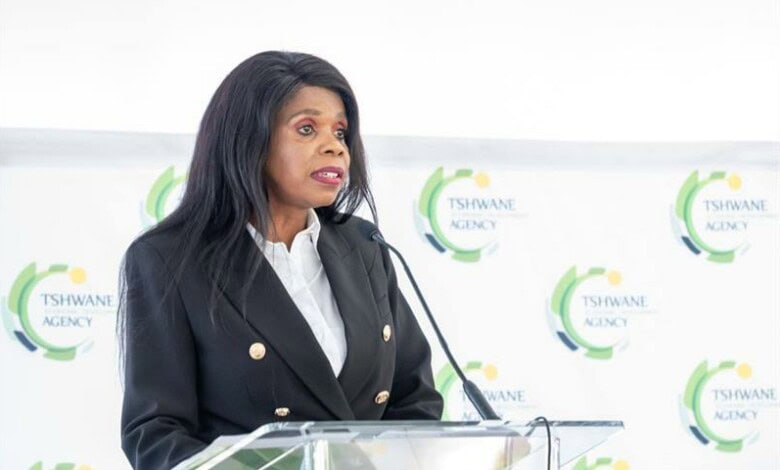
Tshwane is moving forward with a major legislative effort to regulate and support township businesses and informal traders through its draft Informal Trading and Township Economy By-law, which was approved in November 2024.
The metro is now inviting residents and business owners across all seven regions to participate in shaping how this by-law is implemented by attending a series of public consultation meetings in their communities or online.
According to the MMC for Economic Development and Spatial Planning, Sarah Mabotsa, this new by-law marks a significant step in aligning Tshwane metro’s local laws with national and provincial economic development legislation.
This includes the Gauteng Township Economic Development Act of 2022.
“We are introducing this draft by-law and seeking your review and comment on how best to enable and regulate informal trading and on stimulating township economies,” she said.
Unlike the previous street trading by-law, which applied only to traders operating on pavements, the new draft provides a comprehensive framework. It includes home-based enterprises, spaza shops, township markets, and various other informal businesses.
“The Economic Revitalisation Strategy identified 10 priority economic sectors for growth, which included the informal sector and township economies,” Mabotsa said.
“This by-law forms part of our efforts and strategy to accelerate economic and job growth.”
She stressed that more than one in three residents who are seeking employment remain jobless and highlighted the informal economy as a key to unlocking job creation potential in the city.
“By stimulating the economy of our townships specifically, we can help to ensure that there are more jobs close to where most people are living,” she said.
The by-law’s primary goals include promoting social and economic development, ensuring a safe and healthy environment for trading, strengthening municipal planning, and establishing better control over informal trading.
It also seeks to regulate township economies fairly and sustainably.
Stricter licensing requirements, enforcement of health and safety standards, and clearly defined penalties for non-compliance are all outlined in the draft.
Dispute resolution measures are also included, along with avenues for informal traders to appeal decisions that may adversely affect their businesses.
Provisions also include the use of impoundment as an enforcement tool while aiming to manage contraventions in a fair, transparent, and amicable way.
To protect legitimate informal traders, the metro seeks to clearly distinguish them from illegal operations.
The draft also promotes harmonious working relationships between informal trading leadership and the municipality by encouraging mutual respect and co-operation.
“In the democratic era, our Constitution enshrines equality and the right of everyone to live with dignity,” said Mabotsa.
She added that the constitution obligates the municipality to promote social and economic development.
“This means we must enable work opportunities for our residents so that they may provide for themselves and their families. We want people to trade and create jobs, but we want this to be done safely and in compliance with our Constitution and with national legislation, as well as our own by-laws.”
Mabotsa also noted that the draft supports the city’s Economic Revitalisation Strategy, adopted last month, which targets the creation of 80 000 jobs and a 3.9% growth rate by 2029.
“The strategy prioritises township economies and the informal sector among its top 10 sectors for development,” she said.
To ensure the by-law reflects the lived realities of residents and traders, Tshwane is conducting a series of public participation meetings across various areas.
Residents, informal traders, and entrepreneurs are encouraged to attend the meeting in their region or join the session online.
Public participation meeting schedule:
Saturday, May 17
– 10:00 Temba Urban Council (Region 2)
– 10:00 Mbolekwa Community Hall (Region 3)
– 10:00 Olievenhoutbosch Community Hall (Region 4)
– 10:00 Mamelodi Council Chamber (Region 6)
– 13:00 Mabopane Indoor Centre (Region 7)
Saturday, May 24
– 10:00 Tirisano Community Hall (Region 1)
– 10:00 Refilwe Community Hall (Region 2)
– 10:00 Greenhouse Skills Centre (Region 5)
– 10:00 Rethabiseng Community Hall (Region 6)
– 10:00 Bronkhorstspruit Sport Centre (Region 7)
Tuesday, May 27
– 18:00 Online Meeting via Microsoft Teams
Meeting ID: 370 987 444 043 4
Passcode: xj7yg7su
Do you have more information about the story?
Please send us an email to bennittb@rekord.co.za or phone us on 083 625 4114.
For free breaking and community news, visit Rekord’s websites: Rekord East
For more news and interesting articles, like Rekord on Facebook, follow us on Twitter or Instagram or TikTok.