Mamelodi hits back at relief scheme: ‘Scrap debt for all, or none!’
Many residents say they are still receiving final demand notices even after applying for their debt to be written off.
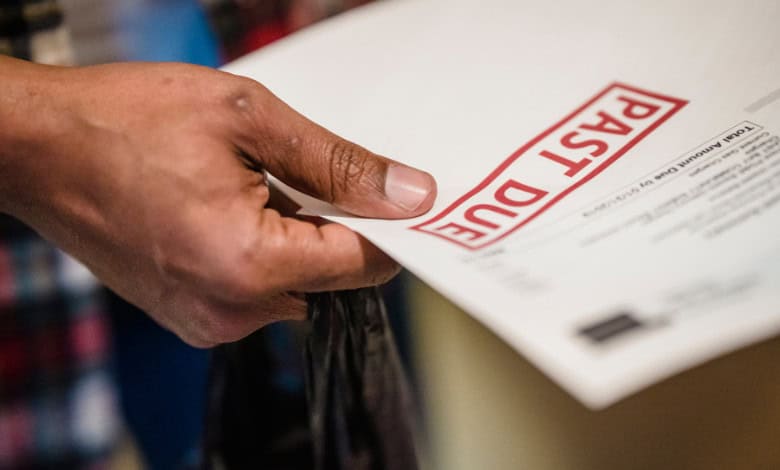
Tshwane metro recently announced that they have written off more than R4.4-billion of debt to 20 000 amnesty applications from residents who tampered with their electricity meters.
This initiative, championed by Deputy Mayor and MMC for Finance, Eugene Modise, was designed to ease the financial burden of municipal debt.
However, Mamelodi residents are still complaining that despite applying for amnesty, they have not had any feedback from the council, and some residents are still receiving final letters of demand.
President of Mamelodi Concerned Residents for Service Delivery, Oupa Mtshweni, said more and more people are still coming to his office complaining about receiving final letters of demand, despite applying for amnesty.
“Debt must be scrapped for all people of Mamelodi because the problem stems from the incorrect, estimated billing system, which affected most and not only those the metro regards as indigents,” he insisted.
He said he had pleaded with the deputy mayor during his visit to Mamelodi to deal with illegal connections at informal settlements before helping the residents of Mamelodi.
“We cannot pay for municipal services while illegal squatter camps around Mamelodi get the services for free,” said Mtshweni.
He added that when Tshwane is done with the informal settlements, it should come back and discuss the scrapping of debt for all residents of Mamelodi.
“When these estimations started, it affected everyone in Mamelodi – therefore scrap all municipal bills for all residents and we all start afresh from zero,” said Mtshweni.
He said that they are still waiting for the metro to remove all illegal connections in informal settlements around Mamelodi.
Metro spokesperson Lindela Mashigo said the city’s Finance Department has submitted applications for amnesty to its Electricity Department, but they have not received the exact figures for Mamelodi or per region.
Mashigo said these will be available once job cards are assigned and the meters are attended to. He added that a total of 20 056 applications from across the city have been received.
“The number might rise slightly as counting wraps up. For the incentive and debt relief scheme, we received 1 033 applications, with a total debt of more than R147-million.”
He added that the metro reported a late rush in submissions. “More than 50% of the applications were received in the last week before closing.”
All applications received under the debt relief scheme have been approved, with some receiving a partial write-off after agreeing to a payment agreement.
With regard to the electricity amnesty process, which targeted illegal meter tampering, the metro said it had already captured 17 140 of the 20 056 forms. A total of 10 741 were issued to the electricity department, but only 300 had been normalised so far.
“The process is ongoing until all legible [applications] have been normalised.”
Mashigo said that while the debt relief approvals are nearly finished, the amnesty programme is still in progress.
“The total value of municipal debt written off through the combination of indigent relief, inactive accounts, and incentive schemes stands at a staggering R4.4-billion.”
He said the incentive and debt relief scheme helped write off R66.4-million in debt owed by 918 residential accounts and 66 businesses, who together owed R147.4-million. Of this, R81-million was either collected or payment arrangements were made.
“The scheme is not a simple debt write-off arrangement. The metro incentivised customers to settle a portion of their municipal accounts or enter into a settlement arrangement to benefit from a write-off of a portion of the debt.”
Although the amnesty campaign focused mainly on electricity, the incentive scheme covered all services, including water, refuse, and sanitation.
Mashigo said on the indigent relief side, about R2.4-million was written off from 85 361 indigent accounts, an intervention aimed at aiding the poorest residents.
The metro plans to review the effectiveness of the campaign, and the outcome of that review will inform the next course of action.
Mashigo said Tshwane’s credit control and debt collection policy remains the central guide to future financial strategy, and that this policy includes ongoing measures, such as disconnections and prepaid blocking.
He closed by saying, “The metro’s revenue recovery has been enhanced by the R81-million recovered or committed to through arrangements.”
Do you have more information about the story?
Please send us an email to bennittb@rekord.co.za or phone us on 083 625 4114.
For free breaking and community news, visit Rekord’s websites: Rekord East
For more news and interesting articles, like Rekord on Facebook, follow us on Twitter or Instagram or TikTok.