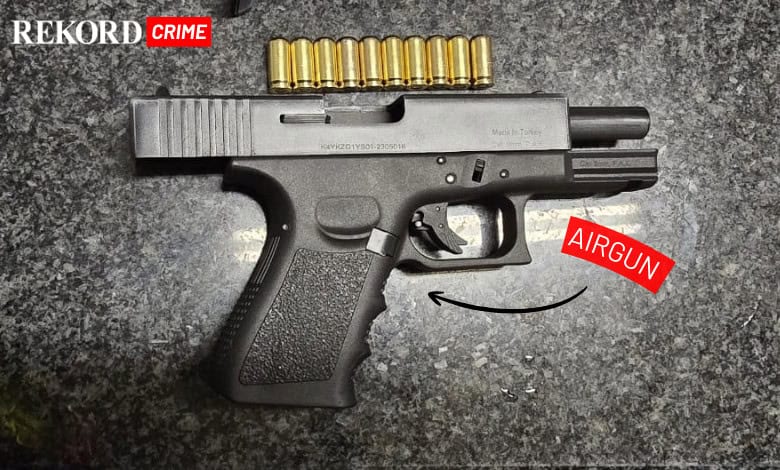
Some serious questions have been raised this week around airgun regulations, especially when it comes to their use in perpetrating crimes.
While some have called for stronger regulation when it comes to the sale of airguns, others say that owning an airgun is perfectly legal, as long as it isn’t used in place of a regular firearm.
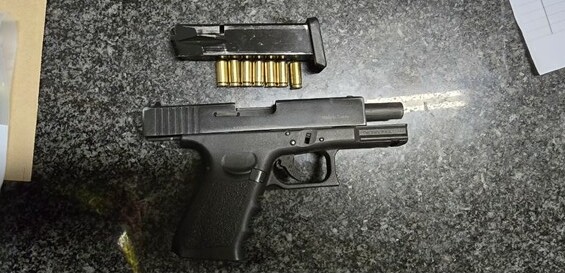
This comes after the recent arrest of two men in the Pretoria CBD, both accused of possessing unlicensed airguns.
The pair were arrested on August 1, detained at the station and charged with possession of dangerous weapons. They have been held in custody after appearing in court following their arrest.
Though the weapons turned out to be non-lethal, police said they still can be used to commit crimes, and permits are specifically required to carry them.
While welcoming the arrest, station commander Brigadier Hlengane Gibin Mashaba pointed out that airguns and pellet guns are considered firearms if they meet certain criteria related to calibre and muzzle energy, as defined by the Firearms Control Act (FCA).
“Pellet guns have been used to commit various crimes, giving victims [the] impression that they are real guns. But the community must take note that should an airgun exceeding a calibre of 5.6mm (.22) and/or a muzzle energy of 8 joules (6 ft-lbs), it will be treated as a firearm under the Firearms Control Act,” Mashaba said.
Resident and owner of Zimbi Arms in Centurion, Pierre Dalton, said not enough was being done to regulate the sales of airguns, which led to instances of illegal carriers.
“It is important to understand that many air rifles with calibres smaller than .22 can exert more than 8 joules. In other words, a significant number of pellet guns legally require licensing under the act. Unfortunately, this is not being properly enforced, and you will find many shops – including online retailers – selling pellet guns that exceed the 8-joule limit without requiring a licence,” Dalton said.
Through his own research, Dalton said sites he has come across do not regularly adhere to the laws regarding firearms, which can lead to legal trouble.
“From the first site you Google, if you sort by price (cheapest first), the first product listed is the Nova Vista Razer Standard D-01W 5.5mm. Scrolling down to the specifications, it shows ‘Regulated: No’, yet the calculated energy is 32 joules.
“According to South African law, an air rifle is required to possess this licence. I am fairly certain that you can purchase it online from this shop and have it delivered without needing to show a licence. This situation is common across many retailers who operate under the misconception that air rifles do not require licensing. Why and how are shops allowed to sell these rifles if the Firearms Control Act requires licensing? This raises broader concerns, for instance, there are strict regulations that licensed firearm dealers must comply with, but these seem not to be equally enforced for shops selling air rifles,” Dalton said.
According to the law, air rifles are exempt from licensing if they:
– Have a calibre less than 5.6mm (.22), regardless of muzzle energy.
– Have a calibre of 5.6mm or greater but a muzzle energy of 8 joules or less.
These air rifles are not classified as firearms under the FCA and do not require a licence to own or operate.
“It is important that you obtain the required competency before you can apply for a licence. So, it is actually a two-step process. There are different competencies for handgun, shotgun, rifle and restricted firearms,” Dalton said.
The SAPS271 form used to apply for a firearm license can be found on the SAPS website www.saps.gov.za/services. On page 2 of the form, it specifies the types of firearms as well as actions.
Pretoria Central SAPS spokesperson Constable Thabang Nkhumise said, “Marabastad is one of the major business areas to the west of the city centre and a major contributor (hotspot) prone to crime. The crime prevention unit has intensified visibility in that area. The arrest came as the members pulled the two suspects while conducting their daily patrol duties.
“Upon interrogation, the two alleged they were from correctional services in Benoni and were working undercover, hence they had the pellet guns. The correctional service at Modderbee Prison in Benoni was immediately contacted, and they confirmed that there was no such deployment from their offices,” Nkhumise said.
He said an airgun becomes illegal if a person uses them to replace a firearm.
“The person must undergo the training of the usage of a firearm whereby, upon completion of the course with an accredited training provider, they will be issued with a Proficiency Certificate and a Statement of Result and must adhere to Section 9 of the Act. They will be able to apply for a competency certificate for the firearms they require with the SAPS. After acquiring the competency certificate, they go to the registered dealer of firearms and ammunition to choose a firearm of their choice,” Nkhumise said.
After this, carriers will go back with the details of the firearm written on the application, and the signature of the responsible person.
The firearm will be kept at the dealer until the licence is approved.
For the approval of the licence, the applicant will also have to submit a comprehensive motive to prove the reason why they need such a firearm.
Residents who find or have knowledge of any illegal firearms must phone the nearest police station so that they can collect them without compromising any evidence on the firearm.
Nkhumise said ridding the streets of illegal firearms is imperative in the police’s fight against crime.
“Unlicensed firearms affect local communities very badly because any person carrying such a firearm may shoot randomly. Simply, it becomes hard to get any leads for the investigation. The success rate is very low. That is why we are always urging gun owners to be vigilant about the possession of firearms. Owners must report their firearms as soon as possible to alert the police,” Nkhumise said.
Classifications of firearms:
– Handguns: pistols, revolvers
– Rifles: manually operated and must not be semi-auto or fully automatic, and their actions vary from bolt, break, and single-barrelled single-action legal to be used as a self-defence firearm, hunting, sport shooting, collectable item, and for business.
– Shotguns: firearms are pump, single-barreled actions. They vary from 12-gauge, 20-gauge, 20mm, and combinations, etc. Legally, it can be used for self-defence based on the motivation for hunting and sport shooting.
– Airguns: firearms that are deregulated by the Act in terms of Section 5 of the Firearm Control Act, Act 60 of 2000. These firearms are still regulated, the same as muzzle-loading firearms. The firearms are divided into handguns and rifles.
To dispose of an unlicensed firearm safely and legally in South Africa, follow these steps:
– Understand the law: Familiarise yourself with the Firearms Control Act 60 of 2000 and relevant regulations. Ensure you comply with all legal requirements to avoid penalties.
– Contact the authorities: Reach out to your local police station or the designated firearms officer in your area for guidance on the disposal process. They can provide specific instructions and support.
– Inventory and documentation: Compile a detailed inventory of the firearm(s), including make, model, serial number, and type. Keep records of all correspondence and transactions.
– Disposal options/Surrender to law enforcement: Hand over the firearm to the police or a designated authority. This ensures safe disposal and may protect from potential liability.
– Licensed firearm dealer: Contact a licensed dealer who can facilitate the disposal process. They may purchase the firearm or assist with the transfer to another party. Firearm amnesty declared by Parliament usually does not exceed six months: Section 139 of the FCA 60 of 2000.
– Safe storage and transportation: Ensure the firearm is unloaded and securely stored during transportation to the disposal location. Follow all safety guidelines and regulations.
– Compliance with regulations: Adhere to specific regulations, such as notification requirements and documentation procedures, to ensure a lawful disposal process.
– Seek professional assistance: If unsure about any aspect of the disposal process, consider consulting with a firearms expert, attorney or relevant authority to ensure compliance with South African laws and regulations.
Do you have more information about the story?
Please send us an email to bennittb@rekord.co.za or phone us on 083 625 4114.
For free breaking and community news, visit Rekord’s websites: Rekord East
For more news and interesting articles, like Rekord on Facebook, follow us on Twitter or Instagram or TikTok.