Eviction order stands after Melgisedek appeal unsuccessful
With the refusal to the appeal of residents living on the Melgisedek property, the court order for eviction and relocation by the metro stands.
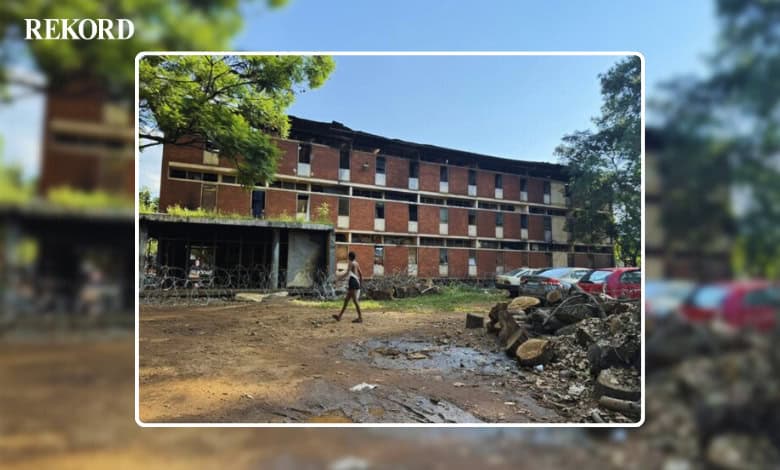
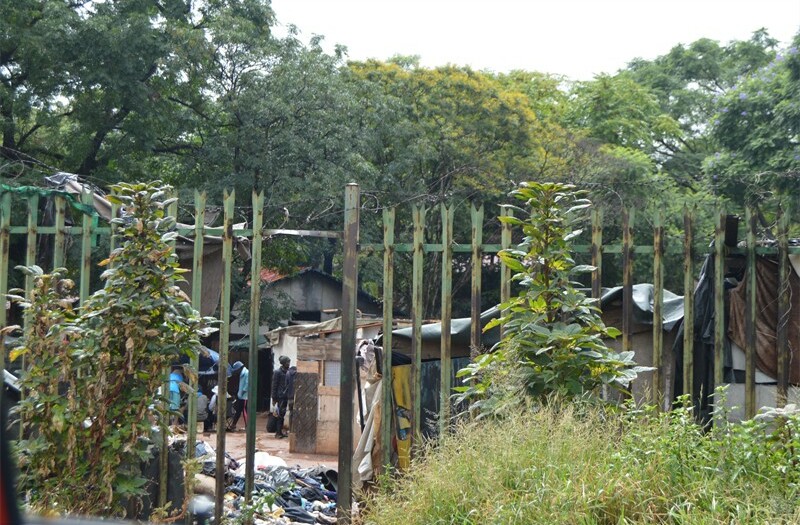
Plans to evict more than 450 occupants from the abandoned Melgisedek building near Steve Biko Academic Hospital in Pretoria are moving forward after an appeal against the eviction order failed.
Representatives of Lawyers for Human Rights lodged an appeal on March 6, following an urgent High Court order granting the Tshwane metro the right to evict on March 3.
The appeal was refused, clearing the way for the municipality to proceed with relocation preparations.
According to court documents, the Melgisedek building and premises have long been declared uninhabitable, with repeated warnings over the past two decades largely ignored.
The metro argued that recent fires and severe structural decay have created an immediate danger to life, necessitating urgent action to remove residents.
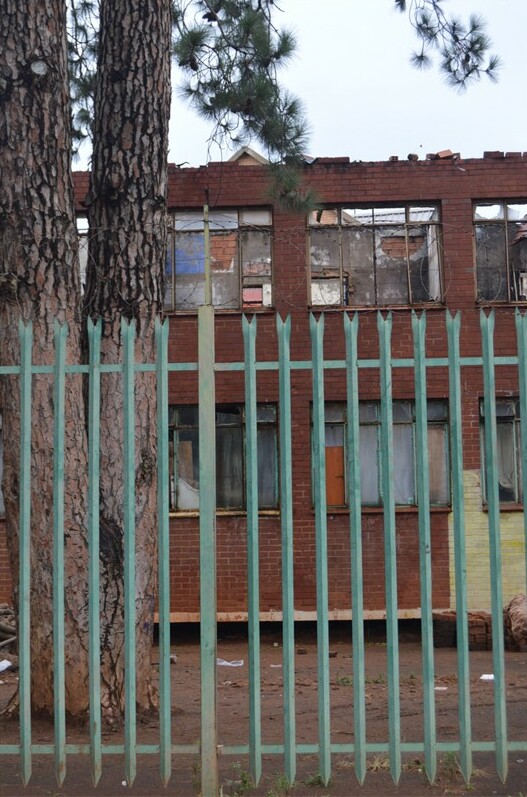
Court records show that the building has been without basic services for years, progressively deteriorating since it was first unlawfully occupied in 2003.
Judge John Holland-Muter emphasised the severity of the risks, including exposure to raw sewage, the presence of cockroaches, and illegal activities such as drug dealing and unlicensed vehicle repairs inside the building.
Lawyers for Human Rights attorney Louise du Plessis highlighted that these violations, while concerning, should not be the sole justification for eviction.
Her primary concern is the inadequacy of the city’s proposed relocation arrangements.
“The tents that the metro indicated to the court would be used for relocation, supported by photographs of a temporary settlement established in a park in Gezina, would be insufficient for the families and residents of Melgisedek,” Du Plessis said.
She added that the proposed site lacks adequate cooking facilities and sanitation infrastructure for more than 450 people, including 134 children.
“The metro explains in its court application that provision has been made for 85 tents and 10 toilets,” she said.
“I am also concerned for the surrounding community, which will now have to deal with this situation. The biggest concern is that there is no real long-term plan, and that this park full of former Melgisedek residents has the potential to become another Plastic View relocation settlement like the one in the east,” she said.
While the metro has indicated that some residents would be accommodated in shelters, Du Plessis said the availability of beds is uncertain.
“The metro indicated [that] there are 150 beds available in shelters, but there is no certainty that these beds will actually be available when the relocation takes place,” she added.
Metro spokesperson Lindela Mashigo confirmed that preparations for relocation are underway.
“An alternative site has been identified for the occupants,” Mashigo said, explaining that vulnerable individuals such as children, elderly residents, and people with disabilities would be placed in shelters across the city.
For the remaining residents, the municipality plans to establish a temporary site with basic services.
“The city has identified a vacant site in Region 3 that will be fenced off with rudimentary services, including water,” Mashigo said.
According to him, an organisation will be appointed to manage the site and provide basic support services.
Residents will be allowed to stay at the temporary relocation site for up to six months, with infrastructure including tents, portable sanitation, and water access.
“The relocation will be on the operational budget of the city,” Mashigo added.
Despite these assurances, Du Plessis remained concerned about the lack of a comprehensive long-term plan.
“If the city is genuinely concerned about the safety and well-being of the people living in these buildings, one would have expected earlier intervention in other dangerous buildings. For example, the De Villiers building, where two occupants tragically died in a fire in 2025,” she said.
The situation at Melgisedek mirrors challenges seen in other unsafe buildings across Pretoria.
Over the years, several organisations, including NGOs, NPOs, church groups, and the University of Pretoria, have expressed willingness to assist in finding constructive solutions.
Most recently, a church group together with the university made several attempts to engage with the metro to propose the development of a one-stop centre for homeless people, which would have accommodated the current Melgisedek residents.
However, the metro did not respond to the requests.
“The situation at Melgisedek, much like the same situation in Struben Street, is clearly not acceptable and widely acknowledged as needing intervention,” Van der Merwe said. “While there is broad agreement that solutions must be found for buildings such as Melgisedek, serious concerns remain about the manner in which the metro is attempting to address the issue.”
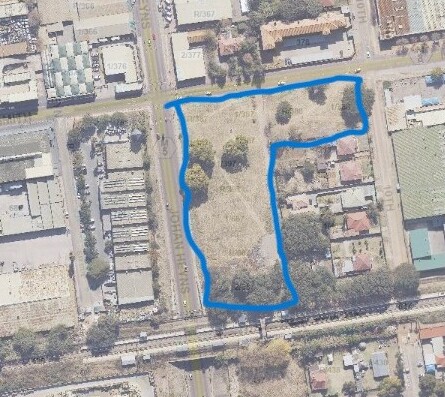
She pointed out that the temporary tent camp planned for Gezina, on the corner of Johan Heyns and Nico Smith streets, raises further concerns. There is no provision for children to do schoolwork or for parents to prepare meals.
She is concerned that waste management arrangements remain unclear, raising the likelihood that the same cockroach and rodent problems experienced at Melgisedek could follow residents to the new site.
Mashigo said the urgency of the eviction was driven by the recent fires and further deterioration of the buildings.
“The city did not have reasons to place the case on the urgent roll until the recent fire,” he said.
However, questions remain about the long-term housing of residents once the six-month temporary period ends.
Mashigo said long-term housing falls outside the city’s direct responsibility and suggested that inquiries on this be directed to the provincial and national government.
MORE ON MELGISEDEK
- Eviction order of Melgisedek occupants to be appealed
- Melgisedek occupants served eviction notices
- Melgisedek building fire aftermath raises concerns
- Roof collapses as fire rips through infamous Melgisedek in Rietfontein
Do you have more information about the story?
Please send us an email to bennittb@rekord.co.za or phone us on 083 625 4114.
For free breaking and community news, visit Rekord’s websites: Rekord EastFor more news and interesting articles, like Rekord on Facebook, follow us on Twitter or Instagram or TikTok or WhatsApp Channel