Lesufi withholds Pretoria abandoned buildings details
Millions are potentially spent securing abandoned government buildings, while the province continues leasing office space at high cost. The DA says funds should be redirected to refurbishing unused properties, raising concerns about transparency, accountability and the long-term impact on urban renewal and service delivery in key areas.
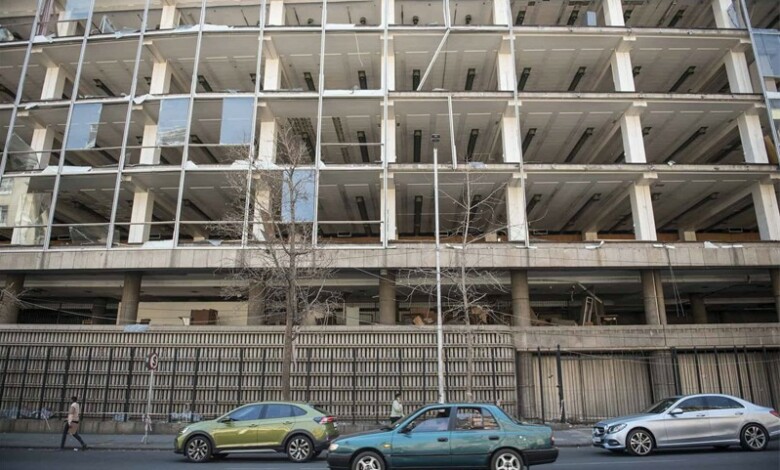
Residents are still being kept in the dark about the true cost of securing abandoned and rented government buildings in Pretoria, as Premier Panyaza Lesufi’s administration continues to withhold critical financial details.
Nearly a year after the premier announced an investigation into 41 abandoned government-owned buildings and 11 leased properties in Johannesburg and Pretoria, no clear breakdown of security expenditure around these buildings has been made public.
“The residents of Gauteng still do not know how much they are paying for security to safeguard these buildings,” said DA MPL Khathutshelo Rasilingwane.
This lack of transparency persists despite mounting concerns about government spending priorities.
It has been previously revealed that the provincial government is spending about R34-million to lease office space for various departments, an amount the DA argued could instead be used to refurbish and repurpose existing state-owned buildings.
Rasilingwane maintained that the continued use of leased facilities, while publicly owned buildings stand unused or underutilised, reflects poor planning and weak financial oversight.
The scale of the issue becomes more apparent when examining the concentration of more than 20 provincial government-owned properties in Pretoria, particularly within the inner city.
These properties, many of which fall under the TPA Buildings portfolio, are clustered around key administrative and commercial nodes.
They include multiple erven and subdivided portions located along Bosman, Church, and Pretorius streets and Church Square, where several properties are recorded.
Additional properties are situated on Parliament and at 245 Paul Kruger streets.
Although these properties are officially listed as office facilities and are largely occupied or intended to be occupied by the Gauteng Department of Roads and Transport, their custodianship lies with the Gauteng Department of Infrastructure Development.
Many of the properties are fragmented into multiple portions under separate title deeds, yet share the same physical addresses.
According to Rasilingwane, this fragmentation not only complicates asset management but also raises further questions about maintenance responsibilities, occupancy levels and, crucially, the cost of securing these sites when they are not fully utilised.
Rasilingwane argued that the provincial government’s current approach undermines efforts to revitalise key urban areas, particularly the Pretoria CBD, where several abandoned buildings are located.
She suggested that a phased refurbishment programme, fixing one building at a time, could help restore confidence among investors, stimulate economic activity and reduce reliance on leased office space.
Efforts by the DA to obtain clarity on expenditure have so far been unsuccessful.
The party recently tabled questions in the Gauteng Provincial Legislature to the MEC for Infrastructure Development, Jacob Mamabolo, seeking detailed information on costs associated with both abandoned and leased buildings, including payments to private security companies.
However, Rasilingwane said these questions have once again gone unanswered, with the department citing the premier’s ongoing investigation as justification for withholding information.
“If Premier Panyaza Lesufi and his government are committed to responsibly spending taxpayers’ money, they would not hide behind an ongoing investigation into how much money is currently being spent on government-owned buildings that are not in use,” she said.
She added that accountability and transparency are essential, particularly at a time when Gauteng faces increasing pressure to improve service delivery and manage limited public resources more effectively.
Do you have more information about the story?
Please send us an email to bennittb@rekord.co.za or phone us on 083 625 4114.
For free breaking and community news, visit Rekord’s websites: Rekord East
For more news and interesting articles, like Rekord on Facebook, follow us on Twitter or Instagram or TikTok or WhatsApp Channel