Vision loss no barrier for UP master’s graduate’s dream career
University of Pretoria master's graduate Ingrid Pieterse has used assistive technology, Braille literacy and unwavering determination to achieve her academic dreams while inspiring others facing similar challenges.
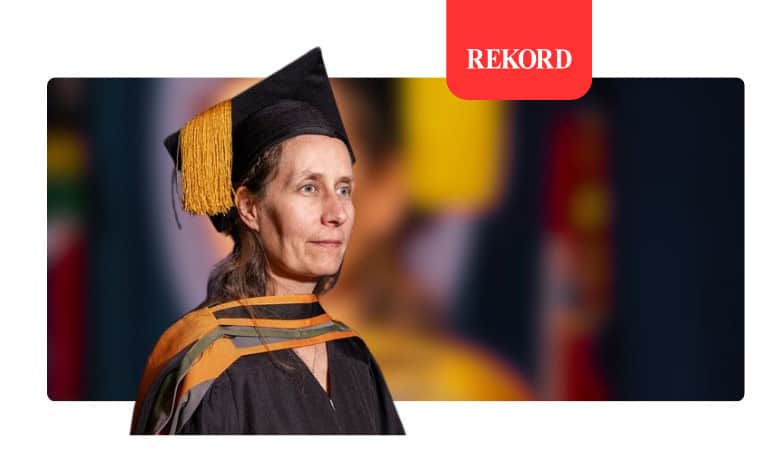
Despite living with progressive vision loss, a University of Pretoria master’s graduate has achieved her dream of becoming a music therapist while using her experience to encourage others facing similar challenges.
Ingrid Pieterse, who recently graduated with a Master of Music (MMus) in Music Therapy from the University of Pretoria, has spent years adapting to life with Stargardt disease – a condition that causes progressive vision loss.
“Having a disability has led me to be a very determined person, as I’ve always wanted to prove to myself, and I suppose to others as well, that nothing can stand in my way,” says Pieterse.
Rather than allowing her condition to limit her ambitions, she embraced assistive technology, Braille literacy and practical adaptations that help her maintain her independence and pursue her goals.
She uses text-to-speech software on her devices, including VoiceOver on her iPhone and NVDA (non-visual desktop access) on her computer, to access information and complete daily tasks.
She also relies on accessible online libraries and a refreshable Braille display to read and study.
One of the skills she values most is reading Braille.
“One of the other benefits of being able to read in Braille is that I am able to play board games along with my sighted friends and family using specially designed Braille board game sets. One of my favourites is Scrabble,” says Pieterse.
She says Braille also helps with everyday tasks, including identifying medication packaging and navigating the world more independently.
At home, Pieterse uses tactile markers to identify household items and keeps belongings in specific places to make them easier to find.
“I use my fingers to see, so I have maximised this by creating tactile indicators for myself. For example, we have cut a groove in the handle of my toothbrush so that I can recognise it easily,” she explains.
She also relies on a white cane when navigating unfamiliar spaces and public places.
“Letting people know that I am blind is so important because they are then more willing to assist if necessary. Also, they don’t get frustrated or irritated if I bump into things or don’t respond to hand gestures or facial expressions as they would expect a sighted person to do,” she says.
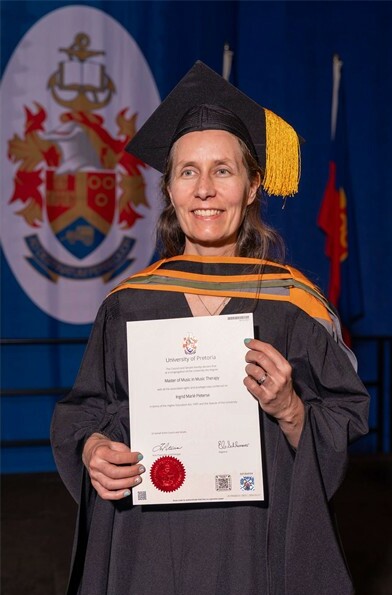
Her journey to obtaining her master’s degree took more than two decades.
After studying music at UP following matric, she continued building experience, studying part-time and saving towards her dream of becoming a music therapist.
In 2023, she discovered she could study music therapy remotely and began preparing for the programme by reading extensively and teaching herself to play the guitar.
After being accepted into the programme in 2024, Pieterse successfully navigated the challenges of postgraduate study, clinical placements and unfamiliar environments, relying on determination, adaptability and support from lecturers and fellow students.
“I try to find alternatives when faced with difficult circumstances rather than giving up when the going gets tough,” she says.
Drawing from her own experience, Pieterse shares several practical tools and strategies that can help people living with vision loss maintain their independence and confidence:
Use assistive technology: Screen readers such as VoiceOver on iPhones and NVDA on computers can make reading, studying and working more accessible.
Access specialised libraries: Services such as Bookshare provide thousands of books in accessible formats for people with visual impairments.
Learn Braille: Braille can assist with reading, identifying medication packaging and participating in activities such as board games designed for visually impaired users.
Develop mobility skills: Learning to use a white cane can help improve confidence and safety when navigating unfamiliar environments.
Create tactile markers: Adding tactile indicators to everyday items, such as toiletries and household products, can make them easier to identify independently.
Keep items organised: Storing belongings in designated places can reduce frustration and make daily tasks more manageable.
Learn keyboard shortcuts and touch typing: These skills can make computer use easier and reduce reliance on sight.
Connect with support networks: Engaging with organisations and support groups can provide practical advice, encouragement and a sense of community.
Pieterse hopes her story will encourage others facing vision loss to seek support from organisations and communities that understand their challenges.
Do you have more information about the story?
Please send us an email to bennittb@rekord.co.za or phone us on 083 625 4114.
For free breaking and community news, visit Rekord’s websites: Rekord East
For more news and interesting articles, like Rekord on Facebook, follow us on Twitter or Instagram or TikTok or WhatsApp Channel