E-toll debt written off
The decision brings long-awaited certainty to motorists and closes a contentious chapter in South Africa’s road funding history. The decision also allows Sanral to conclude remaining legal and administrative matters.
Cabinet has approved the write-off of all outstanding Gauteng Freeway Improvement Project e-toll debt.
While unpaid debt will be written off, government has confirmed that motorists who paid their e-tolls while the system was legally in force will not receive refunds.
This brings an end to one of South Africa’s most contentious road funding disputes and provides certainty for motorists and the national fiscus.
Minister of Transport Barbara Creecy and deputy minister Mkhuleko Hlengwa welcomed the decision, which authorises Sanral to implement the closure of historical e-toll debt and resolve all outstanding litigation matters linked to the scheme.
The decision effectively draws a line under the e-toll system, which was introduced to help fund upgrading Gauteng’s freeway network.
According to the Department of Transport, the approval follows government’s earlier decision to terminate the Gauteng Freeway Improvement Project e-toll scheme and withdraw the toll declarations that made the system legally enforceable.
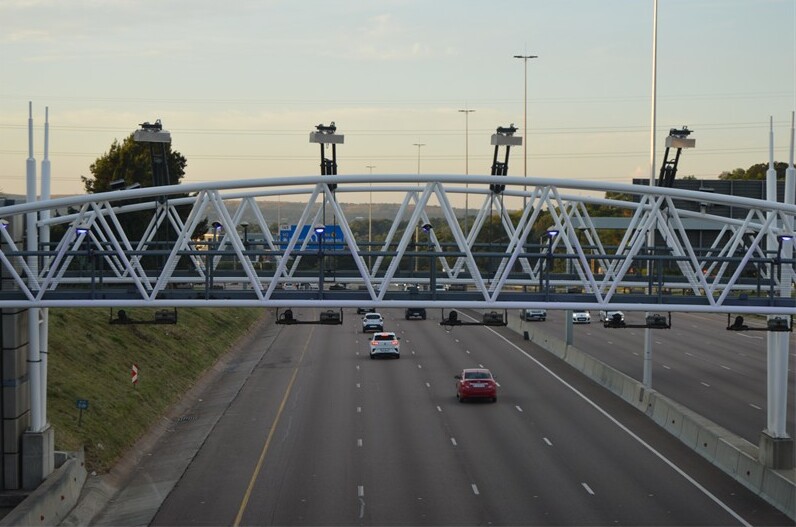
Those withdrawals took effect on April 11, 2024.
“The Cabinet decision means that all outstanding and unpaid historical e-toll debt owed by road users will be written off,” said Collen Msibi, spokesperson for the national Department of Transport.
Sanral will also stop pursuing the collection of any remaining historical debt linked to the scheme.
Creecy and Hlengwa said the decision provides much-needed relief to motorists who are already facing significant financial pressures.
They noted that road users have been burdened by high fuel costs and broader economic challenges linked to ongoing geopolitical developments, making the closure of the debt chapter particularly significant.
The e-toll system was introduced under the applicable tolling framework and approvals in place at the time.
Sanral implemented and operated the scheme to finance the upgraded freeway network in Gauteng.
However, the system faced years of public opposition, legal challenges and widespread resistance from motorists, many of whom refused to pay the e-toll charges.
The latest decision seeks to provide certainty for all parties involved, including motorists, Sanral and government.
According to Cabinet, the no-refund position is based on the fact that the toll charges were lawfully levied at the time they were collected, before the toll declarations were withdrawn.
Government said the write-off is intended to give effect to its decision to close the e-toll scheme and bring finality to historical debt matters.
The Department said the move will help create certainty while supporting a sustainable approach to funding, maintaining and improving South Africa’s national road network.
Although the Gauteng e-toll system has been closed, government stressed that the user-pay principle remains an important component of infrastructure funding in South Africa.
According to the department, user-pay models can still play a role where they are broadly accepted by road users through negotiation and agreement, are appropriately structured, legally sound and supported by clear policy certainty.

The decision is expected to end years of uncertainty surrounding the future of unpaid e-toll accounts and outstanding legal disputes.
For many motorists, the announcement finally closes a chapter that has dominated public debate over road funding in Gauteng for more than a decade.
The write-off also removes the prospect of future debt collection efforts related to historical e-toll accounts, bringing clarity to thousands of road users who had remained uncertain about their obligations following the closure of the scheme.
With Cabinet’s approval now secured, Sanral can proceed with the administrative steps necessary to implement the debt write-off and conclude all remaining matters associated with the Gauteng Freeway Improvement Project’s e-toll system.
Government has positioned the move as a balanced solution that acknowledges both the legal status of past toll collections and the need to provide a practical resolution to a long-running issue that affected motorists, the roads agency and the national fiscus.
Executive director of the Organisation Undoing Tax Abuse, Stefanie Fick, told Rekord this should have happened far sooner.
“But it is the best news motorists in Gauteng can receive with all the recent burdens adding to the cost of transport for road-users.
“We are delighted for motorists that this final chapter in the tollgate saga has now been closed.”
ALSO READ: Residents urged to stay alert, CPF shares crime prevention tips
Do you have more information about the story?
Please send us an email to bennittb@rekord.co.za or phone us on 083 625 4114.
For free breaking and community news, visit Rekord’s websites: Rekord East
For more news and interesting articles, like Rekord on Facebook, follow us on Twitter or Instagram or TikTok or WhatsApp Channel