Animal shelter pressure rising
Surrender rates of pets are rising due to housing restrictions and financial strain.
More than 7.4 million dogs are owned by 4.2 million households in South Africa, representing 21% of all households, according to new data released through Stats SA’s General Household Survey at the beginning of June.
Meanwhile, 2 million cats are owned by 1.3 million households or 6.4% of households.
The figures are being described by animal welfare organisations as a significant step forward in establishing a credible national baseline for companion animal ownership and distribution.
Stakeholders say the data will support more effective planning for animal health, shelter capacity, and disease control measures, while also highlighting the scale of welfare challenges facing communities.
Cilla Trexler, founder of Wollies Animal Shelter, said it would be valuable if future data collection included more detailed shelter statistics, particularly to track the number of stray animals currently housed and those surrendered by owners under financial strain.
The only statistics available on homeless animals are from 2024, which estimate 325 000 animals are in shelters and about 1.7 million are living on the streets. This is according to an index on the state of pet homelessness in South Africa which gauges initiatives to assist strays.
Trexler said shelters are already reporting a noticeable rise in dog surrenders in recent months because of financial strain.
She said many of the recent admissions at their shelter can also be linked to housing restrictions in townhouse and complex living arrangements, where strict no-pet policies or complaints about noise often result in owners being forced to give up their animals.
She added that some cases involve formal decisions through community governance structures, including the Community Schemes Ombud Service, where pets are declared a nuisance and removal is enforced.
She warned that the growing gap between expectations of pet ownership and restrictive housing rules is placing increasing pressure on shelters, with rising intake numbers and limited resources making it difficult to sustain operations.
“Pet owners should be very careful if they buy into a complex and should be very much aware beforehand about the rules and regulations on pets and pet ownership,” warned Trexler.
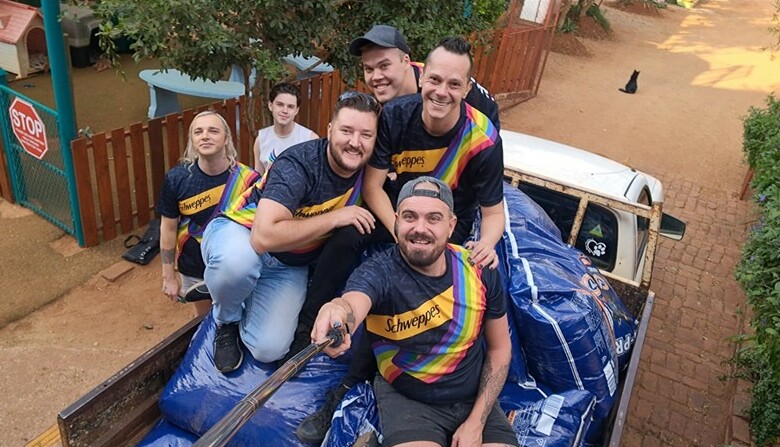
Leonard Kotze, a representative of the LGBTQIA+ community in Pretoria North, said a group of performers has risen to the occasion to answer Trexler’s call for support for the shelter.
For three years, the LGBTQIA+ community have hosted an annual Drag Queen fundraising concert in support of Wollies, describing it as a tradition built around friends coming together to raise funds through their drag performances and community events.
He said this year’s recent event raised about R25 000 worth of food products for Wollies, with additional funds collected through an auction on the evening.
“Our group’s efforts are driven by a shared commitment to animal welfare and community involvement,” said Kotze.
He explained the donation delivery to Wollies was met with strong appreciation from staff, adding that volunteers and visitors are often deeply affected by the scale of need at the shelter. He said the experience often leads to emotional moments, with some visitors, like members of their group, even adopting rescue animals during their donation visit.
He added that, as a dog owner himself, he is motivated by the impact animals have on people’s lives and will continue to support fundraising efforts to assist shelters facing ongoing pressure.
Do you have more information about the story?
Please send us an email to bennittb@rekord.co.za or phone us on 083 625 4114.
For free breaking and community news, visit Rekord’s websites: Rekord East
For more news and interesting articles, like Rekord on Facebook, follow us on Twitter or Instagram or TikTok or WhatsApp Channel