Call for action as Kameeldrift settlement relocation stalls
Eight years of promises have yielded little progress for residents living near an informal settlement. As the settlement grows and concerns over noise, waste and health risks increase, relocation plans remain delayed by legal and administrative hurdles.

Residents living near an informal settlement in Kameeldrift close to East Lynne say they are growing increasingly frustrated as years of promises to relocate the settlement have yet to happen, while the informal settlement continues to expand and conditions deteriorate.
The settlement, situated near Kwikkie Street on part of the farm Derdepoort, has become a source of concern for neighbouring property owners who complain of noise, health risks, waste management problems and declining property values.
One resident, Marie Strydom, said the community have been fighting for about eight years to have the settlement relocated.
According to Strydom, what started as a small settlement has grown significantly over the years and now consists of more than 150 informal structures housing an estimated 300 men, women and children.
“This noise is now completely out of control. One cannot sleep. The air is heavily polluted and the objects being burned on the property in the settlement create smoke that is a health risk, as well as the waste lying everywhere, which leads to infestations of rats and mice. What are the metro and political parties going to do regarding the relocation? It cannot continue like this. Every day, the hassles become more and more,” she said.
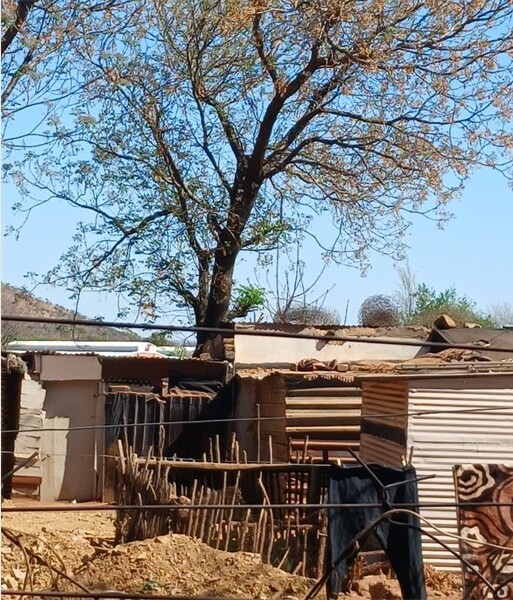
Strydom said the ongoing situation has had a direct impact on her quality of life.
She said the noise levels have become so severe that she can no longer accommodate overnight guests because visitors often leave due to the disturbances.
The presence of the settlement has also affected the marketability of her property.
Strydom said she had twice received interest from prospective buyers who considered purchasing her property but ultimately decided against it because of the nearby informal settlement.
Her concerns come amid ongoing discussions between the metro, landowners and community representatives about the settlement’s future and possible relocation plans.
Ward 87 councillor Freddie Pienaar said the process of relocating residents is subject to legal and administrative requirements that cannot be bypassed.
“The executor of the estate, as the owner has passed away, must obtain a court order empowering the metro to start the relocation process,” Pienaar said.
He explained that before any relocation can take place, the municipality must identify land, complete subdivision processes, undertake rezoning procedures and conduct town-planning processes to relocate the current occupiers.
Pienaar said he had already shared relevant documentation with a Kameeldrift community leader who is in favour of the relocation, whom he described as the only member of the community willing to pursue the matter with him.
“The leader and his legal adviser are busy with a legal process to obtain a court order,” Pienaar said.
He added that discussions with the Department of Human Settlements are continuing. He once again took the matter up with the department on June 25.
Pienaar said he has repeatedly explained to residents that relocation cannot happen immediately.
“It is a long process and people cannot simply be moved,” he said.
He added that he had recommended that residents submit a petition that he could present to the relevant committee.
The councillor’s comments are consistent with a letter he issued on February 26 to the metro in which he formally expressed support for the relocation.
In the letter, Pienaar stated that informal occupation on Portion 186 had prevented approved development from proceeding, while relocation efforts on Portion 65 remained delayed because the property forms part of a deceased estate and legal processes had not yet been completed.
“The relocation of both communities is essential to enable lawful and approved development, ensure compliance with land-use requirements, protect the safety and dignity of affected households and prevent further unlawful occupation,” Pienaar said in the letter.
He said he had followed the required metro processes, including engagements with the Department of Human Settlements, meetings with the informal community leader Lucas Ramashuwana, and consultations with affected residents.
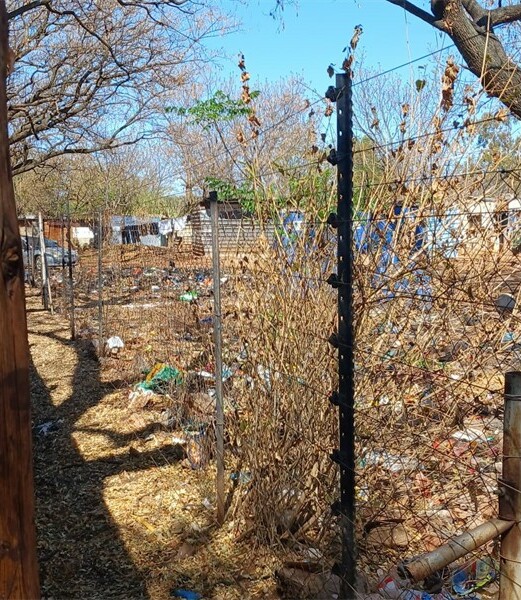
According to Pienaar, metro officials have visited both sites, engaged with occupants and recorded details for relocation purposes. He also stated that suitable land had already been identified, subdivided and rezoned for relocation.
He added that the informal community had been informed about the relocation process and offered an alternative.
According to him, Ramashuwana rejected it on behalf of the residents.
“The DA is working with the city, landowners and affected residents to secure a lawful relocation process that protects residents’ rights and dignity while ensuring that approved development can proceed,” he said.
He noted that relocation would only proceed once outstanding legal requirements, including a court order relating to Portion 65, had been finalised.
The metro said it has no official position on an informal settlement of about 150 shacks on a privately owned property, maintaining that responsibility for the site lies with the landowner.
Metro spokesperson Lindela Mashigo said the municipality had no plans to relocate the occupants because the land is privately owned.
Mashigo said any previous commitments or intervention regarding the settlement should be viewed in the context of the metro’s position that the property falls under the responsibility of its owner.
He said the municipality was also not responsible for addressing reported health hazards, including overcrowding, waste accumulation and poor sanitation conditions at the site, because it is privately owned.
Do you have more information about the story?
Please send us an email to bennittb@rekord.co.za or phone us on 083 625 4114.
For free breaking and community news, visit Rekord’s websites: Rekord East
For more news and interesting articles, like Rekord on Facebook, follow us on Twitter or Instagram or TikTok or WhatsApp Channel