University of Pretoria climbs global sustainability rankings
The University of Pretoria has been ranked second in South Africa and Africa, while securing top-25 global rankings in three United Nations Sustainable Development Goals.
The University of Pretoria (UP) has, once again placed Pretoria on the global map, ranking among the world’s top 100 universities for sustainable development.
The university was ranked 78th out of 1 650 institutions in the 2026 Times Higher Education (THE) Impact Rankings, making it the second-highest ranked university in both South Africa and Africa.
The latest rankings, announced in June, recognise universities for their contribution towards achieving the United Nations’ Sustainable Development Goals (SDGs), which focus on tackling global challenges such as poverty, healthcare, gender equality, economic growth and climate change.
For Pretoria, the recognition reinforces UP’s reputation as one of the city’s leading institutions, with research and innovation increasingly influencing not only the capital but also communities across South Africa and the African continent.
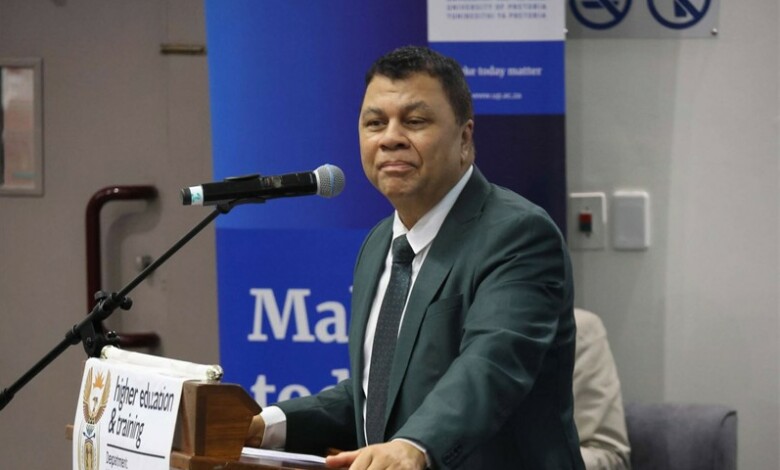
UP Vice-Chancellor and Principal, Prof Francis Petersen, said the results reflect the university’s commitment to producing research that creates meaningful change.
“These results affirm UP’s commitment to creating knowledge that matters, and to addressing the complex challenges facing society,” said Petersen.
“Being ranked among the top 75 universities globally for sustainable development impact reflects the dedication of our staff, students, alumni and partners who work every day to advance positive change in South Africa, Africa and the world.”
UP achieved its strongest performances in three SDGs, all of which were ranked among the world’s top 25 universities.
The university climbed from 45th to 20th globally for Decent Work and Economic Growth (SDG 8), improved from 63rd to 21st for Gender Equality (SDG 5), and ranked 25th for Partnerships for the Goals (SDG 17).
The institution also secured places in the global top 100 for several other categories, including No Poverty; Zero Hunger; Good Health and Well-being; Industry, Innovation and Infrastructure; Reduced Inequalities, and Peace, Justice and Strong Institutions.
Petersen said the rankings demonstrate that the university’s impact extends well beyond the lecture hall.
“It is particularly encouraging to see the breadth of our performance across the SDGs,” he said.
“From health and gender equality to innovation, economic growth and global partnerships, UP is demonstrating that an impact-driven, research-intensive university can simultaneously achieve academic excellence and meaningful societal impact.”
He added that these achievements support the university’s long-term vision.
“These achievements align strongly with our strategic vision, ThriveUP 2038, which positions the University as a leading African university recognised internationally for its impact, innovation and contribution to a more sustainable future.”
Several major projects undertaken by the university over the past year contributed to the improved rankings.
Among them was the launch of the United Nations University (UNU) Hub on Resilient Environment, Agriculture, Climate and Health for Africa.
Based at UP, the hub aims to develop African-led solutions to climate change, food security, public health and sustainable development, while strengthening collaboration between researchers and policymakers.
UP also hosted Africa Week 2025, attracting more than 300 leaders from government, academia, business and civil society to discuss issues including food security, healthcare, economic resilience, innovation and climate sustainability.
Closer to home, the university strengthened its commitment to clean energy by signing a 25-year agreement with ATTSolar to build a 10.5-megawatt solar photovoltaic facility at Persequor Park.
Petersen said that once completed, the facility will supply renewable electricity to UP’s Hatfield and Hillcrest campuses, improving energy security while reducing carbon emissions.
“The university’s submission to the rankings was supported by more than 100 verified pieces of evidence showcasing research projects, partnerships, institutional data and measurable community impact.”
He said UP also emerged as one of the country’s top-performing universities across the Sustainable Development Goals.
The university ranked first nationally for Good Health and Well-being, Gender Equality, and Industry, Innovation and Infrastructure. It placed second in seven other SDGs, including No Poverty, Zero Hunger, Affordable and Clean Energy, Decent Work and Economic Growth, Reduced Inequalities, Sustainable Cities and Communities, and Peace, Justice and Strong Institutions.
Overall, 11 of the university’s ranked Sustainable Development Goals are now among the top three in South Africa.
Beyond the rankings, the university said the results reflect its growing contribution to finding practical solutions to some of society’s biggest challenges, including poverty, healthcare, food security, inequality and institutional resilience.
Do you have more information about the story?
Please send us an email to bennittb@rekord.co.za or phone us on 083 625 4114.
For free breaking and community news, visit Rekord’s websites: Rekord East
For more news and interesting articles, like Rekord on Facebook, follow us on Twitter or Instagram or TikTok or WhatsApp Channel