New housing process fills gaps, despite challenges
The Tshwane metro says its role in housing has fundamentally changed. Its services are now limited to providing serviced stands with essential infrastructure.
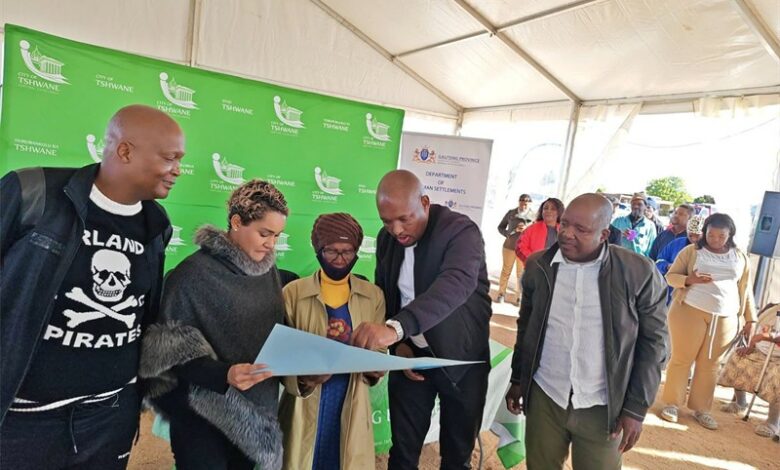
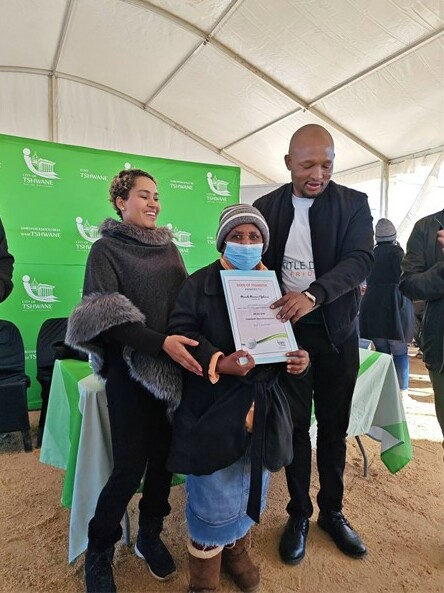
The recent handover of 150 title deeds to families in New Eersterus, Hammanskraal, marked a significant milestone in the Tshwane Metro’s efforts to restore homeownership and dignity to residents.
However, behind the celebrations lies a broader shift in how housing is being delivered across northern Pretoria.
The metro has confirmed that it no longer constructs government-subsidised houses and instead, its mandate is now limited to providing serviced stands with essential infrastructure such as water, sewer and roads.
The Gauteng Department of Human Settlements is responsible for building the houses.
This new approach is shaping housing developments across communities including Winterveldt, Soshanguve, Mabopane, Ga-Rankuwa and Hammanskraal.
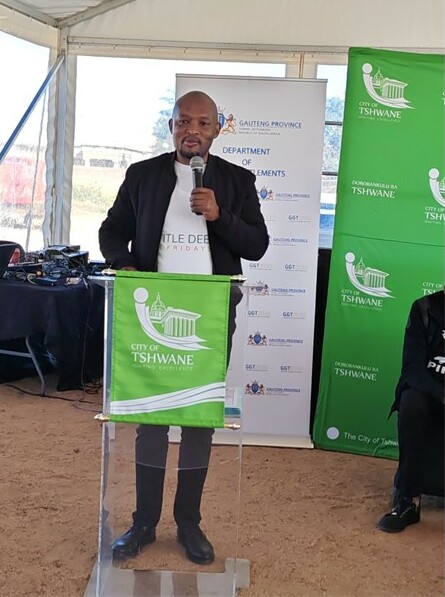
MMC for Human Settlements Alderman Aaron Maluleka said the programme remained central to restoring dignity and creating opportunities for residents.
“The handover underscores the metro’s commitment to restoring dignity, security and economic opportunity through home ownership.
“Beyond providing proof of ownership, title deeds enable residents to build generational wealth, unlock access to finance, and invest with confidence in their properties and communities,” said Maluleka.
The metro recently handed over 150 title deeds to qualifying beneficiaries in New Eersterus Ext 4 and 6.
Since December 2025, the metro has registered 800 title deeds through its title deed restoration programme, which was introduced to address historical backlogs.
Despite this progress, challenges remain, and the municipality confirmed that 1 536 title deeds are still outstanding in New Eersterus alone, highlighting the scale of work that still lies ahead before all qualifying residents receive legal ownership of their homes.
Housing delivery itself also faces significant obstacles.
According to the metro, insufficient funding remains the biggest barrier to expanding serviced stands, while funding for constructing homes is provided through the Human Settlements Development Grant administered by the provincial government.
Title deed transfers continue to be delayed by unproclaimed townships, illegal sales of subsidised houses, unresolved deceased estates, and beneficiaries who cannot be traced.
Rather than focusing on building houses, the metro’s priority has shifted towards preparing land and installing infrastructure that will eventually allow the provincial government to construct homes.
Several major projects are currently underway across northern Pretoria.
In Winterveldt Ext 3 and 4, contractors are on site with work about 60% complete on water and sewer reticulation, as well as the construction of toilet top structures for 1 274 stands.
In Mabopane Ext 12, work is progressing on water and sewer reticulation for 539 stands, while Ga-Rankuwa Ext 10 is being prepared for future walk-up housing units.
The metro has allocated R416.7-million towards Human Settlements capital projects during the 2026/27 financial year.
Of that amount, more than R152-million will be invested in water, sewer, and road infrastructure across the north of the metro to support future housing developments.
Beyond formal housing projects, the metro is also expanding its efforts to upgrade informal settlements through its Informal Settlement Management Policy, approved earlier this year.
The policy focuses on improving safety, expanding access to engineering services, strengthening tenure rights and creating sustainable communities.
Through the Upgrading of Informal Settlements Programme, residents will receive permanent serviced stands while services are introduced incrementally.
Current projects include Soshanguve South Ext 29, Ga-Rankuwa Units 23 and 25, Kopanong Ext 2, Mabopane Ext 13, Stinkwater Ext 10, Leeuwfontein, Kameeldrift, Bhubesini, Phumekaya, Rethabiseng, Marikana and Riverwalk.
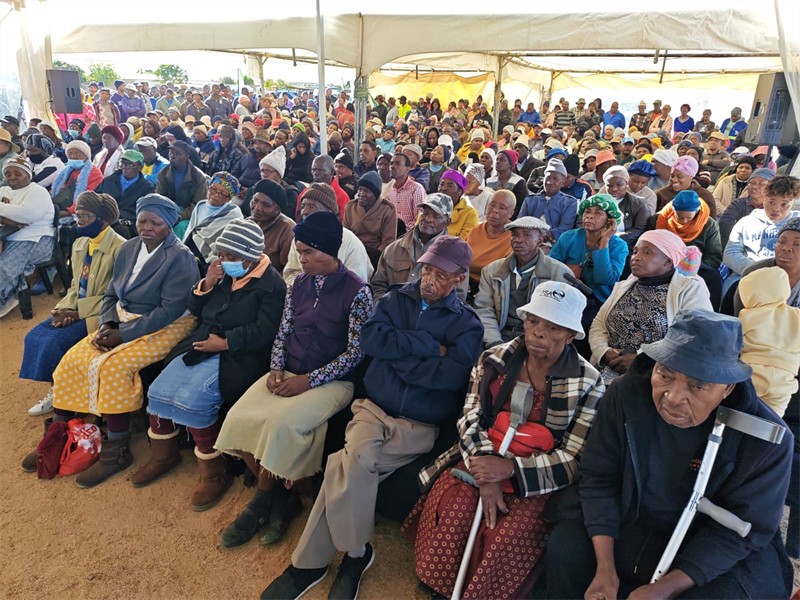
For many residents, however, the pace of housing delivery remains a concern.
Soshanguve resident Gomolemo Ndlovu said many families had spent years waiting for permanent homes.
“It is encouraging to hear that infrastructure is finally being installed because that is the first step towards housing.
“But many of us have been waiting for years, and we hope the province can now move quickly to build the houses once the serviced stands are ready,” he said.
The metro said its long-term focus will remain on expanding bulk infrastructure in Winterveldt, Ga-Rankuwa, Gatsebe, Kopanong and Mabopane to unlock future housing opportunities.
Do you have more information about the story?
Please send us an email to bennittb@rekord.co.za or phone us on 083 625 4114.
For free breaking and community news, visit Rekord’s websites: Rekord East
For more news and interesting articles, like Rekord on Facebook, follow us on Twitter or Instagram or TikTok or WhatsApp Channel