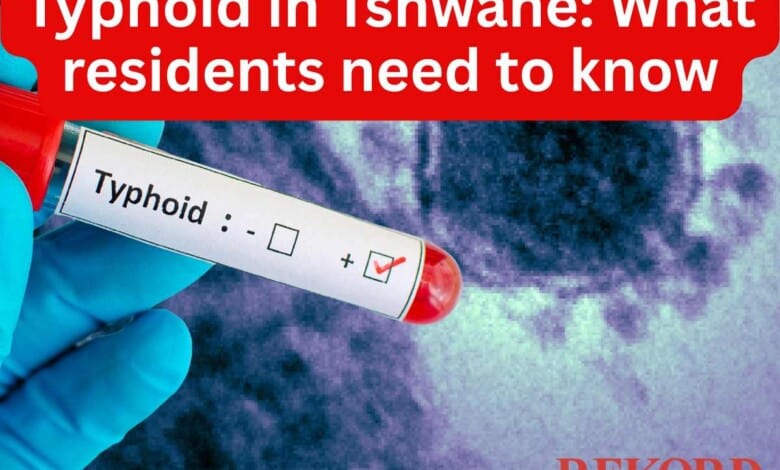
Typhoid in Tshwane: What residents need to know
Tshwane has recorded 60 typhoid cases this year, while residents in Region 7 have been warned not to drink the water.
shwane residents are urged to remain vigilant as health authorities monitor a rise in typhoid fever cases, with Bronkhorstspruit and surrounding areas accounting for most infections.
The concern comes as the City of Tshwane has warned Region 7 residents not to drink their water, saying typhoid remains a risk in the area.
In an update on August 14, the City said turbidity levels at the Bronkhorstspruit water treatment plant remained high and advised residents to use the water only for domestic purposes.
“The city will communicate with residents when the water is safe to drink,” it said.
According to the National Institute for Communicable Diseases (NICD), Tshwane recorded 60 laboratory-confirmed typhoid cases between January 1 and July 29, accounting for 60 of Gauteng’s 70 cases during the period.
Of the Tshwane cases, 31 presented at Bronkhorstspruit Hospital. Cases associated with identified clusters have primarily involved Ekangala, Rethabiseng and Zithobeni, with additional cases identified in areas including Bronkhorstspruit, Mamelodi and Arcadia.
The NICD said two distinct strains of Salmonella Typhi have been associated with clusters dating back to 2025.
Despite the increase, the NICD has stressed that South Africa currently has no declared typhoid fever outbreak.
Authorities have not established that Tshwane’s municipal drinking water is the source of the infections.
During investigations into Tshwane cases in 2025, the Department of Water and Sanitation said testing of municipal water supplies, boreholes and water tankers did not detect Salmonella Typhi.
The City’s latest warning not to drink water supplied from the Bronkhorstspruit treatment plant relates to high turbidity levels. At the same time, it has separately cautioned that typhoid remains a risk in the area.
Salmonella Typhi bacteria cause typhoid and are usually spread through food or water contaminated with faecal matter from an infected person.
Symptoms to look out for
According to the NICD, symptoms can include fever, headache, muscle aches, abdominal pain, nausea, vomiting, constipation and diarrhoea.
The World Health Organisation (WHO) says typhoid can lead to serious complications if left untreated but can be treated with antibiotics.
Residents experiencing persistent fever, particularly with gastrointestinal symptoms, are advised to seek medical attention.
Region 7 residents affected by the current water warning should continue to avoid drinking the water until the City confirms that it is safe.
Also read: WATCH: Video of ‘drunk’ SANDF member in uniform goes viral
Do you have more information about the story?
Please send us an email to bennittb@rekord.co.za or phone us on 083 625 4114.
For free breaking and community news, visit Rekord’s websites: Rekord East
For more news and interesting articles, like Rekord on Facebook, follow us on Twitter or Instagram or TikTok or WhatsApp Channel.