
Pretoria theatre-maker revives forgotten 1832 Cape Town satire
A centuries-old play discovered in a grandfather's library is bringing early South African humour and social commentary back to the stage.
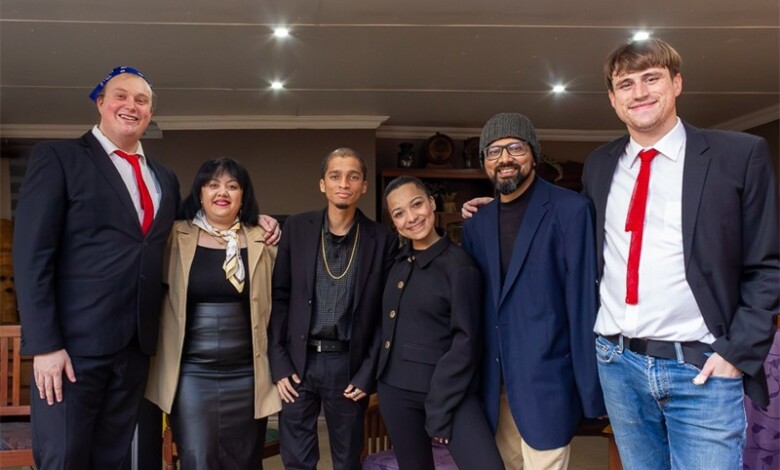
Zacharia Botha is testing whether the humour and social commentary of a forgotten 1832 four-act play can be brought to life for contemporary audiences.
Charles Étienne Boniface (1787–1853) was a French-born playwright, journalist, musician, language teacher and translator who became an important figure in the early cultural and theatrical history of the Cape Colony.
Botha, who runs Vlyt Art Acting in Lynnwood Ridge, Pretoria, translated Boniface’s De Nieuwe Ridderorde into contemporary English. The satire of Cape Town’s Temperance Society has remained largely unexplored for almost 200 years.
Grandfather’s library
The journey began at home, while Botha was sorting through his grandfather’s personal library after he passed away.
“My Oupa Zach had many books regarding the development of Afrikaans, including early texts written by Charles Boniface from the 1820s and 1830s,” Botha said.
His interest deepened after reading Van Roem Tot Selfmoord, a book about Boniface’s life, journalism and theatrical characters. While clearing the collection, he also found a 1975 facsimile reprint of De Nieuwe Ridderorde.
Since then, he has returned to the play annually. This year, he decided to translate the entire work and begin performing scenes with actors.
Satirical portrait of colonial Cape Town
Written in 1832, the play offers a comic portrait of colonial Cape Town through rival factions divided by their attitudes towards alcohol. The Temperantist Knights (Knights Templar) are members of the social elite who advocate abolishing alcohol while indulging in heavy drinking during private meetings. Opposing them is the Brotherhood of Brandy, associated with working-class characters and immigrants, while indigenous characters form a separate group of Learner Temperantists.
Boniface gives his 29 characters names that signal their behaviour and shortcomings, including Dominie Humbug, Dr McThirsty, Piet Dronkelap and Andrew Everdry. The exaggerated names become part of the satire, revealing the hypocrisy and pretensions of the society being portrayed.
The play’s backdrop includes the alcohol trade, the temperance movement and the campaign to abolish slavery, placing its comedy within the wider social tensions of the period.
Despite its age, Botha believes the material has a distinctly familiar South African flavour.
He describes the experience as ‘Monty Python in 1800s Cape Town’, imagining the absurdist comedy of Monty Python or Blackadder combined with the humour of modern South African entertainers and advertising.
That connection has become clearer during rehearsals. Actors rehearsing the second act have recognised familiar patterns of exaggeration, judgement and hypocrisy in the characters.
“When we put these characters on their feet, the age of the text becomes obsolete,” Botha said.
Challenges of adapting 200-page work
Bringing the work to the stage, however, presents considerable challenges. The original is a 200-page play in four acts, filled with commentary and jokes that may not immediately translate for modern audiences.
Botha has had to reshape the material into something actors can perform without losing the original’s character.
Where necessary, he has substituted modern equivalents or drawn on Afrikaans similes that reflect the original Dutch text.
The actors have also become collaborators in the process, helping him discover layers in the characters that were not always apparent on the page.
“You only get to truly know and understand Boniface by putting the play on its feet,” he said.
The performance in early October was intended as a proof of concept rather than a full theatrical production.
The project also reflects Botha’s belief that Pretoria offers fertile ground for rediscovering South African theatre history.
He regularly explores second-hand bookshops for neglected plays. For him, Pretoria is where he found Boniface and where he hopes to find the performers, resources and audiences needed to develop the work.
His ambitions extend beyond one experimental scene. Botha hopes the play could become part of a shared theatrical heritage, accessible to South Africans across cultural and linguistic backgrounds.
During travels in Russia, he observed how literature and theatre could provide a common cultural reference point among people from different communities. He hopes Boniface’s work might offer a similar opportunity in South Africa.
“We all share the Springboks, and we all share a strong braai and drinking culture,” he said. “We can also be united and share Boniface.”
Do you have more information about the story?
Please send us an email to bennittb@rekord.co.za or phone us on 083 625 4114.
For free breaking and community news, visit Rekord’s websites: Rekord East
For more news and interesting articles, like Rekord on Facebook, follow us on Twitter or Instagram or TikTok or WhatsApp Channel


