Tuks can’t fund student accommodation shortfall as it struggles with load-shedding costs
"The cost of diesel to run the generators on our campuses and residences is around R1.5-million a day on stage 3 load-shedding and R2-million a day on stage 4."
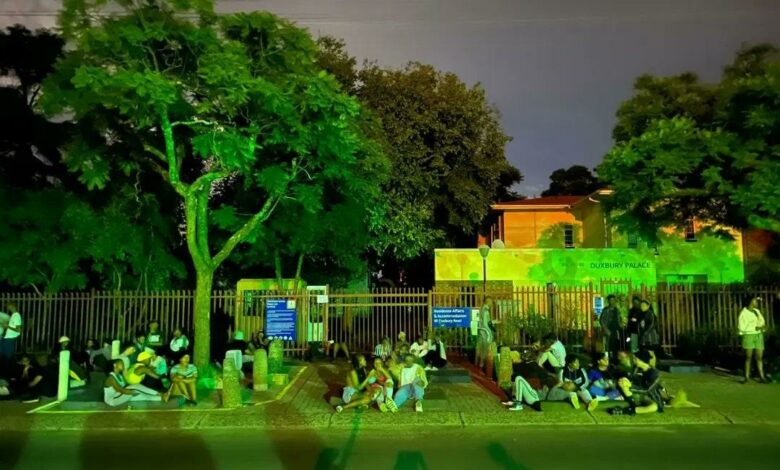
The University of Pretoria (UP) said it cannot help its Nsfas students with accommodation because it is already spending approximately R2-million a day mitigating load-shedding.
UP students last week slept outside various residences in Hatfield, protesting the national student funding aid scheme (Nsfas) capping its accommodation funding to R45 000.
🔷Happening now🔷
Day 2 of sleeping outside in defense of the poor child. #UP_SRC2023#UPAccommodationCrisis#UPWay pic.twitter.com/dR2H8z67fw
— UP SRC (@UP_SRC) February 17, 2023
Previously the scheme paid the “actual cost of accommodation charged”.
Recently, the Feenstra Group property developer temporarily offered a concession to its rental rates to meet the Nsfas funding cap.
The group said it acknowledged the dire effect the cap had on students in the wake of the 2023 academic year commencing.
“We have agreed to temporarily make a concession to rental rates of specific room types to enable the funded students to find suitable accommodation.”
These concessions apply to specific room options in Studios@Burnett, Varsity Studios, Festival’s Edge and Hatfield Studios, said the group.
Long-term sustainable solutions are, however, still being sought for the provision of safe and decent accommodation for the students.
UP student representative council president Njabulo Sibeko said the cap posed a threat to students.
Sibeko said students were in a state of panic as homelessness had become a reality.
He said many students had to choose between homelessness or an unsafe roof over their heads in “crime-riddled” areas such as Mamelodi and Sunnyside because UP residencies were too expensive.
“The cap threatens the poorest students in our society – those with absolutely no means to deal with it.”
He said previous Nsfas guidelines limited the amount paid out for accommodation, at the “actual costs of accommodation”.
“In 2022, when the accommodation allowance for students in private accommodation was R60 000, a Nsfas-funded student at a UP residence who was charged R65 200 annually for rent was paid even though it surpassed the cap because of a top-up.
He said although those students ended up using the top-up for rent, it was originally meant to cover electricity, laundry and Wi-Fi charges.
“The students now will only get R45 000 from Nsfas, not the previous R60 000.”
He said the current annual going rate for accommodation around the university was R87 000, and the cap meant a 2023 Nsfas-funded student would have to fork out an additional R42 000 from their own pocket.
“This is an entire 227% increase in what students could afford in 2022.”
Sibeko said for Nsfas to fund a student, such students would have to be identified as poor; hence, asking them to pay this amount defeated the object.
— UP SRC (@UP_SRC) February 18, 2023
UP spokesperson Rikus Delport said UP was experiencing financial strain.
Delport said the university was not in a financial position to fund the difference between the actual and capped amounts for Nsfas students.
“The extent of the funding required by approximately 12 000 Nsfas students at UP will be approximately R240-million.”
He said if the university covered the shortfall, it would have no funds to maintain its current residences.
Delport said load-shedding had increased pressure on the university’s operational budget.
“Year-on-year utility fees have increased by more than the inflation rate. The cost of diesel to run the generators on our campuses and residences is around R1.5 million a day on stage 3 load-shedding and R2-million a day on stage 4.
He said that UP was committed to helping students.
“We’re using multiple institutional communication channels where the SRC and any registered student struggling to find accommodation, can request assistance.”
He said further UP had a list of the accommodation providers that fell within the cap.
“The university will, as a matter of urgency, work with the SRC to find alternative accommodation and accredit more affordable accommodation. Where this accommodation is not located close to our campuses, we will be looking at possibly making safe transport available to support students.”
He said students in UP residences that charged more than the cap would be allowed to continue living there while the university explored solutions to address the problem.
Do you have more information about the story?
Please send us an email to editorial@rekord.co.za or phone us on 083 625 4114.
For free breaking and community news, visit Rekord’s websites: Rekord East
For more news and interesting articles, like Rekord on Facebook, follow us on Twitter or Instagram