Official tariff hikes to hit Tshwane residents set
“The decrease from 18% to 15.1% for electricity reflects the rate finally approved by Nersa – not the 18% Eskom had asked for,” MMC for finance said.
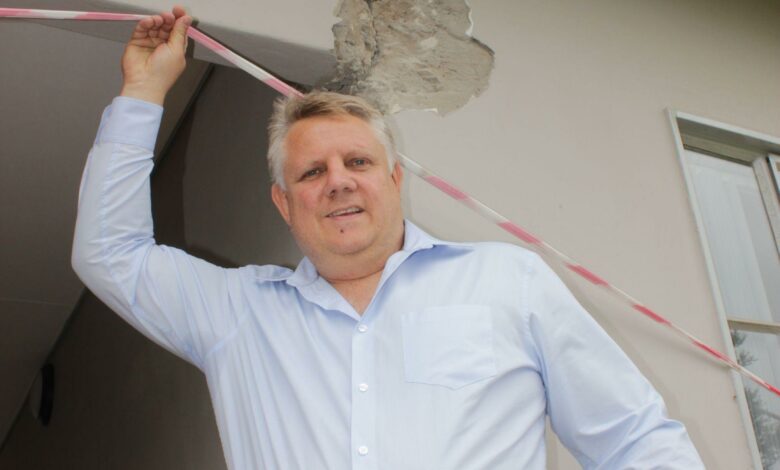
Tshwane has set “reasonable rates and taxes increase” across all core services, an MMC has said.
Finance MMC Peter Sutton was delivering his budget speech on Wednesday, May 24 when he said the official increase for property rates tariff was 5%, electricity 15.1%, water and sanitation 9.2% and refuse removal 6%.
“This will be an average increase of 8.9%.”
The electricity and water increases are directly linked to the Nersa-approved rate and the Rand Water-approved rate.
“The decrease from 18% to 15.1% for electricity reflects the rate finally approved by Nersa – not the 18% Eskom asked for,” he said.
BUDGET SUFFICIENT TO PROVIDE QUALITY SERVICES.
Sutton said the budget was sufficient to provide quality services.
“Much focus will be placed on execution and implementing the budget.”
He said previous service delivery failures were primarily due to lack of execution of the budget and inefficiencies in the system.
The 2023/24 budget is geared towards maintaining financial stability to advance service delivery and drive critical infrastructure investment.
Electricity revenue is the largest component in Tshwane’s operational revenue capacity at a projected R16.6-billion for the next financial year.
Water revenue is projected at R5.7-billion and the bulk water purchases will make up R3.6-billion of the outflow and repairs and maintenance have been budgeted at R135-million.
Sanitation has a projected income of R1.7-billion for the next financial year, while waste collection is projected at an income of R1.8- billion and property rates projected at R9.6-billion in revenue.”
In April, Sutton said the tariff increases previously proposed would not be enough to pull the municipality out of its financial morass.
This was as residents at the time braced for an 18% electricity, 9.2% water and sanitation and 5% property rate increases in July.
However since the public was allowed a say on the proposals, the tariffs slightly decreased.
“The city, however, remains in a cash liquidity challenge,” said Sutton.
“This budget, if implemented, and all parties keep their obligation will not fix this liquidity problem.”
He said the city needed at least three years to “holistically” fix the liquidity challenge.
This would be done by increasing the revenue base and reducing fixed and semi-fixed costs.
Revenue collection has not recovered to pre-Covid levels, while expenditure increased due to tough economic conditions and poor governance decisions.
Before the start of the upcoming financial year, Tshwane tabled an expenditure budget of R44.7-billion consisting of an operating budget of R44.5-billion.
Service charges related to electricity, water, sanitation and refuse removal constitute the biggest component of the revenue basket at R25.9-billion for the 2023/24 financial year.
Tshwane also expects to generate R9.6-billion from property rates in the financial year.
The metro said its challenge, however, remained ensuring that the tariffs are affordable to residents but also covered the cost of service.
Sutton said the metro had not added a margin on tariffs.
In November 2022, the Tshwane metro’s debtors’ book stood at R17.2-billion with residents owing 58.2% of that.
On March 16, the debtor’s book had worsened to R20.8-billion.
Sutton said he expected the metro’s financial health to only improve by 2026 because it had to pay operational expenses while servicing its debt obligations.
The new tariffs come into effect in July.
ALSO READ: Enjoy the sunny side of life with the right sunscreen
Do you have more information about the story?
Please send us an email to editorial@rekord.co.za or phone us on 083 625 4114.
For free breaking and community news, visit Rekord’s websites: Rekord East
For more news and interesting articles, like Rekord on Facebook, follow us on Twitter or Instagram