UP performs first-ever beak transplant
Before the surgery, the bird was struck by a moving car causing a serious head injury that resulted in blindness in its right eye.
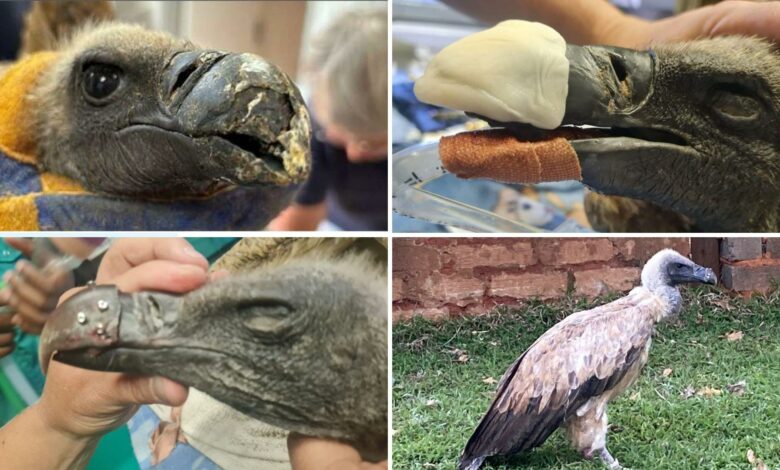
A ground-breaking beak transplant for a vulture was performed by the University of Pretoria’s veterinary team recently.
Before the surgery, the bird was struck by a moving car causing serious head injury that resulted in blindness in its right eye.
According to VulPro CEO Kerri Wolter, a team of veterinarians and nurses attempted on two occasions to perform the surgery but were unsuccessful.
“Following the two unsuccessful attempts, Professor Katja Koeppel decided to use an intact beak from a deceased vulture.
“This would provide the correct shape for tearing meat,” Wolter said.
During its captive time at VulPro, the bird was hand-fed as it was unable to eat on its own.
“The vets found that the prosthetic became unstable once the vulture tried to feed on a carcass.
Fortunately, a matching piece of the beak was obtained from a dead white-backed vulture, which was stored in a freezer for research purposes.
The result has been remarkable. The vulture has shown tremendous improvement,” Wolter added.
Furthermore, the professor said the crushed beak, which was made of keratin, would continue to grow back fully underneath the bit bolted onto it.
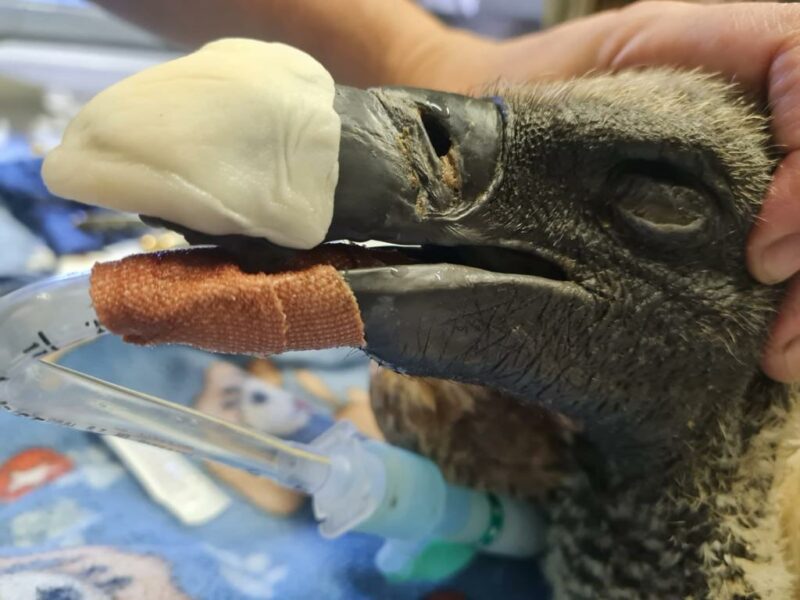
According to the university, the bird would remain captive at the VulPro and monitored continuously.
“Unfortunately, the blindness caused by the head injury means that she will not be able to rely on her otherwise excellent sight any longer, and will not be released back into the wild.”
Although the white-backed vulture is the most widespread vulture species in sub-Saharan Africa, it is listed as an endangered species because of its decreasing population.
These scavengers are vital to the ecosystem as they feed primarily on the carcasses of dead animals, thus clearing the landscape of carrion and helping to curb the spread of dangerous diseases and bacteria.
ALSO READ: Local biker helps family in distress
Do you have more information about the story?
Please send us an email to editorial@rekord.co.za or phone us on 083 625 4114.
For free breaking and community news, visit Rekord’s websites: Rekord East
For more news and interesting articles, like Rekord on Facebook, follow us on Twitter or Instagram