IMESA provides guidelines to control urban flooding
Cities face ongoing challenges with stormwater systems being abused and neglected, resulting in frequent blockages and flooding. The Institute of Municipal Engineering of South Africa has proposed a few solutions in a recently developed guideline tool.
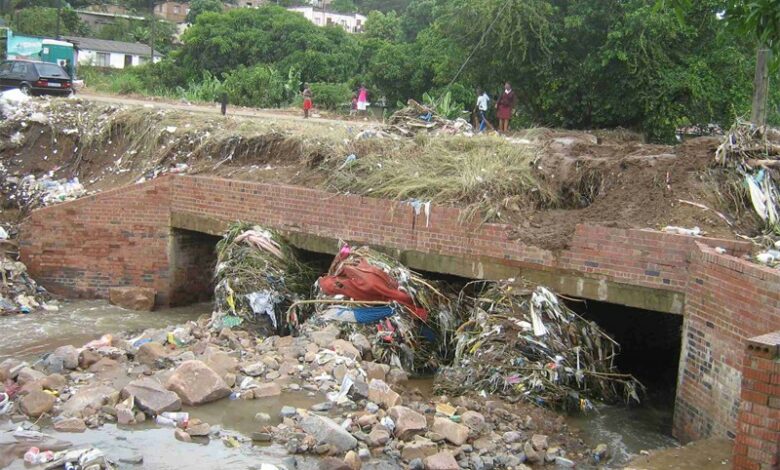
The Institute of Municipal Engineering of Southern Africa (IMESA) recently highlighted a crucial tool in addressing the growing problem of abuse of stormwater systems and brought out a tool for municipalities to cope: The Best Practice Guideline for Design Flood Estimation in Municipal Areas.
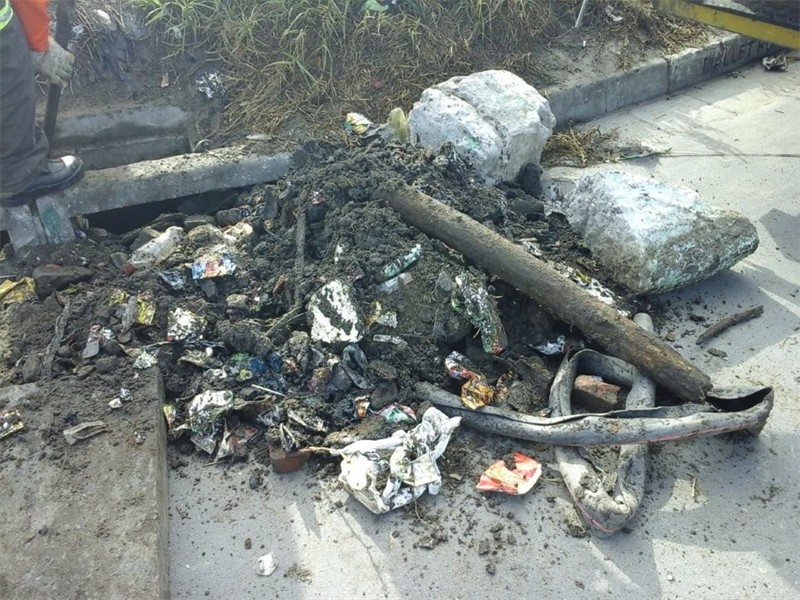
The institute has observed a ‘worrying trend’ where people remove manhole covers and dump waste such as builders’ rubble, tyres, clothing, toys, and even large rocks into stormwater drains.
“When these foreign objects block the pipes, rainwater has nowhere to go. As a result of this abuse, streets can turn into rivers. Homes get flooded. Infrastructure collapses. And the damage can cost billions to repair,” the institute explained.
One of the biggest problems is these blockages often remain unnoticed until the heavy rains reveal the consequences.
The institute pointed out that ‘most municipalities do not have the budget or manpower to check and clean the piped systems proactively, although all efforts are made to clean system inlets, such as catchpits and grids’.
This means flooding is often the first sign that something is wrong, and by then, the damage has already occurred.
Experts at the institute stressed: “This is not just a technical or engineering issue. It is a community one. When residents use stormwater drains as dump sites, the whole community suffers the consequences.”
The reactive nature of flood management is costly and dangerous because the damage is already done by the time help arrives.
Adding to this challenge is South Africa’s rapid urbanisation, which increases paved surfaces like roads and rooftops.
Unlike natural ground, these surfaces do not absorb rainwater but increase runoff, placing additional strain on stormwater systems.
The institute said: “Add to this the growing impact of climate change, with storms becoming more intense and unpredictable, and it is easy to see why local infrastructure is struggling to cope.”
Faced with these mounting pressures, IMESA and the Water Research Commission have developed their best practice guidelines.
This guideline is a crucial step forward, providing municipalities with the tools they need to estimate how much water must be managed during various rainfall events and to design stormwater systems capable of handling these challenges.
The guideline supports better planning for future developments, helping municipalities’ design systems that can cope with increasing volumes of runoff and prevent flooding.
It also aids careful infrastructure planning in flood-prone areas to avoid disasters, as well as in managing data and records to prepare for future risks.
Importantly, the guidelines encourage stronger collaboration within municipalities, especially between town planning and engineering departments, ensuring that urban growth does not create long-term drainage problems.
The guidelines bridge the gap between academic expertise and practical implementation, offering a standardised approach to flood estimation and risk assessment that was previously lacking.
While municipalities hold responsibility for maintaining stormwater infrastructure, the institute also reminded residents of their role.
The institute has advised people not to dump waste into drains or remove manhole covers and urges reporting of such incidents to local authorities.
Keeping gutters and street drains free of leaves and debris also prevent blockages.
– Access the guidelines here: https://www.wrc.org.za/wp-content/uploads/mdocs/TT%20921%20final%20web.pdf
Do you have more information about the story?
Please send us an email to bennittb@rekord.co.za or phone us on 083 625 4114.
For free breaking and community news, visit Rekord’s websites: Rekord East
For more news and interesting articles, like Rekord on Facebook, follow us on Twitter or Instagram or TikTok.