Tshwane 2026 election: 79 parties to compete on crowded ballot
Female voters dominate the Tshwane voters' roll as 79 political parties prepare to contest the municipal election on November 4.

More than 6 000 candidate entries have been certified to contest seats in the Tshwane metro ahead of the municipal elections.
The Electoral Commission of South Africa (IEC) published its certified candidate register on September 16, recording 79 political parties standing across the municipality. The figures, drawn from the IEC’s certified Gauteng candidate register, include ward and proportional representation (PR) candidates and parties.
The Tshwane metro has 107 wards. The certified list contains candidates contesting ward seats as well as candidates appearing on PR party lists. The council also has seats for 107 PR-councillors.
One of the most notable features of the Tshwane election is the number of parties contesting the ballot.
The IEC candidate list for Tshwane includes parties such as the ANC, Patriotic Alliance, UDM, ActionSA, African Independent Congress, Minority Front, South African Communist Party and United Independent Movement. Lesser-known groups on the ballot include the Active African Christian United Party, Know Your Power Party and the Organic Movement Party.
This means voters in the metro will encounter a crowded electoral field, particularly on the PR ballot.
Ward candidates compete to represent individual wards, while PR candidates are connected to the allocation of council seats according to parties’ share of the vote.
For voters, the large number of candidates makes it particularly important to establish which ward they live in and to check the certified candidates and party lists relevant to their ballot.
Electorate profile
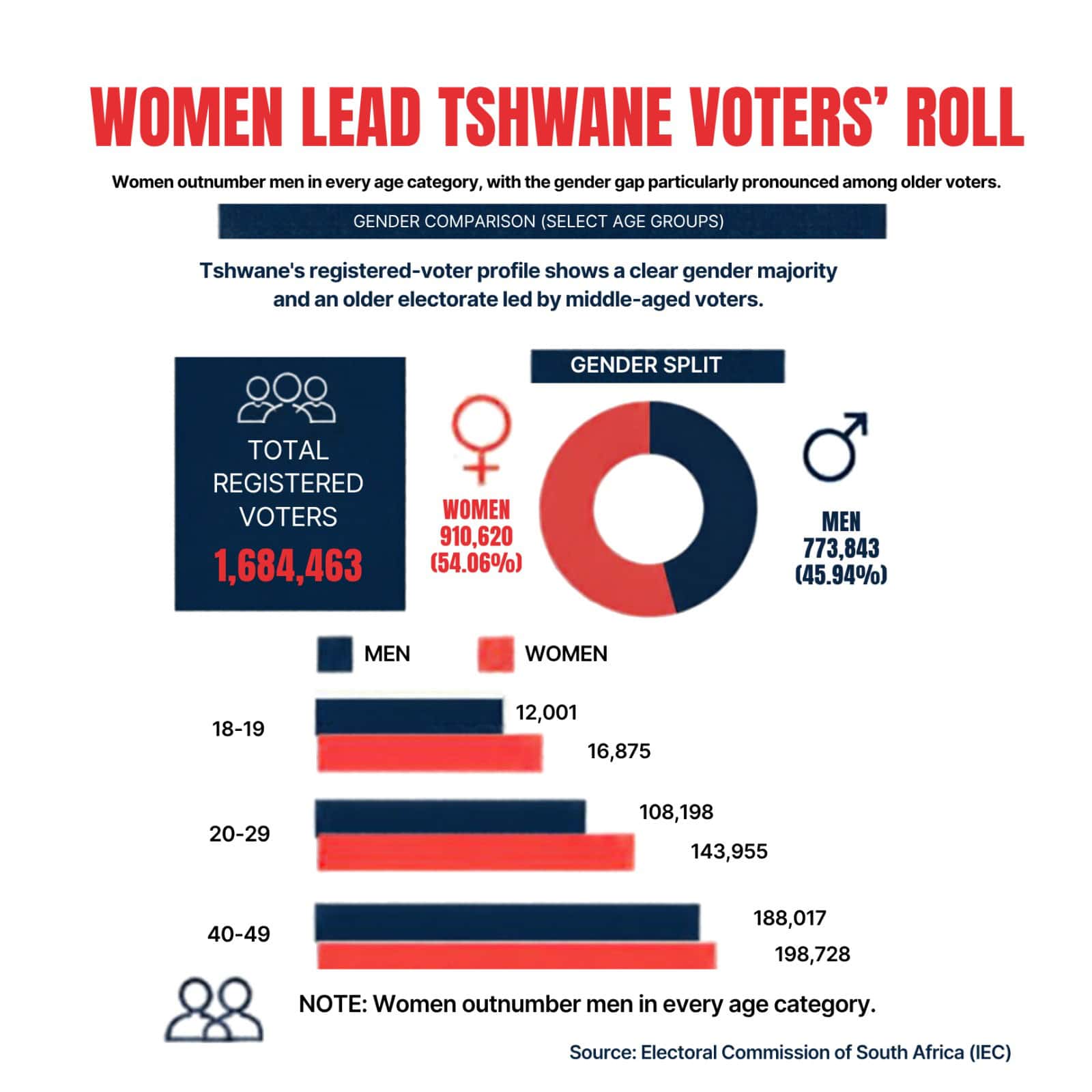
The metro has 1 684 463 registered voters, with women making up the majority of the voters’ roll, according to the IEC.
Women account for 54.06% of the ballot, compared with 45.94% of men.
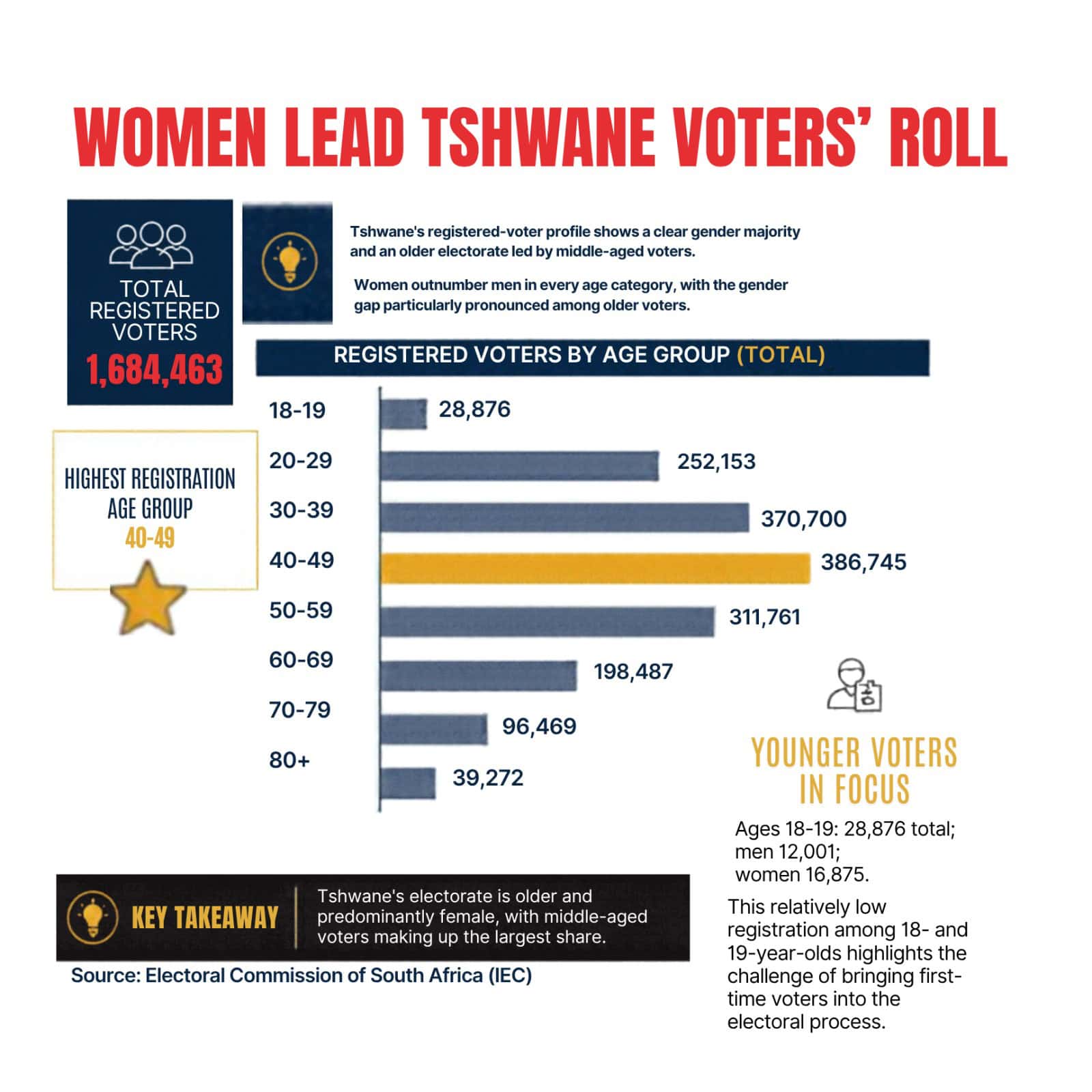
The figures show a notable gap among younger voters. The Tshwane metro has 28 876 registered 18- and 19-year-olds, comprising 12 001 men and 16 875 women.
Registration in the metro is highest among middle-aged residents, with the 40–49 age group accounting for 386 745 registered voters, 188 017 men and 198 728 women.
Older residents remain a significant part of the voters’ roll, with 96 469 people aged 70–79 registered, compared with 39 272 voters aged 80 and above.
Women outnumber men in every age category, with the gender gap particularly pronounced among older voters.
Overall, the figures paint a picture of a Tshwane electorate that is older and predominantly female, with middle-aged voters making up the largest share of those registered.
Voter perspectives
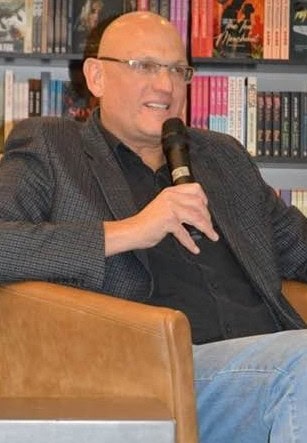
Photo: Elize Parker
Francois Bekker, a book reviewer from Pretoria east, says every voter should go to the polls. “We cannot allow Pretoria to end up in the same state as Johannesburg,” he says.
“The smaller niche parties make the biggest and most appealing promises because they know they are not going to govern, and nobody is going to hold them accountable. Service delivery is what it is all about: water in the taps, reliable electricity supply and streetlights that work. Most certainly, every one of us must go and vote.”
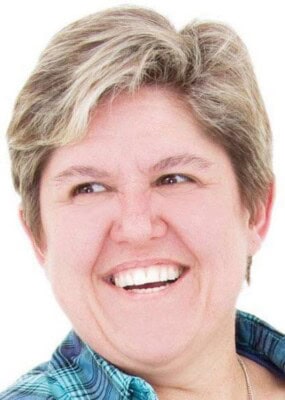
Photo: Supplied
Madeleine Carlsson, a technology specialist from Pretoria east, believes the decline of Pretoria began with coalition governments. “To prevent it from happening again, we as voters need to unite in large numbers behind one specific party so that party wins more than 50% of the council seats,” she says.
“Vote for the party that has knowledge of municipal government and a genuine love for the city.”
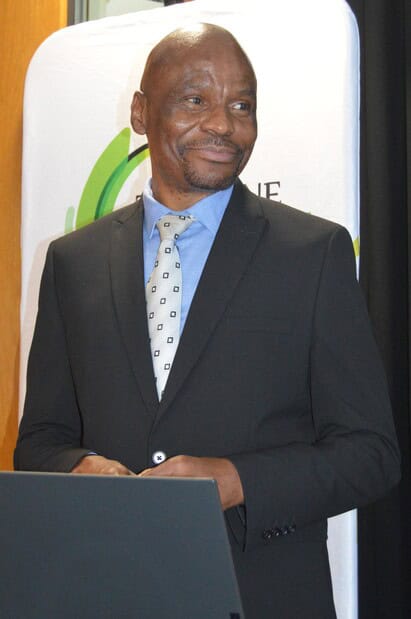
Photo: Elize Parker
Nkosinathi Njoko, COO of the Pretoria Chamber of Commerce and Industry, says it is important to business people that the right local government be in place, which is why he encourages everyone to vote. “It is important that we have good infrastructure and stability to attract investment so that jobs can be provided and the environment is safe for business,” he says.
Liesl Myburgh, an activist from Eersterust, believes the local election is arguably the most important election because it affects residents most directly. “Yes, I will definitely vote, and it is so important to vote correctly because for years now we have been getting the short end of the stick as residents of Eersterust,” she says.
“The critical question is who is truly capable and competent enough to turn words into action. Service delivery must definitely change to a standard that restores a sense of pride, something that is completely lacking at the moment.”
Tremane Abdul, from the Moot, says people in her age group want to see whether a change in government could make a real difference. “My age group in their 30s wants to vote to see whether, if we get another party in power, there can really be a change,” she says.
“I believe it can work because everyone is so disappointed now that we need hope, and a change could bring that about so that we can have hope again.”

Ziphokazi Nxumalo, an administrative manager, says she is saddened when she hears people arguing that they should not vote because their vote will change nothing.
“To vote in South Africa is a right that people have died for,” she says.
“I encourage everybody to go online and read the manifestos of the parties and make up their own minds about who to vote for. You should not stay away because you are disappointed in people in power.”
Do you have more information about the story?
Please send us an email to bennittb@rekord.co.za or phone us on 083 625 4114.
For free breaking and community news, visit Rekord’s websites: Rekord East
For more news and interesting articles, like Rekord on Facebook, follow us on Twitter or Instagram or TikTok or WhatsApp Channel