Stricter air quality by-law enforced to protect residents from pollution
The metro has strengthened its air quality management by-law, introducing stricter rules on vehicle emissions, fuel-burning appliances, and open burning.
The Air Quality Management By-law has been amended to better safeguard residents’ health and reduce pollution across the metro.
The updated by-law, originally implemented on March 2, 2022, and officially gazetted on January 29 this year, introduces stricter measures aimed at curbing harmful emissions and holding both individuals and businesses accountable.
The by-law reinforces the principle of duty of care, placing responsibility on every resident and business to ensure their activities do not cause, or risk causing, air pollution.
MMC for Environment and Agriculture Management Obakeng Ramabodu said the amendments empower the city to act proactively to prevent potential pollution sources before they compromise air quality.
According to Ramabodu, the by-law states: ‘Everybody has a responsibility to ensure their activities will not cause or are likely to cause air pollution’.
“The provision empowers the city to act proactively, ensure that potential sources of pollution are addressed before they adversely impact air quality,” he said.
“The by-law further outlines specific controlled activities that are now subject to stricter regulation.”
Ramabodu said the specific controlled activities include vehicle and stack emission, fuel burning appliances and annual emissions reporting.
Mandatory maintenance is now required of compressed ignition-powered vehicles to reduce the emissions of dark smoke and toxic gases through emissions roadside testing.
Dark smoke from stacks or chimneys of any fuel-burning appliance on any premises, whether domestic, business or industrial, is prohibited.
Existing fuel-burning appliances need to be registered. The closing date for registration for such appliances with a net heat input of 2MW to less than 50MW, like spray-painting facilities, was March 3. The city calls on all facilities that have not registered yet to contact the relevant authorities to avoid penalties.
All fuel-burning appliances need to report their annual emissions to the city’s Agriculture and Environmental Management Department. The first annual cycle started on March 1 and will end on February 28, 2026.
Ramabodu said facilities must keep records of their fuel types, quality, and quantities for reporting purposes.
He said the city calls on all facilities that have not registered yet to contact the relevant authorities to avoid penalties.
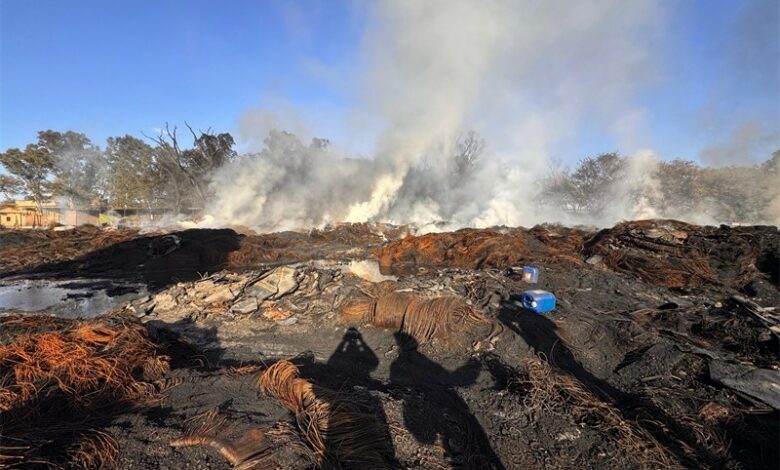
Open burning on any property without written authorisation from the council is prohibited. Additionally, the by-law prohibits the burning of domestic, garden, and industrial waste such as tyres, plastic, and rubber products, addressing a major source of harmful particulate matter and toxic emissions.
Operators must implement dust suppression measures.
Ramabodu stressed that the metro remains committed to improving air quality and promoting sustainable urban living.
“These amendments align with national environmental standards and reflect the municipality’s dedication to public health and ecological preservation.”
He urged residents and businesses to familiarise themselves with the updated by-law and take active steps to comply.
“The city will continue to provide guidance and enforce the regulations to ensure a cleaner, healthier Tshwane for all.”
The announcement comes amid growing public concern over air quality.
Greenpeace Africa recently staged a protest outside the Department of Forestry, Fisheries and the Environment (DFFE) in Arcadia, handing over a memorandum demanding urgent action to protect citizens’ constitutional right to clean air.
Activists criticised the department’s repeated exemptions granted to Eskom, arguing that they undermine both public health and the country’s energy transition.
Greenpeace Africa spokesperson Cynthia Moyo said: “Granting Eskom repeated exemptions is a direct betrayal of public health and a dangerous derailment of our urgent energy transition.”
The organisation cited research showing that air pollution causes more than 42 000 premature deaths annually in South Africa, as well as severe impacts on infants and children, including underweight and preterm births.
Greenpeace argued that enforcement is still far too weak, and that existing plans often fail to materialise into real change.
In response, departmental spokesperson Shelton Mollentze defended the exemptions as temporary, conditional, and consistent with the National Environmental Management: Air Quality Act.
“These are time-bound and come with strict conditions. They are part of our commitment to transition to renewable energy while honouring our international obligations,” he said.
The department also confirmed it is working with the South African Medical Research Council to establish more reliable data on the health effects of air pollution.
For further details, contact the Environment and Agriculture Management Department at 012 358 5599 or email Tshifhiwag@tshwane.gov.za / mabailer@tshwane.gov.za.
Do you have more information about the story?
Please send us an email to bennittb@rekord.co.za or phone us on 083 625 4114.
For free breaking and community news, visit Rekord’s websites: Rekord East
For more news and interesting articles, like Rekord on Facebook, follow us on Twitter or Instagram or TikTok.