Unisa advances in global ranking, highlighting its research and innovation
The improved Shanhai Ranking signals Unisa’s strengthening role in global academia, celebrating both staff and student efforts in research and innovation.
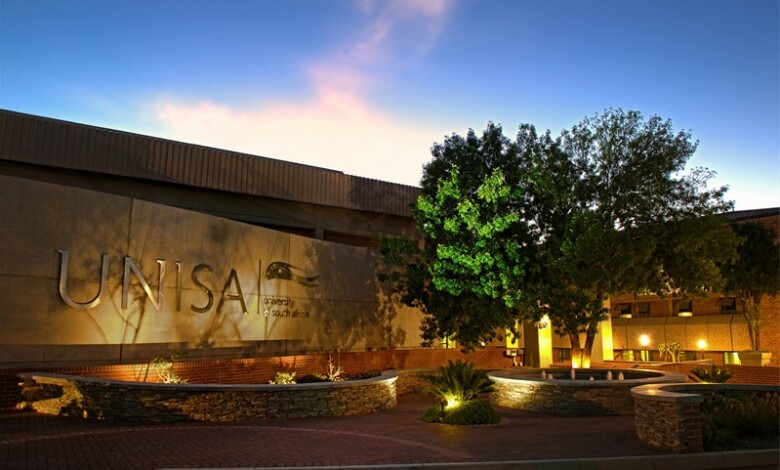
The University of South Africa (Unisa) was one of only three universities to improve its ranking in the 2025 Academic Ranking of World Universities (ARWU).
The ARWU (also known as the Shanghai Ranking) is a globally recognised ranked list of the best international universities worldwide.
It was first released by the Centre for World-Class Universities at the Shanghai Jiao Tong University in 2003.
Unisa has moved up to the 801–900 range, placing the institution among the eighth-best universities in the country and the top 1 000 universities globally.
Unisa had previously placed in the 901–1 000 range in 2024.
The criteria used by ARWU to rank world universities are the number of staff and alumni who have won Nobel Prizes and Fields Medals.
The number of highly-cited researchers in 21 broad subject categories, and the number of papers published in the journals Nature and Science, is also examined.
The number of papers issued by the university that are indexed in either the Science Citation Index (expanded) or the Social Sciences Citation Index is also a key factor in ranking university performance.
The final criterion is the per capita academic performance of the institution.
In the top 500 group are the University of Cape Town, the University of the Witwatersrand, Stellenbosch University, and the University of Pretoria.
The top 500–1 000 band includes the University of Johannesburg, the University of KwaZulu-Natal, North-West University, and Unisa.
Speaking at the Unisa Catalytic Niche Area Research Symposium, Professor Puleng LenkaBula, the institution’s Principal and Vice-Chancellor, expressed her gratitude to staff and students for the university’s improvement.
She especially applauded faculty members involved in the university’s catalytic niche areas.
According to the Vice-Chancellor, Unisa’s continued good ARWU performance is very much an indicator of the university’s focus on ten catalytic niche areas.
These areas are marine studies, aviation and aeronautical studies, automotive studies, energy studies, space studies and the Square Kilometre Array. Further, there are also the study of the Fourth Industrial Revolution and digitalisation, biotechnological studies, health and pharmaceutical studies, Feminist/Womanist/Bosadi theory and study, and finally student support and co-curricular activities.
These areas are seen as reaffirming the university’s commitment to excellence in the areas of teaching and learning, research and innovation, and engaged scholarship, as well as showing the global impact of the institution.
“These areas contribute to rethinking and reclaiming Africa’s futures. Unisa’s roots are embedded in African knowledge, social justice and academic excellence, enabling us to remain steady, even as we navigate the shifting global dynamic,” Professor LenkaBula said.
Do you have more information about the story?
Please send us an email to bennittb@rekord.co.za or phone us on 083 625 4114.
For free breaking and community news, visit Rekord’s websites: Rekord East
For more news and interesting articles, like Rekord on Facebook, follow us on Twitter or Instagram or TikTok.