Conference held to launch TUT campus safety forum
Authorities, students, and university leaders have joined forces to strengthen campus safety and to make campuses safer places for learning.
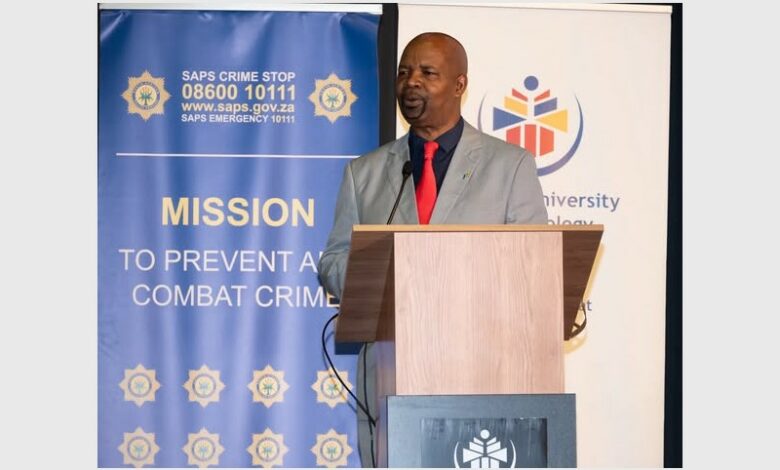
The Community Campus Safety Forum (CCSF) was recently launched at Tshwane University of Technology (TUT).
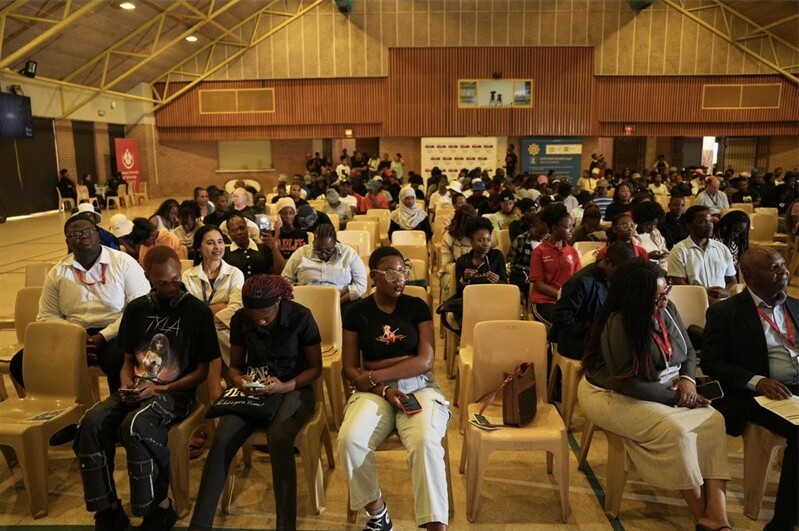
SAPS and the Department of Higher Education and Training (DHET) attended the conference at Theuns Bester Hall from October 6–7.
The initiative stems from the need to bolster campus and student safety, with the launch being themed ‘Building safer campuses and safer communities’.
CCSFs serve as platforms where campus security, university administration, students, law enforcement and other stakeholders can collaborate in identifying and addressing campus-related crimes and issues.
The two-day event saw several speakers from different organisations and disciplines come together to give students an outlook on what this forum will entail and why it was necessary to form.
Dr Mercy Sondlo, Senior Research Practitioner at TUT, addressed the urgent challenges and risk factors that gender-based violence and femicide (GBVF) can impose.
“GBVF is the most pressing human rights and social justice issue of our time. It disproportionately impacts women and girls, eroding the moral fabric of our communities.
“The alarming truth? Too many of us still don’t fully grasp what GBVF entails, and that’s where change begins. Knowledge is power: the more we talk about it, the more awareness we build to drive real action,” Sondlo said.
The Civilian Secretariat for Police Services, Teka Molatsa, addressed the importance of student safety and collaboration between SAPS and institutions of higher learning.
Molatsa noted the rising levels of crime both on and off campus, urging students to exercise their constitutional rights responsibly during protests.
“Our mandate is to ensure a good working relationship between the police and the community. Today, we are here to make sure students are safe and able to learn without fear.
“You have the right to protest, but do not infringe on the rights of others or destroy property. Protect your rights without endangering your future. A criminal record can close doors to employment,” Molatsa said.
He further spoke about the growing mistrust between communities, students, and police, emphasising the need to rebuild that relationship through consistent engagement.
Vice-chancellor and Principal Professor Tinyiko Maluleka said the collaboration among the university, police and DHET to devise ways to enhance campus safety is necessary for the institution’s over 60 000 students.
“Over the past two decades, we have seen a steady deterioration of safety in and around South African university campuses.
“Three decades ago, the Muckleneuk campus at Unisa, where I worked and studied, had no perimeter wall or gate; you could walk across from any direction.
“The same applied to UP, where I also spent some time, among other Gauteng universities. If you go back to 1995, 1996, you wouldn’t find perimeter walls; it was a time when safety was taken for granted.
“Since then, over 20 years later, these campuses have rapidly been walled and fenced up, thanks to safety concerns and many instances of violence experienced in these campuses.
“Where the walls and fences can keep outsiders out, the walls and security fences are ineffective from the violence, which has claimed lives from inside the campuses,” Maluleka said.

Three standing police officers salute while singing the national anthem alongside several other guests.
Maluleka believes that the CCSF will help in quelling a culture of fear among students (especially female students) that has caused them to be constantly on alert, even while on campus.
He also encouraged students to be active, vigilant supporters of the CCSF and for the forum to use the technologies and bodies established to address safety, especially in high-risk areas.
During his keynote address, Major General Thokozani Mathonsi raised concerns over the many crimes on campuses that go unreported, reminding students that prevention must become a shared priority.
“We need to focus on preventing incidents before they happen. We must adopt a more proactive, robust, and holistic approach to safety. We have witnessed gruesome acts of criminality in institutions across the country, and we do not want to see that here or anywhere else.
“Crime has the potential to derail learning.”
Mathonsi listed issues such as drug abuse, gang activity, alcohol misuse, and taxi violence that affect students.
“Sadly, many of these crimes are committed by young people who should be in classrooms, not on the wrong side of the law,” Mathonsi said.
The general stressed that the era of social media means a single act of violence can spread nationwide in seconds, making prevention more critical than ever, calling for a united front against these risks.
“Universities cannot stand on the sidelines. Criminal infiltration of campuses is a real threat, and we need a collective response. Students are not the leaders of tomorrow; they are the leaders of today.
“Our mandate is to protect students and bring perpetrators to justice, but this requires collaboration from everyone: SAPS, university management, security companies, and the broader community. A launch like this means nothing without action. This structure is about proactive crime prevention, not reaction,” Mathonsi said.
Do you have more information about the story?
Please send us an email to bennittb@rekord.co.za or phone us on 083 625 4114.
For free breaking and community news, visit Rekord’s websites: Rekord East
For more news and interesting articles, like Rekord on Facebook, follow us on Twitter or Instagram or TikTok.