Wonderboom Airport set for major upgrade under master plan
The metro says it will keep the airport under public ownership while partnering with investors to boost aviation, logistics, and tourism.
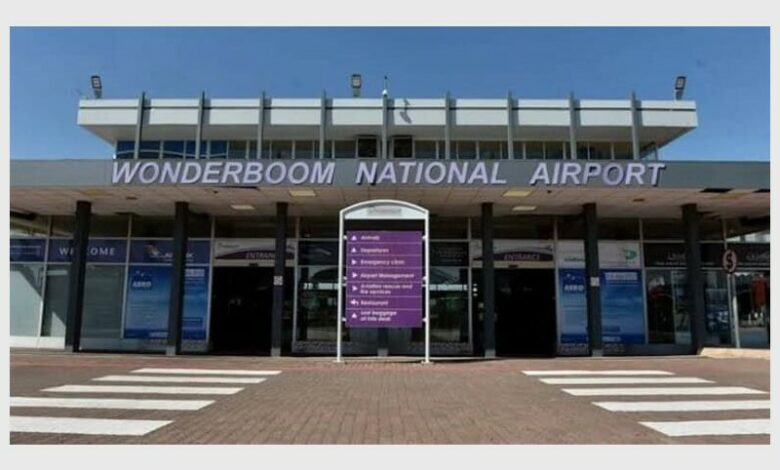
The Tshwane coalition government has announced it expects to finalise a master plan for Wonderboom National Airport by December, with the aim of turning it into a thriving logistics and economic hub.
The airport, which has been operating at a loss for several years, will not be sold. Instead, the city plans to attract partners and investors to support operations and improve long-term sustainability.
“The goal is to revive Wonderboom Airport and unlock its economic potential while keeping it firmly in public hands,” said MMC for Roads and Transport, Tlangi Mogale.
“We want to attract private investment to stabilise and grow the airport, create jobs, and improve connectivity without having to sell this strategic asset.”
Opposition parties have called for more clarity on the financial implications and specific turnaround strategies, including the scale of losses and timelines for implementation.
Mogale confirmed the metro is in discussions with Airports Company South Africa regarding upgrading the airport to reintroduce commercial flights between Pretoria and Cape Town.
Flights between these cities were halted in 2018 due to profitability concerns, and over the years, various stakeholders have suggested privatising the airport.
“There are no plans to sell or privatise Wonderboom Airport,” Mogale emphasised.
“We intend to retain ownership and work with investment partners to stabilise operations and ensure long-term sustainability.”
With Tshwane situated along the northern economic sector and within Gauteng, the province responsible for over 34% of South Africa’s Gross Domestic Product, the airport offers a link to trade, tourism, and transportation networks.
The metro believes that investing in Wonderboom will open doors for partnerships in aviation training, aerospace maintenance, and logistics operations.
The metro has budgeted R7.2-billion for the airport upgrade. The master plan will cover the newly expanded design of the airport as an inter-modal transport facility.
As part of the upgrades, plans are in the pipeline for an expanded primary runway and a parallel secondary runway for general aviation operations and an expanded network of taxiways.
A new terminal building, control tower, multipurpose centre for aviation training, diplomatic terminal, and cargo handling facilities will be built.
A plan to include a Gautrain rail network station and other public transport facilities is also being discussed.
Mogale said the reimagined Wonderboom National Airport will be capable of handling both general aviation and commercial scheduled passenger and cargo traffic, with the primary objective of stimulating trade and tourism within the city.
“The master plan ensures that Wonderboom Airport will remain a public asset,” Mogale said.
“Even as we explore private investment, the airport will stay under municipal ownership while operating with the flexibility and efficiency of a private enterprise.”
She said to achieve this, the airport will be transformed into a municipal entity with its own legal status and corporate governance structure.
“This will allow it to trade independently from the municipal service delivery framework, enabling focused oversight and expert management. The airport will also consider Build-Operate-Transfer (BOT) or Public-Private Partnership (PPP) models to attract private equity while remaining a public asset,” Mogale explained.
She said improvements at the airport are expected once the necessary capital has been secured, which will occur after the financial due diligence by the transaction advisor, who is yet to be appointed.
“The transaction advisor will be appointed following the finalisation and adoption of the master plan, expected in April 2026.”
Mogale said financially, the airport has shown significant improvement.
Net loss margins have decreased from -230% in 2020/21 to -70% in 2024/25, with actual net losses dropping from R46-million in 2020/21 to R28-million in 2024/25.
She explained this demonstrates the success of the airport turnaround plan and the decreasing dependency of the airport on the municipal fiscus.
Mogale added that revenue generation has also increased by 19% year-on-year.
“Our vision is for Wonderboom Airport to become a world-class facility that benefits Tshwane economically and socially,” Mogale said.
“This is about more than flights, it’s about trade, tourism, and jobs, and ensuring that the airport operates efficiently with focused governance to attract the right investment partners.”
Mogale told Rekord the deadline for finalising the airport master plan in December 2025 remains unchanged, and substantial work on detailed designs has already been undertaken.
“Once implemented, the airport is expected to serve as a critical economic asset for the city, operating independently as a municipal entity while stimulating growth in both aviation and commercial activity.”
Do you have more information about the story?
Please send us an email to bennittb@rekord.co.za or phone us on 083 625 4114.
For free breaking and community news, visit Rekord’s websites: Rekord East
For more news and interesting articles, like Rekord on Facebook, follow us on Twitter or Instagram or TikTok