Typhoid cases stabilises as mayor faces criticism
While the outbreak has stabilised, both the city and the national government are under pressure to address long-term infrastructure problems that have made communities like Hammanskraal vulnerable to water-borne diseases such as typhoid fever

On November 12 Tshwane Mayor Dr Nasiphi Moya visited Jubilee Hospital in Hammanskraal to assess patients diagnosed with typhoid fever. The visit followed a sudden rise in cases between October 13–19.
Moya met medical staff and patients, thanking healthcare workers for their quick response to the outbreak.
Before the antibiotic era, the disease had a fatality rate of up to 20%. Today, it is treatable, and in South Africa, it is a notifiable condition because of its outbreak potential.
“I am grateful to our dedicated teams at Jubilee Hospital and to the metro’s health and environmental services who acted swiftly to contain the spread of typhoid fever,” she said.
“Today, only three patients remain admitted, and they are clinically stable. We are witnessing a clear stabilisation of cases, which is a positive sign for our city.”
According to Moya, 52 typhoid cases have been reported in Pretoria this year, with the last new cases recorded on November 5.
Recent water quality tests showed no presence of Salmonella Typhi, the bacteria that cause typhoid fever, in any municipal or tanker-supplied water.
“All treated water supplied to residents continues to meet the South African National Standard for drinking water quality,” she added.
In Pretoria, two problem clusters have been identified, according to the National Institute of Communicable Diseases (NICD): Bronkhorstspruit and Hammanskraal.
The NICD reported between July and October, 14 cases were linked to the Bronkhorstspruit cluster, averaging one case per week. Whole genome sequencing of 11 isolates showed they were closely related, suggesting a common infection source. Most cases (57%) were in females and individuals under 15 years of age.
In Hammanskraal, 11 cases emerged between September and October, with a sharp rise during epidemiological week 42, indicating a point-source outbreak.
Ten cases were reported at Jubilee Hospital within four weeks, and one at a private hospital. Males made up 82% of cases, with children under 15 accounting for the majority.
The contrasting patterns show persistent transmission in Bronkhorstspruit, and a sudden spike in Hammanskraal highlights differing outbreak dynamics under investigation by health authorities.
Metro health officials, together with the NICD, continue to investigate both clusters.
The DA welcomed the mayor’s hospital visit but questioned her administration’s commitment to solving Hammanskraal’s water problems.
“The DA notes the visit by the mayor to Jubilee Hospital, an endeavour to play oversight and engage patients affected by typhoid fever,” said DA councillor Katlego Makgaleng.
“We encourage the mayor to be open and transparent about her visit and share full details of her oversight. The same opportunity to gain access to the hospital was denied to DA councillors by the CEO of the hospital.”

The DA criticised Moya for using the visit for publicity.
“The mayor’s visit should not only be for cameras, as she is known for posing for social media photos and videos, but should be a meaningful visit that will yield results on the ongoing typhoid fever challenges,” said Makgaleng.
He believes that completing the Magalies Water package plant project, started under former mayor Cilliers Brink, would provide a lasting solution to Hammanskraal’s water crisis.
“It is clear that under Moya’s administration, there is no appetite for the completion of this project.
“The DA questions why Mayor Moya has stalled the completion of the package plant project, leaving residents vulnerable to water-borne diseases like typhoid fever.
“It is unacceptable that the administration has failed to prioritise the health and well-being of Hammanskraal residents,” he said.
The DA demanded a clear timeline for completion and promised to continue holding the mayor accountable.
“The people of Hammanskraal deserve better than empty promises and photo opportunities. They deserve access to clean water, sanitation, and healthcare,” he concluded.
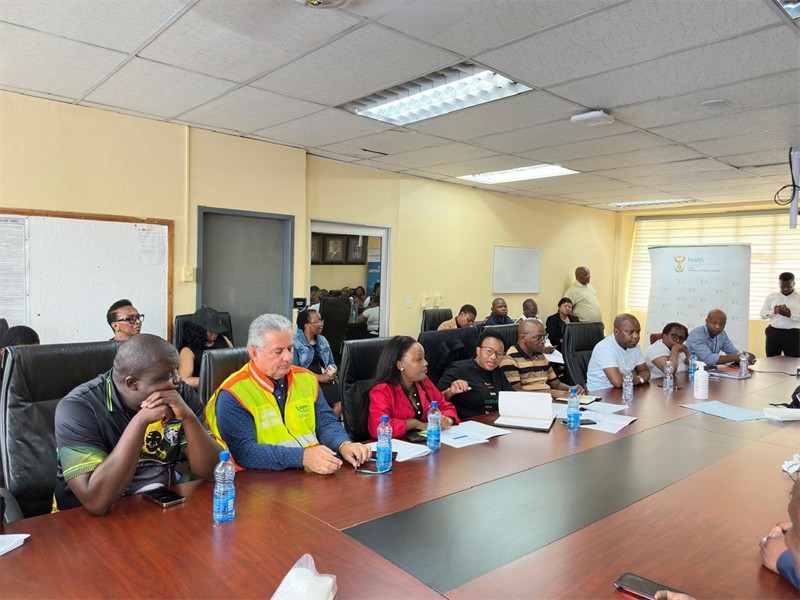
The Department of Water and Sanitation (DWS) has praised the co-operation between the metro, DWS and the NICD in responding to the outbreak.
Department spokesperson Wasane Miyasa said to Rekord that investigations show no link between the city’s water supply and the outbreak.
She said the department has asked the Water Research Commission and the Council for Scientific and Industrial Research to conduct independent monitoring and testing, which is currently being undertaken.
She warned the public against drinking untreated water from rivers, dams, and streams, and urged residents to wash their hands with soap and store water safely.
Typhoid fever, also known as enteric fever, is caused by Salmonella enterica serotype Typhi or related Paratyphi strains.
It spreads through contaminated food or water and remains a threat in areas with poor sanitation.
Symptoms include fever, headache, stomach pain, nausea, vomiting, constipation or diarrhoea, and sometimes a slower-than-expected heartbeat despite high fever. Without treatment, typhoid can lead to complications such as intestinal perforation or sepsis.
From January 1 to October 31, 147 laboratory-confirmed cases of enteric fever were reported across eight provinces. Gauteng recorded the most cases (59%), followed by the Western Cape (16%) and KwaZulu-Natal (10%). This year’s total already exceeds the 139 cases reported in 2024.
Do you have more information about the story?
Please send us an email to bennittb@rekord.co.za or phone us on 083 625 4114.
For free breaking and community news, visit Rekord’s websites: Rekord East
For more news and interesting articles, like Rekord on Facebook, follow us on Twitter or Instagram or TikTok.