Emotional readiness key as children enter first school year
According to Dr Elda Thiart, early familiarity with school routines, supportive conversations and gradual independence help children adapt with confidence.
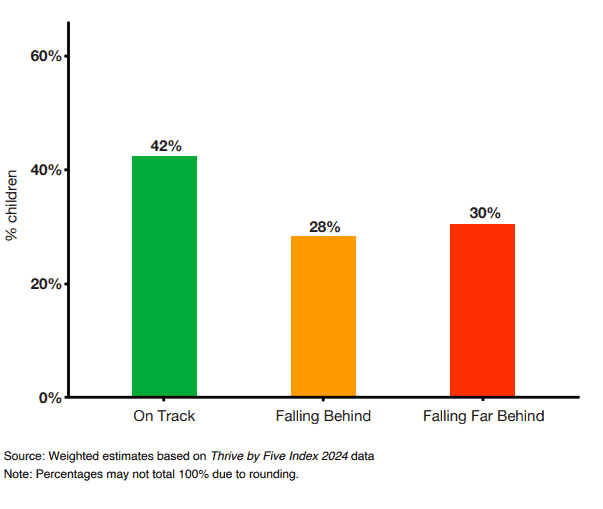
Only four in 10 children in South Africa’s Early Learning Programmes are prepared for school, according to the latest Thrive by Five Index.
The national study, led by the Department of Basic Education and co-ordinated by DataDrive2030, shows that most four-year-olds lack the basic developmental skills needed for Grade 1.
The index tracks children’s progress across all nine provinces.
It also highlights a clear gender gap: 48% of girls are ‘On Track’ compared with just 37% of boys.
Far fewer girls fall ‘Far Behind’ (24%) than boys (35%), a pattern seen across all developmental areas except gross motor skills.
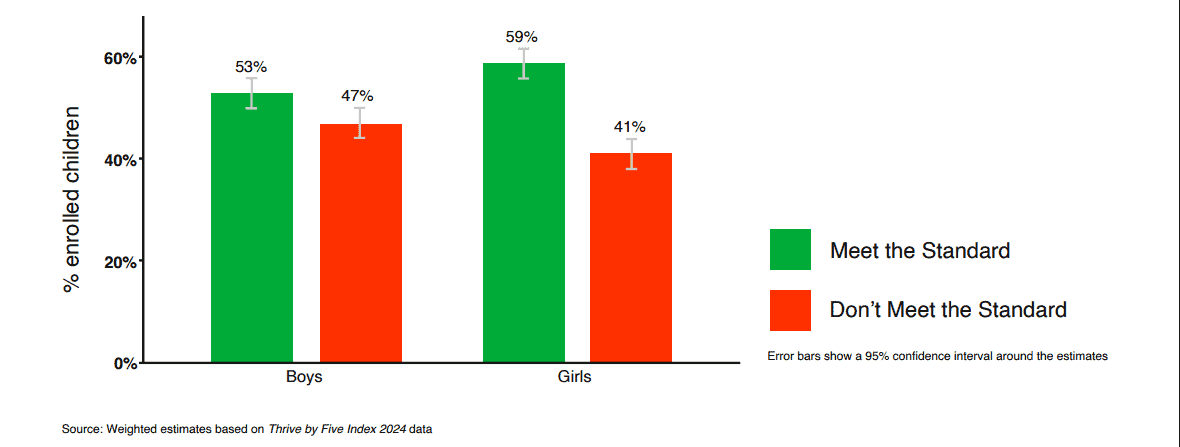
One of the interesting statistics shows that only 53% of boys and 59% of girls are emotionally ready for their first year in school.
One of the ways this can be mitigated is to make sure the first day and the period before that runs smoothly.
But how can parents make sure that their children will be able to cope with the first day of Grade 1, because, as these figures show, it is much more than just a date on the calendar?
According to Dr Elda Thiart, professional adviser for early childhood education at the South African Teachers’ Union, this moment should be “approached with warmth, honesty and practical planning, so that a child steps into Grade 1 with confidence rather than uncertainty”.
She explains that preparation is not a once-off activity, but a gentle process that unfolds over weeks and months before the big day arrives, and for this reason, the emphasis should also be on emotional preparedness.
Many children who attended Grade R at the same primary school already have a sense of familiarity with the setting. They know the layout of the grounds, recognise school routines and understand the flow of the day.
This early exposure helps reduce anxiety and builds emotional readiness naturally. Still, even with this advantage, parents play a key role in reinforcing emotional security.
When a child has visited the school with a parent beforehand, the first day feels less like a plunge into the unknown. They have a mental picture of their classroom, teacher and playground.
Thiart notes that “children cope better when they can imagine the place they are going to. Predictability is one of the strongest foundations for emotional safety”.
She advises parents to talk openly during the holidays about what Grade 1 will be like, as this can also ease tension.
“Describe the shape of a typical school day, from morning drop-off to the moment they return home. Speak with enthusiasm about new friends, new learning and the wonderful discoveries that lie ahead,” advises Thiart.
She believes shopping for school uniforms can become part of this positive anticipation.
Seeing a child in their oversized first-day outfit is often an emotional moment for parents, and Thiart encourages families not to leave this experience for the hectic first morning.
“Make it part of the adventure,” she says. “Let the child try on their new clothes ahead of time so it becomes something exciting rather than overwhelming.”
She believes empowering children to join in the preparation strengthens a sense of ownership.
Packing their own school bag, choosing where to place their stationery or helping prepare lunchboxes are small but meaningful steps. These actions help them feel involved rather than passive in the process.
Just as important to her is offering reassurance.
“Remind your child that you will fetch them on time and explain calmly how the pick-up works.”
Children feel safe when adults speak truthfully and answer questions without brushing aside worries.
Thiart emphasises that “honest answers build trust. Children are not comforted by vague promises. They are comforted by clarity”.
She subscribes to the thought that encouraging independence in daily life further supports emotional readiness.
“Let your child dress themselves, manage their shoes, open and close their lunch containers and help tidy their belongings. Praise their efforts, not only the results. The shift to Grade 1 is about embracing a journey, and reinforcing the process builds resilience.”
According to her parents, they can also normalise emotions by acknowledging that it is okay to feel nervous. A calm parent sets the tone. Children read their caregivers’ emotional cues instinctively, so adults should remain steady even if they feel sentimental.
Research shows that developing social confidence can also start long before school begins.
“Playdates with future classmates help establish early friendships, making the first day feel less intimidating. Play pretend games like ‘school-school’, taking turns being the teacher and practising routines such as lining up or asking for help.”
Thiart warns that the teacher should never be used as a threat, as school should be associated with belonging and safety, not fear.
She adds that a simple, predictable goodbye ritual on the first morning, such as a hug and a short phrase, works wonders in creating a secure attachment moment that helps a child transition into the classroom with confidence.
“Practical readiness is just as important. Establishing a stable routine several weeks before school begins can significantly reduce stress. Start adjusting bedtime and wake-up times to match the school schedule.
“This avoids the shock of early mornings and supports a calmer start to the day. Practise packing lunchboxes, drive the route to school and identify parking or drop-off zones beforehand. Routines make life more predictable for children, and predictability is deeply reassuring,” notes Thiart.
If your school hosts an open day, Thiart advises, take your child to meet the teacher, explore the classroom and walk around the grounds.
“Seeing where they will line up or where the bathrooms are located gives them a sense of control. Involving children in selecting and labelling their school supplies also nurtures pride and responsibility.”
According to her, these small choices help them feel that Grade 1 is something they are part of, not something simply happening to them.
Before the first day arrives, parents can practise little scenarios such as what to do if they need to use the bathroom or how to ask for help, Thiart explains.
“Problem-solving in small moments is the root of independence,” she emphasises.
The shift to a school-year routine includes consistent sleep patterns, predictable mealtimes and morning preparation habits. A structured evening routine with a bath, quiet story and lights-out creates a sense of calm and safety.
“Let your child practise opening food containers or bottles so lunchtime does not become a frustration. Encourage them to dress themselves in the mornings and lay out clothes the night before to reduce pressure.”
Children entering Grade 1 also need key developmental skills. This aligns with Thiart’s view that independence allows them to manage tasks without constant adult support.
“Listening skills help them follow instructions, participate in lessons and build language comprehension. Social skills, fine motor development, attention span and familiarity with routines all contribute to a smoother transition.
Thiart explains that “these foundational abilities, strengthened in Grade R, form the bedrock on which all formal learning in Grade 1 is built”.
“This is not just a milestone but a journey shared between parent and child. Walk it with patience, humour and plenty of reassurance.”
Do you have more information about the story?
Please send us an email to bennittb@rekord.co.za or phone us on 083 625 4114.
For free breaking and community news, visit Rekord’s websites: Rekord East
For more news and interesting articles, like Rekord on Facebook, follow us on Twitter or Instagram or TikTok or WhatsApp Channel