Decision to slash school budgets by 64% receives backlash
The department's decision to slash the budgets of quintile five schools by 64% has sparked strong criticism from the DA. The political party warns that the cuts will force fee increases, reduce learner support and place further financial strain on parents already battling the rising cost of living.
The DA has strongly criticised the Gauteng provincial government’s decision to slash budgets for quintile five (Q5) schools by 64% for the 2026/27 financial year, warning that the move will severely burden financially stressed parents and negatively impact learners.
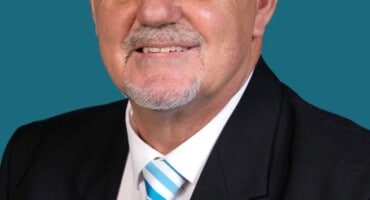
DA Gauteng spokesperson for education Michael Waters said the decision by Premier Panyaza Lesufi’s administration would place thousands of learners at risk and force schools into impossible financial positions.
“This decision puts many of our learners at a huge disadvantage,” Waters said. “Quintile five schools are fee-paying schools, and many parents are already unable to afford the school fees at these schools.”
According to Waters, the Gauteng Department of Education (GDE) has failed to show that any proper impact assessment was conducted before the drastic budget reduction was approved.
“There is no evidence that the department analysed the impact this will have on teaching and learning, on parents, or on the protection of vulnerable learners,” he said. “This is reckless decision-making.”
While the GDE has cited financial constraints as justification for the cuts, Waters said this explanation does not align with how funds are being allocated elsewhere in the department. Waters pointed to the Mathew Goniwe School of Leadership and Governance (MGSLG) in Johannesburg as a clear example.
The government subsidy for Q5 schools has been cut from roughly R879–R919 per learner to about R315 per learner in 2026.
This means some fee-paying public primary schools in Pretoria east are set to charge around R27 300 per learner per year for grades 1 to 7.
Parents typically have the option to pay in 10 equal monthly instalments or in full upfront, often with an early payment discount.
This amount more or less reflects the cost for foundation phase learners as well as older primary grades, illustrating the significant financial commitment required from families sending their children to Q5 schools.
“The MGSLG is set to receive R397.9-million for the 2026/27 financial year, an 11% increase from the previous year,” Waters said.
“In just two years, this institution will have received more than R750-million. If money is so tight, why are schools being starved while bureaucracy continues to grow?”
Waters argued that the GDE should immediately redirect funding from the MGSLG into classrooms.
“Front-line services must be prioritised,” he said. “Schools, teachers and learners should come first, not expensive training institutions with questionable impact.”
He added that Q5 schools appear to be targeted because they are perceived as being better resourced, despite major changes in school demographics over the past two decades.
“This is a political decision that ignores the economic reality faced by parents today,” Waters said. “Using outdated quintile classifications to justify massive budget cuts is not evidence-based policy. It is administrative laziness and political vindictiveness.”
Waters warned that the budget cuts would force schools to either increase school fees or reduce essential services.
“These cuts mean fewer learner support materials, reduced classroom resources, delayed maintenance, poorer safety measures and less supervision,” he said. “Ultimately, it is learners who will suffer.”
He said the timing of the decision could not be worse, as Gauteng households continue to battle rising living costs without corresponding increases in income.
“Parents are already stretched to breaking point,” Waters said. “Expecting them to absorb these cuts through higher school fees is unfair and unrealistic.”
He accused the department of attempting to plug internal budget shortfalls by shifting the burden onto schools and families.
“Instead of fixing problems elsewhere in the department, they are passing the cost on to parents and learners,” he said.
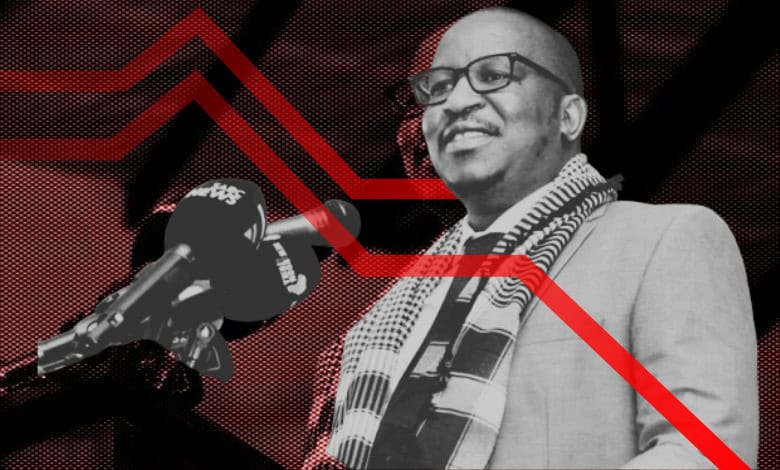
The DA has now demanded full transparency from MEC for Education Matome Chiloane.
Waters said the party would request all documentation used to justify the cuts and submit formal questions in the Gauteng Provincial Legislature.
“The MEC must provide the data and any impact assessments that informed this decision, if such documents exist,” he said.
Waters concluded that Gauteng’s learners deserve better.
“Our children deserve a government that puts their education first,” he said. “Not one that balances its books on the backs of struggling parents.”
Questions have been forwarded to the GDE, but answers had not been received by the time of publishing.
Do you have more information about the story?
Please send us an email to bennittb@rekord.co.za or phone us on 083 625 4114.
For free breaking and community news, visit Rekord’s websites: Rekord East
For more news and interesting articles, like Rekord on Facebook, follow us on Twitter or Instagram or TikTok or WhatsApp Channel