Gauteng health department underspends millions as Pretoria hospitals struggle
Millions are set to be returned to Treasury despite cancelled surgeries, unpaid suppliers and severe staff shortages. The DA says poor management and weak leadership continue to harm patients relying on public hospitals.
The DA has strongly criticised the Gauteng Department of Health (GDoH) for chronic under-spending while hospitals across the province remain in crisis, with cancelled surgeries, severe staff shortages, unpaid suppliers, and failing infrastructure that continue to affect patient care.
According to a written reply from the Gauteng Finance and Economic Development Department to DA questions in the provincial legislature, the GDoH is projected to underspend R725-million in the 2025/26 financial year, which ends on March 31.
National Treasury has approved only a conditional rollover of R261-million of these unspent funds, meaning that R464-million will be returned to Treasury instead of being used to address urgent healthcare needs in Gauteng.
The department has attributed the under-expenditure to delays in the completion of projects, late submission of invoices by contractors, and the delayed delivery of machinery and equipment.
However, the DA argues that these explanations offer little comfort to patients and healthcare workers dealing daily with the consequences of systemic failure.
DA Gauteng shadow MEC for Health Jack Bloom said the impact of mismanagement is clearly visible at major hospitals in Pretoria.
“Surgery was cancelled at Steve Biko Hospital last year because the air conditioning was not fixed,” Bloom said.
He added that critical diagnostic services have also been affected, stating: “The supplier for isotopes for Positron Emission Tomography (PET) scans has not been paid, so certain cancer patients have been waiting since November last year to be diagnosed.”
Basic services such as laundry and linen supply have also been severely compromised.
Bloom pointed to problems at the Masakhane provincial laundry in Rosslyn, which services a large portion of the Pretoria state healthcare system.
“Clean linen shortages are experienced as only one of the six tunnel washers at the Masakhane provincial laundry in Rosslyn is working,” he said.
The facility supplies linen to 14 hospitals and 54 clinics in the Pretoria area, leaving many facilities struggling to maintain hygiene standards.
Long surgical waiting lists in Pretoria hospitals further illustrate the strain on the system.
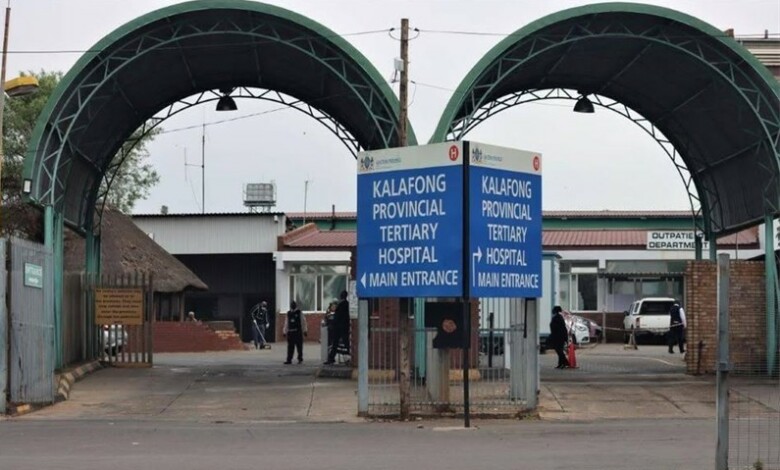
“More than 6 000 patients are on the waiting list for surgery at Steve Biko and about 1 800 at Kalafong Hospital in Atteridgeville because of staff shortages and lack of Intensive Care Unit beds,” Bloom said.
These backlogs continue to grow as hospitals battle to retain staff and keep specialised units functional.
The under-spending comes amid broader concerns about financial governance in the GDoH.
In December last year, it was reported that the National Treasury would write to the Gauteng Health MEC and three other provincial health MECs to motivate why they should not be placed under administration.
This followed warnings that several provinces faced a high risk of running out of medication. This was due to a chronic failure to pay service providers within 30 days, salary overspending, persistently high doctor and nurse vacancy rates, and ongoing budget overruns, combined with neglected infrastructure maintenance.
The DA has also highlighted leadership instability within the department, noting that it has not had a permanent CFO for more than three years.
This lack of continuity has been blamed for weak financial controls and poor planning.
These concerns were echoed by findings from the Auditor-General, who found Gauteng to be the only provincial health department that failed all nine assessed areas.
These included procurement, management of revenue and expenditure, strategic planning, consequence management, transfer of funds, and the use of conditional grants.
According to the DA, these failures directly affect medical staff who are expected to work under increasingly adverse and demoralising conditions.
Further turmoil has been caused by the suspension of the head of the department, Lesiba Malotana, after failing a lifestyle audit, while corruption allegations continue to haunt the department.
He was placed on suspension by Premier Panyaza Lesufi in October 2025 after a lifestyle audit conducted by the Special Investigating Unit flagged him as ‘high risk’ and amid an ongoing corruption investigation connected to the Tembisa Hospital graft scandal.
Dr Darion Barclay was appointed as the acting head of the department during his suspension.
More than R2-billion was reportedly looted from Tembisa Hospital, reinforcing perceptions that financial misconduct is deeply entrenched.
The DA said it will renew pressure on Lesufi to dismiss Health MEC Nomantu Nkomo-Ralehoko and ensure competent and ethical leadership across the department.
According to the DA, proper and accountable use of the department’s R67-billion budget could dramatically improve healthcare services in Gauteng, reduce waiting lists, stabilise hospitals, and restore dignity to both patients and healthcare workers.
Section 27 and the Cancer Alliance have repeatedly taken legal action against the Gauteng DOH over its failure to provide radiation oncology services and to spend ring-fenced funds to address the backlog. They expressed deep frustration at delays and the health department’s decisions to appeal court orders rather than comply with them.
These organisations have also expressed deep disappointment following a December 2025 Johannesburg High Court ruling that dealt a setback to efforts aimed at securing urgent treatment for cancer patients in Gauteng’s public health system.
Based on developments up to January, the Cancer Alliance and Section 27 said the ruling effectively halted immediate relief for thousands of patients waiting for radiation oncology services.
The High Court overturned an earlier August 2025 judgment that had compelled the GDoH to urgently intervene in the growing treatment backlog.
As a result of the latest ruling, a March 2025 court order requiring the department to ensure immediate access to life-saving radiation treatment has been suspended.
The court found that the GDoH has reasonable prospects of success on appeal, meaning the matter will now proceed to the Supreme Court of Appeal.
The case is expected to be heard during the first term of 2026, extending uncertainty for patients already facing long delays.
The legal dispute unfolds against the backdrop of the deepening oncology crisis in Gauteng.
Although the National Treasury ringfenced R784-million in 2023 to allow the outsourcing of oncology services to the private sector, advocacy groups say administrative failures and slow implementation have prevented the funds from being used effectively.
The GDoH has welcomed the High Court ruling, and maintains that it remains committed to improving oncology services. It has also indicated that it is working on plans to stabilise and expand radiation oncology capacity at Charlotte Maxeke Johannesburg Academic Hospital and Steve Biko Academic Hospital.
Section 27 and the Cancer Alliance recently asked cancer patients who were diagnosed with cancer in Gauteng and were eligible for radiation oncology treatment between 2019 and 2025, to submit a response using the following link: https://forms.gle/4B9jBoVpiJ2RkwEZ6.
Do you have more information about the story?
Please send us an email to bennittb@rekord.co.za or phone us on 083 625 4114.
For free breaking and community news, visit Rekord’s websites: Rekord East
For more news and interesting articles, like Rekord on Facebook, follow us on Twitter or Instagram or TikTok or WhatsApp Channel