Laudium breathes easier as water supply stabilises
Taps are flowing again in Laudium and other affected parts of Pretoria, ending nearly 10 days of uncertainty that saw residents protest and communities mobilise to survive without water.
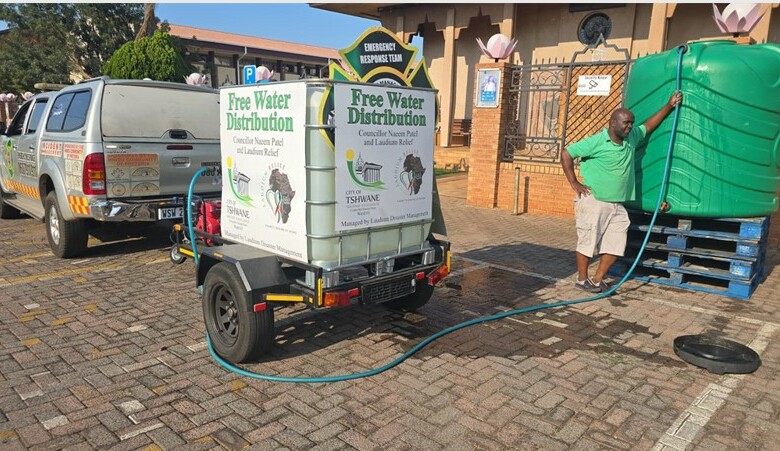
Water supply has finally been restored in parts of Pretoria that were previously affected by ongoing disruptions linked to Rand Water’s Palmiet system.
This brings much-needed relief to communities that endured over a week of uncertainty and inconsistent supply, including Laudium, one of the most vulnerable areas during the crisis.
For over a week, the Laudium Reservoir remained highly sensitive, repeatedly dropping to critical levels whenever pressure on the Palmiet system was reduced.
According to Tshwane metro spokesperson Lindela Mashigo, the situation has now been fully stabilised.
“Following recent challenges with Rand Water’s Palmiet water supply system, all affected networks have recovered. As of the early hours of February 4, all reservoirs, including those in previously sensitive zones, are supplying water normally,” he said.
Mashigo added that the recovery indicates that the Palmiet system has been fully pressurised and is now operating reliably, allowing emergency water tankers to be withdrawn as communities receive a consistent supply again.
However, he cautioned that during the recovery process, some areas may experience temporary reservoir overflows due to the unrestricted supply being restored to accelerate stabilisation.
“Residents are urged to report any visible overflows or excessive water so that technical teams can respond quickly and prevent unnecessary losses. The city sincerely apologises for the inconvenience caused by the water supply interruption and thanks residents for their patience and co-operation during this challenging period,” Mashigo said.
This update comes after mounting frustration culminated in a community protest on February 2, at around 17:30, when residents gathered along the R55 in Laudium.
A large crowd gathered on the R55 in Laudium @CityTshwane demanding water.
Residents have demanded answers from @Rand_Water
Ward councillor @naeempatelSA says residents are understandably angry. He says a memorandum will be submitted to the @PublicProtector @CityTshwane… https://t.co/5pmafM054I pic.twitter.com/MprYdVJ5lf
— Yusuf Abramjee (@Abramjee) February 2, 2026
The peaceful protest saw residents demanding clearer answers from Rand Water and calling for their ongoing concerns about water security to be taken seriously.
Patricia Naidoo explained that the repeated outages had pushed the community to its breaking point.
She described how households struggled to cook, clean, and maintain basic hygiene, relying on neighbours, donated water, and limited tanker deliveries.
“The lack of clear communication about when water would return added to the frustration,” said Naidoo.
“You wake up every day hoping the taps will work, and when they don’t, there are no clear answers. People are exhausted. That’s what led to residents deciding to take to the R55. We weren’t trying to cause trouble; we just wanted accountability and to be heard.”
Ward 61 councillor Naeem Patel detailed the extent of the disruptions, noting that the water supply first stopped on January 25, briefly returned on the evening of January 26, and then went off again on the afternoon of January 28.
According to Patel, water only returned consistently on February 3 around 14:00. He said that during the outage, the impact on daily life was significant.
“Schools were forced to dismiss learners early, while the community mobilised to support one another. Our community is well organised in terms of disaster and crisis management. Besides government support, we also relied on our own water tanks,” he said.
He explained that about ten 1 000-litre tanks were distributed to schools, mosques, temples, churches, and old age homes to ensure operations could continue.
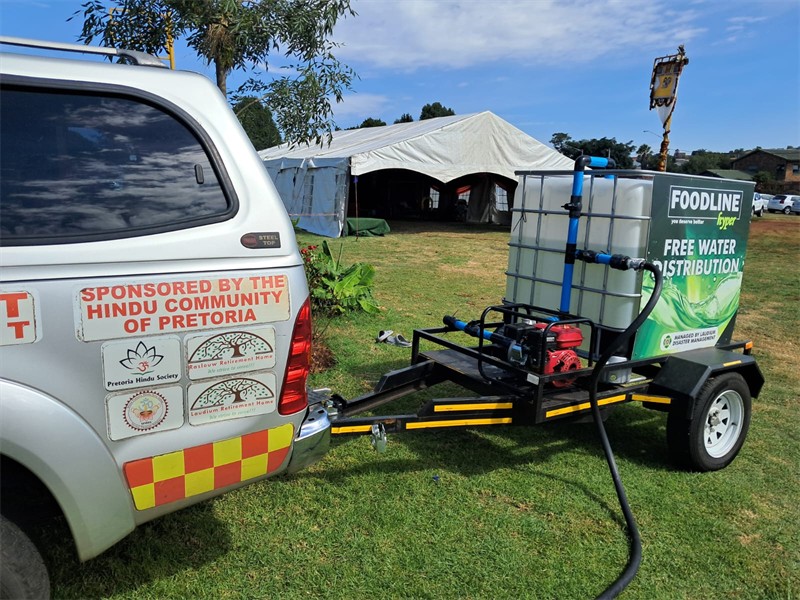
Drinking water was also delivered directly to homes and organisations, with the councillor personally donating water to residents in informal areas.
While Patel acknowledged that Rand Water provided ongoing communication, he criticised the clarity of their messaging.
“The issue is that Rand Water doesn’t communicate clearly. After speaking to councillors in other municipalities, it seems this is a broader problem,” he said.
In an effort to assist residents, Patel stated that around 120 volunteers worked to distribute water to those in need, while community members who had the means contributed their own resources.
Now that supply has been restored, Patel thanked the Laudium community for their patience and solidarity.
“Many residents helped by donating water and resources. I truly appreciate everyone’s efforts to alleviate the situation,” he added.
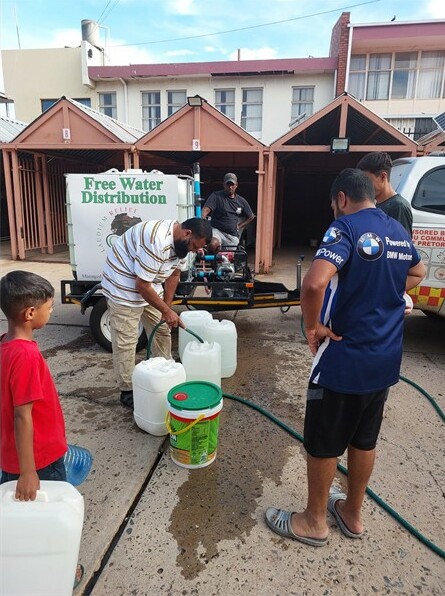
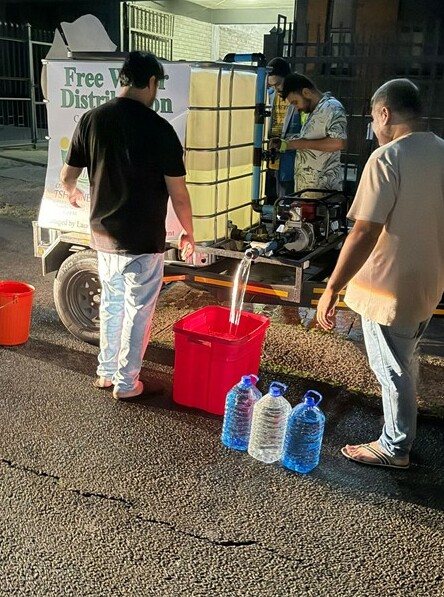
A critical role during the outage was played by Laudium Disaster Management (LDM). Spokesperson Pritesh Bhana explained that water trailers were deployed to religious institutions, schools, clinics, and hospitals, as municipal council trucks do not normally serve these areas.
“Many people in Laudium have JoJo tanks, but they still need water to fill them. We supply water for these tanks across the suburb, especially for schools, hospitals, clinics, and retirement homes,” he said.
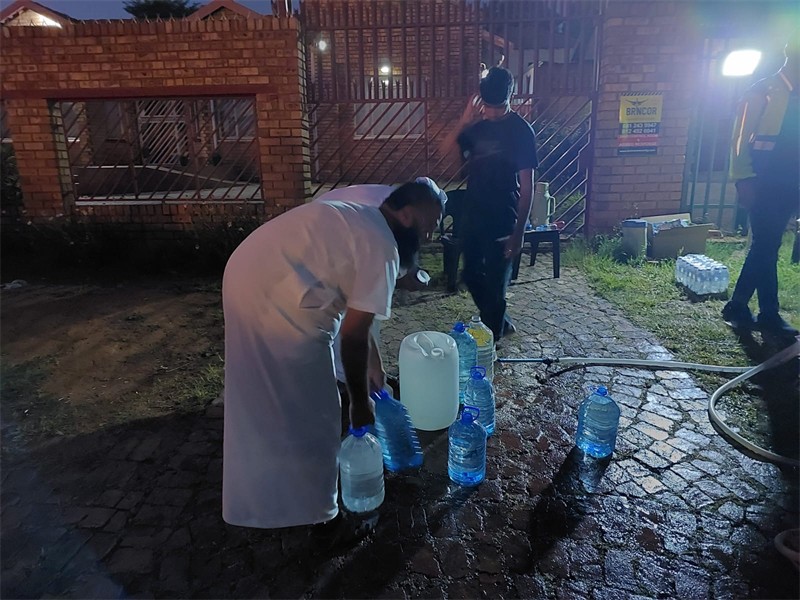
Bhana added that a water collection point was opened in Erasmia, allowing residents to collect water directly.
While municipal tankers often arrived mid-morning and left early, the LDM team ensured the water points opened at 06:00 and operated until late, around 22:00. Tanks were refilled daily for continued distribution.
“The Erasmia Reservoir, which had a more stable water flow, was closely monitored to support Laudium when possible. If the level was above 70%, we distributed water, and if it dropped below that, we stopped to conserve the source.”
Bhana noted that Laudium has faced water outages for years, usually lasting two to three days, but described this incident as one of the longest, lasting nearly 10 days.
He added that the timing was particularly difficult during religious periods for Muslim and Tamil communities, where water is essential for purification before prayers.
“Ensuring that mosques and religious institutions had access to water remained a priority throughout the outage,” he added.
Do you have more information about the story?
Please send us an email to bennittb@rekord.co.za or phone us on 083 625 4114.
For free breaking and community news, visit Rekord’s websites: Rekord East
For more news and interesting articles, like Rekord on Facebook, follow us on Twitter or Instagram or TikTok or WhatsApp Channel