Learners stranded as Gauteng scholar transport collapses
The ongoing dispute between government departments and transport operators has left parents and learners caught in the middle, with uncertainty continuing around when full services will resume.
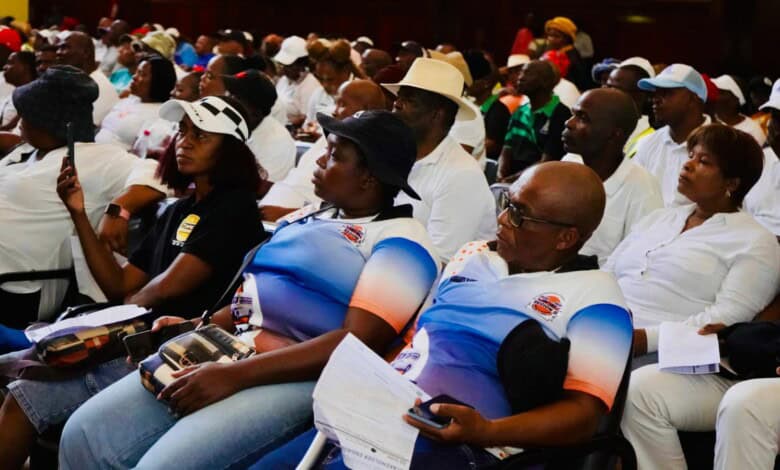
Thousands of learners across Gauteng have been left stranded and unable to attend school after the provincial government failed to pay scholar transport operators, forcing the suspension of services at more than 20 schools and plunging vulnerable families into crisis.
The disruption has been particularly severe at four schools in Centurion, Pretoria: Laezonia Primary School, Steve Tshwete Secondary School, Seshegong Secondary School and Olievenhoutbosch Secondary School.
Learners have struggled to get to class, while parents have been left scrambling to find alternative transport at short notice, often at costs they find unaffordable.
According to the DA, the Gauteng Department of Education (GDE) has failed to honour contractual payment obligations to scholar transport operators, resulting in services being halted after operators went unpaid for more than three months.
This is despite contracts stipulating that payments must be made within 30 days.
Sergio Isa Dos Santos, MPL and DA Shadow MEC for Education, said the situation is the direct result of mismanagement and a lack of co-ordination within government.
“The department has failed to pay scholar transport operators, forcing thousands of learners in at least 20 schools to go without transportation,” Dos Santos said.
“This mismanagement within the department is costing learners valuable education time and leaving their parents in despair.”
Dos Santos added that the Gauteng Small Bus Operators’ Council (GASBOC) has confirmed that its members have not breached any contractual conditions, yet remain unpaid.
He further criticised the Department of Roads and Transport (DRT), which he said has failed to issue operating permits, despite completed applications being submitted by operators.
He also took aim at provincial leadership, accusing it of prioritising rhetoric over action.
“While Premier Panyaza Lesufi and MEC Matome Chiloane routinely speak about placing learners first, the scholar transport collapse proves otherwise,” Dos Santos said. “Learners cannot be prioritised in speeches while abandoned in practice.”
The DA has repeatedly warned that failures in the scholar transport system place children at risk, not only by denying them access to education, but by forcing families to rely on unsafe and unregulated transport options. According to Dos Santos, government responses remain reactive rather than proactive. “The government continues to react only after a tragedy strikes,” he said.
In response to growing public concern, the GDE has acknowledged challenges within the Scholar Transport Programme and confirmed that it is meeting with service providers to resolve outstanding payments. The department said the suspension of services began on February 2, contributing to low attendance levels at affected schools.
GDE spokesperson Steve Mabona said the department remains committed to settling outstanding invoices and restoring services.
“The department has been actively engaging with scholar transport service providers to address outstanding payments,” Mabona said. “Subsequently, the GDE emphasised their commitment to fulfilling payments of outstanding invoices.”
Mabona added that the department had appealed to operators to continue transporting learners while payment processes are finalised.
“We appealed to service providers to provide continuous, uninterrupted transportation of all learners under the programme as we work tirelessly within available financial processes to finalise payments accordingly,” he said.
While negotiations continue, schools have been advised to implement academic recovery measures to minimise the impact of learner absenteeism.
“While these matters are being resolved, the department has advised schools to utilise appropriate academic recovery measures to ensure that teaching and learning remains on track,” Mabona said.
Reiterating the department’s stance, Mabona said learner safety and access to education remain priorities. “Indeed, safety, access, and well-being of learners remain a priority,” he said.
“We will continue to engage all affected stakeholders and resolve the impasse, and we are confident that these engagements and commitments will enable operators to resume services.”
The Freedom Front Plus (FF Plus) has also condemned the situation, describing the GDE’s failure to pay GASBOC as ‘scandalous and irresponsible’.
Advocate Anton Alberts, an FF Plus MPL, said an official memorandum issued by GASBOC on January 31 confirmed that the council had unanimously resolved to suspend learner transport services across Gauteng.
Alberts said the dual failure of both the education and transport departments has created severe cash-flow problems for operators, who are now unable to pay drivers, staff, vehicle financiers or service providers, threatening the survival of their businesses.
He noted that GASBOC had emphasised its members’ willingness to negotiate in good faith, but said the GDE failed to meet its obligations while making unrealistic demands.
“The FF Plus will not stand idly by while learners are denied their constitutional right to basic education,” Alberts said.
He added that the party has already engaged with the GDE to find urgent solutions and will work with economists and financial experts to review the department’s budget and propose strategic adjustments.
“This crisis sends a clear message that the ANC-led Provincial Government of Unity does not prioritise learners’ interests. This is unacceptable, particularly as many parents cannot afford alternative transport,” Alberts said.
“The FF Plus will do everything in its power to keep pressing for outstanding invoices to be settled, permits to be issued and bus transport to resume as soon as possible.”
Meanwhile, the Gauteng DRT has rejected claims that permit backlogs are contributing to the crisis. The department said there is currently no backlog in processing scholar transport operating permits and urged operators to ensure that applications are complete and compliant. It warned that incomplete submissions delay finalisation and place learners at risk.
On February 9, Gauteng MEC for Roads and Transport Kedibone Diale-Tlabela hosted a Provincial Scholar Transport Stakeholder Engagement Meeting at Johannesburg City Hall. The meeting brought together transport operators, industry stakeholders and government representatives to address operational challenges, compliance enforcement and learner safety.
MEC Diale-Tlabela emphasised the government’s commitment to supporting operators to regularise their operations and acknowledged that many depend on the sector for their livelihoods.
“The operators want to be compliant. As the Department of Roads and Transport, our responsibility is to assist them and ensure they operate within the law. But we must meet each other halfway,” she said.
She outlined key requirements for operators, including formal contracts with parents, endorsement letters from schools, and roadworthy vehicles.
“We have negotiated reduced prices at private VTS [Vehicle Testing Solutions] centres to support operators. There is no excuse for transporting children in unroadworthy vehicles,” Diale-Tlabela said.
According to the department, more than 1 500 scholar transport operators have applied for licences since compliance efforts were intensified last year, with over 500 licences already issued and 1 009 applications in the final stages.
The MEC urged operators facing difficulties to return to the department for assistance, stressing that learner safety cannot be compromised.
Do you have more information about the story?
Please send us an email to bennittb@rekord.co.za or phone us on 083 625 4114.
For free breaking and community news, visit Rekord’s websites: Rekord East
For more news and interesting articles, like Rekord on Facebook, follow us on Twitter or Instagram or TikTok or WhatsApp Channel