Two South African teams will lose their Super Rugby status in 2018
SA Rugby must soon decide which two South African Super Rugby teams will next year lose their status and be kicked out of the competition.
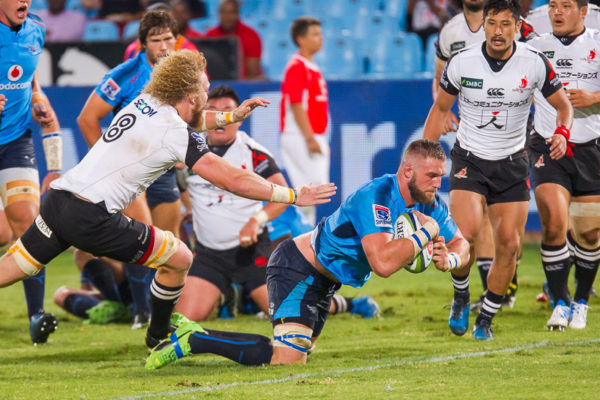
South Africa, New Zealand, Australia and Argentina Rugby (SANZAAR) announced this weekend that Super Rugby had been restructured for 2018 and would kick-off with a three conference, 15-team format featuring four teams from South Africa, five from New Zealand, four from Australia, one from Japan and one from Argentina.
The streamlining of the competition comes at the end of a nine-month consultation and strategic review process that looked at the short and long-term prospects for SANZAAR’s competitions.
The decision to reduce Super Rugby competitors by three teams was unanimously agreed by the four SANZAAR partners. Franchises, broadcasters and fans were all engaged in the process.
“Fans, media and broadcasters have spoken and we have listened to them,” said Jurie Roux, CEO of SA Rugby.
Roux said the 18-team Super Rugby competition has not worked and we had to face up to that hard fact. The integrity of the format and the lack of competitiveness in too many matches were major issues that needed addressing.
He also said from a South African rugby high performance perspective they have had to acknowledge that the dilution of talent and resources across six franchises – at a time when rand weakness has led to more departures to Europe and Japan – has seriously affected South Africa’s ability to compete across the board.
“As a rugby nation we need several strong franchises all of whom are in with a serious chance of challenging for the title and we could no longer say that. A reduction in the number of South African franchises was the unavoidable conclusion, especially when put in the context of SANZAAR’s long-term strategy of adding to our tournaments’ appeal and commercial success which, in time, will mean greater returns for SA Rugby,” said Roux.
SA Rugby will now begin internal consultations to identify its four entrants to the 2018 competition.
The newly-established Franchise Rugby Committee (made up of representatives of all six teams) will meet on Tuesday to finalise the criteria for selection. Their recommendation will go to the Executive Council. Once that recommendation is agreed it will need to be approved by the General Council of SA Rugby.
“The decision to revert to a 15-team format reflects a consensus view of the mandated SANZAAR Executive Committee that met in London recently. It was not the determination of any one Union or stakeholder and follows a thorough assessment and review of the tournament over the last nine months,” said SANZAAR Chairman, Brent Impey.
He explained that SANZAAR’s major broadcast partners have, after due consideration, agreed to the restructured format within the existing broadcast agreements.
“This decision has not been an easy one and we recognise the difficulty associated with reducing the number of teams in Australia and South Africa. Naturally we understand that there will be some very disappointed franchises but the tournament’s long-term future and the economic reality of the business at present is something that had to be addressed,” said Impey.
SANZAAR also confirmed that the decision to retain the Sunwolves is linked directly to SANZAAR’s strategic plan for the future. The potential for growth of the sport in Asia off the back of the establishment of the Sunwolves and the impending RWC in 2019 is significant. It remains an obvious focus for the organisation and a Japanese Super Rugby franchise is key to that strategy.
Roux admitted a reduction in teams was a bitter pill for South Africa to swallow but his organisation had faced up to the fact that retaining six teams would have put South African rugby at an even greater risk.
Roux said the large number of South Africans now playing overseas had hastened the decision.
“There are about five or six Super Rugby squads’ worth of South Africans playing overseas. In 2015, 257 South Africans appeared for leading teams overseas; last year it was 313 – including 65 Springboks. There were eight Van der Merwes, seven Du Preez’s and six Du Plessis’s alone. That has got to have had an impact on our competitiveness.”
The new format will see the Sunwolves move into the Australian Conference while the South African conference will continue to feature the Jaguares.
The winners of each conference plus another five teams with the greatest number of log points will qualify for the play-offs.
SA franchises will play teams from both the Australian and New Zealand conference every year although the duration of the available ‘window’ – between the end of the compulsory rest period and the start of the international season – means that there are not enough weeks to play all teams.
SA Rugby said that it hoped it would be able to confirm its 2018 Super Rugby participants by the end of June.
For free breaking and community news, visit Rekord’s websites:
For more news and interesting articles, like Rekord on Facebook, follow us on Twitter or Instagram