
Locals have their say on Bela Bill at hearing in Polokwane
Proposed amendments to the Basic Education Laws Amendment Bill include giving government the power over schools' language policies and curriculums and making Gr the compulsory year in which a child should start schooling.

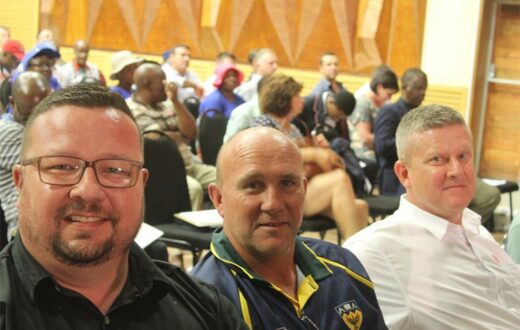
POLOKWANE – Sunday afternoon saw a significant number of provincial stakeholders in education gathered to air their views on the proposed draft of the Basic Education Laws Amendment Bill (Bela Bill).
The bill proposes to amend the South African Schools Act, 1996 (Act No. 84 of 1996), and the Employment of Educators Act, 1998 (Act No. 76 of 1898). A draft bill has been approved by cabinet and public participation meetings are currently being held across the country.
Some of the proposed amendments aim to:
• hold school governing bodies more accountable in terms of the disclosure of their financial interests, which would include that of their spouses and family members;
• give government the power over schools’ language policies and curriculums;
• prohibit teachers from conducting business with the state or being a director of a public or private company that conducts business with the state;
• make Gr R the compulsory year in which a child should start schooling, as opposed to Gr 1;
• compel learners who are home-schooled, to register;
• impose fines or jail time on parents who do not ensure that their children attend school; and
• sell liquor on school premises.
Present to give their input on the final draft bill were members of Parliament’s Portfolio Committee on Basic Education, chaired by Bongiwe Mbinqo-Gigaba.

Representatives of political parties and learner formations, teacher unions and ordinary citizens echoed their sentiments in terms of the proposed changes to language policies, saying this should be centralised. Some made the counter-argument stating the importance of mother-tongue education to especially learners of school-going age.
Congress of South African Students leader, Sello Mahladisa was of the view that urban schools use the language determination policy as a barrier to exclude learners.
Consensus was reached that the requirement imposed by the bill on SGBs to declare financial interests would be unfair if adopted in its current form.

An argument was made that the extension of declaration of financial interests to include family members and relatives would discourage parents from availing themselves for participation in the SGBs and that would weaken the pillar of governance at schools.
DA Polokwane Caucus leader, Jacques Joubert argued that the proposal would take away parents’ prerogative at schools in terms of deciding powers, effectively transferring this right to government, which might impact the effective day-to-day running of schools.
“Currently, school governing bodies represent the parents, who should have a say in the running of schools because it is their children who are being taught. Giving such a deciding power to an HOD will delay SGBs from taking decisions within reasonable times at schools,” he said.

Most participants argued that the quality of content within the Curriculum Assessment Policy Statements (Caps) curriculum is irresponsive to the needs of learners, saying that while the curriculum has a “long history of equipping learners to become employees”, it does not teach learners to be economically self-sustaining.
James Kganya, a learner from a school under the Pietersburg South Education Circuit supported her submission through the observation of agriculture as a subject.
“If the subject was taught effectively, there really would not be any need to take the university route for basic agricultural skills unless if learners wanted to expand their capacity,” she explained.
Meanwhile, labour unions such as Congress of South African Democratic Teachers Union emphasised that the Bill in its current form emphasises the protection of learners and parents while ignoring that of teachers in terms of learner absenteeism.
An insertion of Section 4A in Act 84 of 1996 on monitoring learner attendance reads, “if a learner is absent for three consecutive school days without a valid reason, the class teacher concerned must report the absence to the principal”.
The union suggested that the bill should include a clause that requires parents, and not teachers, to investigate cases of absenteeism.
Participants rejected the proposal to sell liquor on school premises, arguing that there is no moral grounds to justify the decision.
The committee will this weekend chair public hearings in the Free State.