
Premier reflects on poverty in Limpopo during Freedom Day address
Premier Chupu Mathabatha said Provincial Government is working tirelessly to provide solutions through infrastructure development projects to achieve further industrialisation and job creation.
POLOKWANE – Poverty in Limpopo has reduced by 51% in the last financial year, a 31% difference from Provincial Government’s set 20% target for the previous financial year.
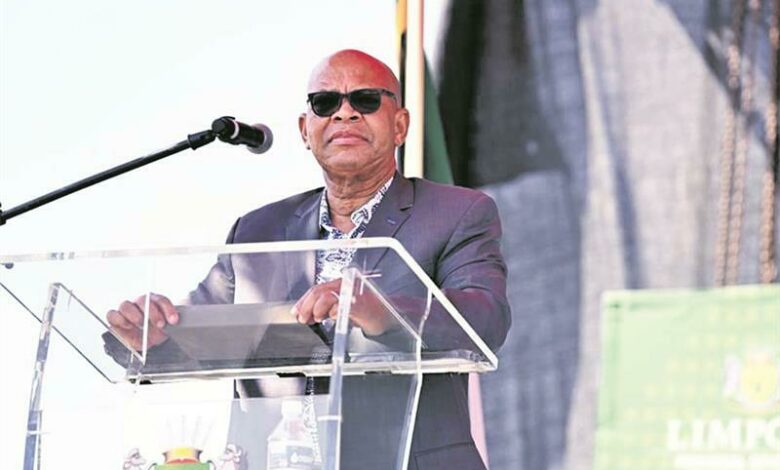
This was among the notable issues remarked upon by the Premier, Stanley Chupu Mathabatha, when he addressed Freedom Day celebrations in the province.
His statistics are based on findings compiled in the province’s 2022 Socio economic Review and Outlook (Sero), according to Limpopo Treasury.
In this document, poverty is defined as more than just a lack of income and productive resources to ensure sustainable livelihoods.
It includes hunger and malnutrition, limited access to education and other basic services as well as lack of participation in decision-making.
Of all six Limpopo districts, Capricorn is the third hardest hit, with 733 939 people living below the poverty line, ahead of Sekhukhune and Vhembe at 748 351 and 834 836 respectively.
In the provision of basic amenities, 69% of Limpopo residents have access to potable water, although smooth provisions of tap-running water have proved to be challenging for local municipalities such as that of Polokwane where bulk-water supplier, Lepelle Northern Water (LNW) decelerates in the refurbishment of pipelines (and other infrastructure) among others, according to Sero.
On the other hand, 97.2% of people in Limpopo have access to electricity.
Mathabatha says such an improvement in the human development index (HDI) is worth noting as citizens celebrated 29 years of democracy.
Some organisations, including the EFF, are of a different view.
EFF provincial chairperson, Thsilidzi Maraga who addressed residents in Polokwane last Friday, said it was concerning that many residents including those in Disteneng still live in shacks, and are without basic services such as proper public schools, electricity and running water.
Mathabatha said Provincial Government is working tireless to provide solutions through infrastructure development projects to achieve further industrialisation and job creation.
“We are the first to admit that while good progress has been made since 1994, more still needs to be done to ensure that basic services are extended to millions more. Limpopo is a much better place to live in than it was before 1994,” he told celebrants at a provincial gathering last week.


catalytic projects that include the Musina Makhado Special Economic Zone and Fetakgomo Tubatse Special Economic Zone that are aimed at industrialisation and rolling out infrastructure investments job creation, business prospects and SMME empowerment. This will shift the mindset that government creates work rather than creating a conducive environment.