
Polokwane student accommodation plan met with opposition
Proposed student accommodation at the corner of Marshall and Voortrekker streets will be a four-storey complex with accommodation for more than 600 students.
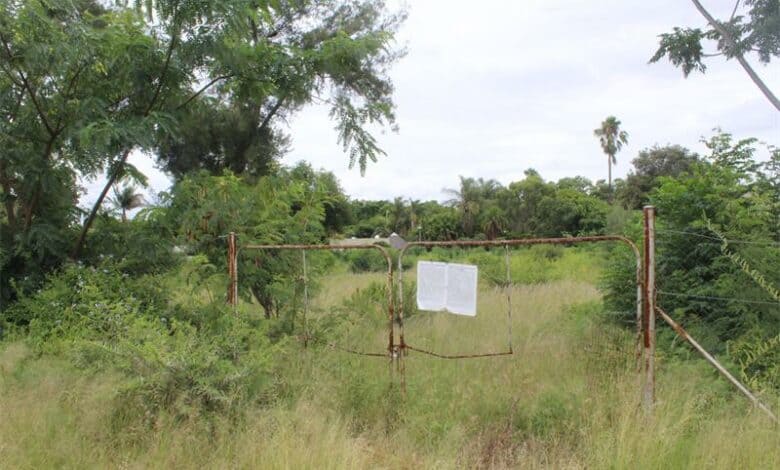
POLOKWANE – Residents in the vicinity of the vacant stand at the corner of Marshall and Voortrekker streets, better known as the property on which the Zeederberg House was demolished, are opposing the establishment of accommodation meant for students of a local university.
The development will be a four-storey complex with accommodation for more than 600 students, a manager and house parents, and will have access from Voortrekker Street.
During a meeting at Fusion Boutique Hotel on Saturday, held between the developers’ agent, Bruce Ncube of Kamekho Consulting and some of the residents, Ncube replied to residents’ concerns in order to fast-track the project.
One of the objectors and an immediate neighbour, Bettina Rabiega of Plumtree Lodge, stated that the proposed rezoning for student housing would severely affect property values, community safety, infrastructure and the overall quality of life in the locality.
“The decision to repurpose established residential areas for student accommodation is further complicated by South Africa’s current financial constraints and these include the significant withdrawal of US funding for South African higher education and the growing strain on the National Student Financial Aid Scheme (NSFAS),” Rabiega argued and added that these financial challenges exacerbate the risks of integrating student housing into residential neighbourhoods, thereby infringing on residents’ human rights, intensifying the need for caution in the rezoning decision.
Rabiega went on to emphasise that a common issue associated with student accommodation is insufficient parking facilities.
“Due to the large number of students residing in these areas, parking demand often exceeds supply, leading to vehicles overflowing onto residential streets. This not only causes congestion but also obstructs driveways, making the area more difficult and less safe for residents and this has led to significant tension between students and permanent residents, further disrupting community harmony,” she explained and added that the noise factor associated with students is also a matter of concern.
“Ward 22’s existing infrastructure is designed to accommodate a relatively small and stable population of family units. The introduction of a large number of students will place a strain on municipal services such as water supply, electricity, waste management and road networks. The area was not planned with the demands of high-density accommodation in mind, and as a result, the increased population could lead to regular power outages, water shortages and sewage blockages,” she said.
DA councillor for Ward 22 in the municipality, Mariette Pretorius echoed Rabiega’s sentiments and suggested that the developers select a more suitable location for the development.
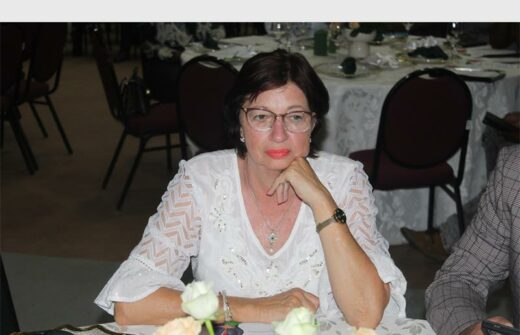
“There are many vacant facilities in the city that can be converted into student accommodation and the city’s rapid transport system can be used more effectively to convey the students to campus,” she said and added that the municipality does not have the capacity to enforce its bylaws in terms of noise control.
Ncube argued that the Polokwane CBD Development Plan and Urban Renewal Strategy has earmarked the area where the subject property is situated, for business development and not for single-family homes.
He also explained that the development will make use of boreholes and water harvesting systems. Electricity-saving measures will include energy efficient lighting and other measures will be instituted to reduce the need of municipal services.
“We will enforce strict rules to students living in the facility and explore best options to ensure that noise related issues are prevented and have made provision for adequate parking facilities,” he said.