
Driving the N1? Here’s how the latest toll fee hike affects you
Sanral's 4.84% toll fee hike from March 1 increases N1 North costs by R18 for a round trip between Polokwane and Pretoria.

POLOKWANE – Motorists traveling along the N1 North between Polokwane and Pretoria and vice-versa will have to dig deeper into their pockets as the South African National Roads Agency (Sanral) implements its annual toll tariff increase.
The new rates, effective from 1 March 2025, reflect a 4.84% adjustment in line with the Consumer Price Index (CPI), as published in the Government Gazette of February 7.
Sanral has confirmed that the tariff increases are necessary to maintain, operate, and improve South Africa’s toll roads.
This year’s increase is lower than the 6.25% adjustment seen in 2024.
Here’s what the new fees will look like for motorists traveling between Polokwane and Pretoria:
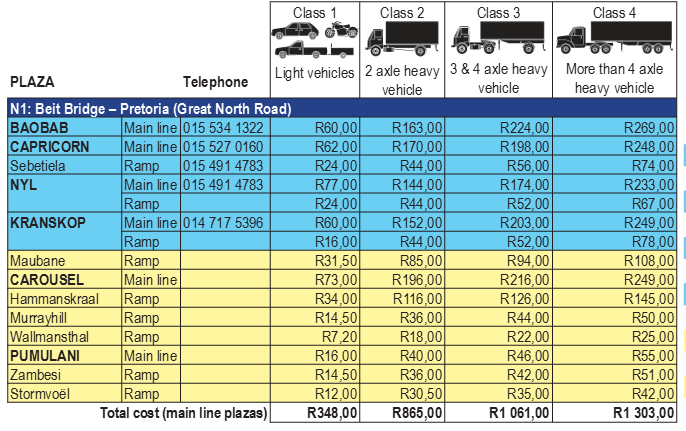
Pumlani Toll Gate: R16 (up from R15.50, an increase of 50c)
Carousel Toll Plaza: R73 (up from R71, an increase of R2)
Kranskop Toll Plaza: R60 (up from R57, an increase of R3)
Nyl Toll Plaza: R77 (up from R73.50, an increase of R3.50)
Total One-Way Cost: R226.00
Total Round-Trip Cost: R452.00
In 2024, motorists paid a total of R434 for a round trip along this route.
With the 4.84% increase, drivers will now pay R452.00, an increase of R18 for a return journey.
SANRAL’s general manager for communications and marketing Vusi Mona stated that toll revenue is critical for infrastructure maintenance and debt servicing.
“The funds go a long way towards ensuring that SANRAL fulfils its mandate of delivering quality road infrastructure that adds value to the lives of South African citizens,” Mona explained.
He added that while SANRAL acknowledges the economic pressures faced by South Africans, maintaining the national road network is vital for economic growth and essential services.
Regular commuters and freight operators using the N1 North should factor these increases into their travel budgets. The new tariffs will impact both private and commercial road users, making cost-effective travel planning essential.