
WATCH: 100’s of Grasshoppers spotted at Polokwane Cricket Club
Cricket South Africa says “Be Part of It” and this week, hundreds of grasshoppers happily obliged, swarming the Polokwane Cricket Club in a surprise takeover.
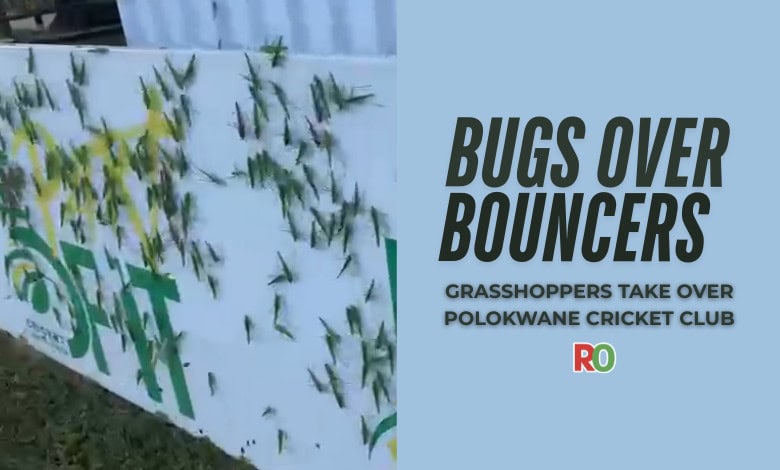
POLOKWANE – Visitors to the Polokwane Cricket Club got a surprising welcome this week, not from the local cricketing talent, but from hundreds of long-horned grasshoppers clinging to signage and the sight screen.
Captured on video, the Katydid family grasshoppers made it known that they’re not ready for the cricket season to end.
These creepy crawly’s aren’t known for swarming, but have made their presence unmistakable this week, not just at the cricket club, but across Polokwane and other parts of Limpopo.
From the Polokwane Golf Club to school grounds, businesses, and even newsrooms, the chirping visitors have been spotted far and wide.
On Wednesday, a small delegation of the long-legged guests even paid a visit to the Polokwane Review-Observer’s offices, where they were captured on camera checking out the latest headlines and begging for coverage.
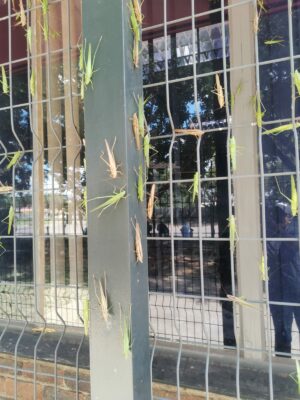
While no official comment has been made by the Department of Agriculture and Rural Development, research suggests the insects are taking full advantage of recent rains, lush vegetation and other factors which all link to a potential population boom.
Limpopo has a strong tradition of insect consumption and grasshoppers rank as the third most commonly eaten insect in the province just behind mopane worms and termites.
Residents are encouraged against spraying pesticides themselves as this can harm other animals in the process.
Agriculture’s head of communication services Mothotse Mosupulogo told the Review-Observer that the control of these grasshoppers will vary from farm areas and public areas.
“It will be easier to control in farm areas, however, it is difficult in public spaces as it requires care and control. There are pesticides, specifically pyrethroids registered for their control but it should be carried out by a registered Pest Control Operator registered with Act 36 of 1947 who will ultimately take responsibility and liability.”
She added that the department is also able to recommend the proper pyrethroid to use.