Wild Heart Wildlife Foundation gives animals a second chance
The Wild Heart Wildlife Foundation is a general rehabilitation centre that relies on donations to continue its vital work.
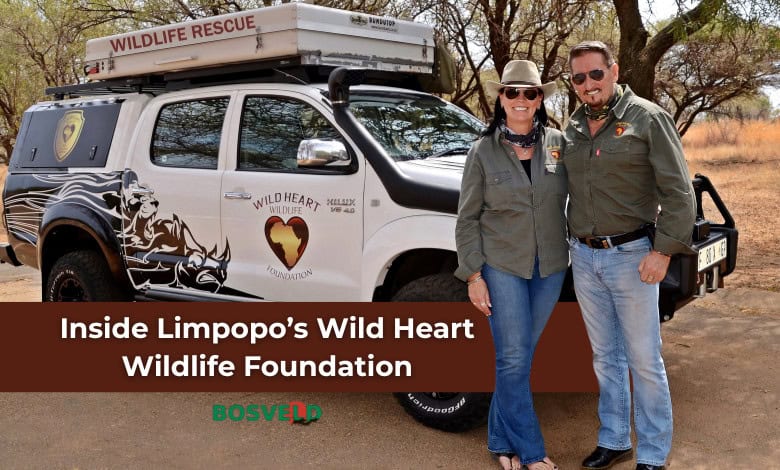
MOKOPANE – The Wild Heart Wildlife Foundation (WHWF) is a non-profit and public benefit organisation founded in 2015 by Paul Oxton (CEO) and Carina Crayton.
“For the first few years, we were based in Johannesburg and worked across Southern Africa, wherever animals needed help,” said Carina. In 2023, WHWF relocated to Limpopo, and in May 2024, the WHWF Rehabilitation Centre received official permission from Ledet.
Carina, who has loved animals since childhood, explained that WHWF is a general rehabilitation centre, not limited to a specific species.
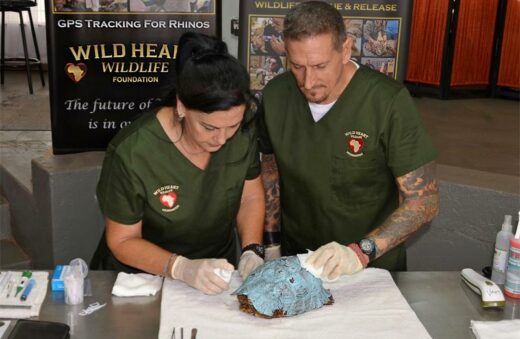
“We assist any animal in need if we are able to.”
Although they did not initially plan to work with birds of prey, they have received many, often with great success, making it a natural direction to pursue.
“The team has a special fondness for mammals such as servals, bushbabies, black-footed cats, and smaller buck species, as well as reptiles like tortoises and chameleons. However, they do not choose which animals arrive at their clinic. We are not fully equipped for smaller garden birds, but we will help in an emergency,” Carina added.
She said that true rehabilitation is only complete when the animals are returned to their natural habitat, where they belong.
“Wild animals are not pets and should never be treated as such. Wildlife rehabilitation involves the temporary care of sick, injured, or orphaned wild animals with the goal of releasing them back into their natural environment once they are healthy and capable of independent survival.”
The team carefully selects release sites where each species will be safe, have abundant food, and be ecologically beneficial.
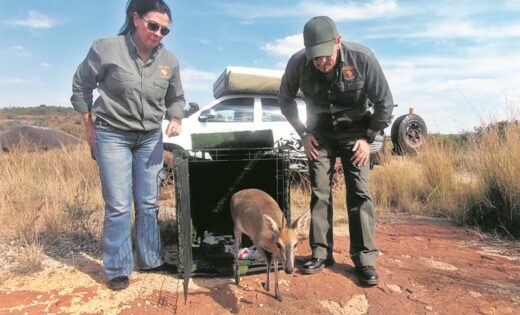
For example, caracals cannot be released near livestock farms, and porcupines should not be placed near crop farms.
However, many areas in the natural bush need these species to restore ecosystem balance. “You just have to care enough to find these places,” Carina said.
Every successful release is its own reward.
“There is no feeling quite like it! Some highlights include seemingly small moments, like when an injured animal begins eating on its own or displaying natural behaviour again. But nothing compares to releasing a now-healthy animal and restoring its birthright of freedom.”
One of WHWF’s recent successes was the release of a group of lesser bushbabies, which Carina raised from just a day or two old.
“They arrived as orphans from various areas and formed a cohesive family unit. The smallest weighed only eight grams upon intake and reached 178 grams before release. Watching them explore their new home in the riverine forest was incredible.”
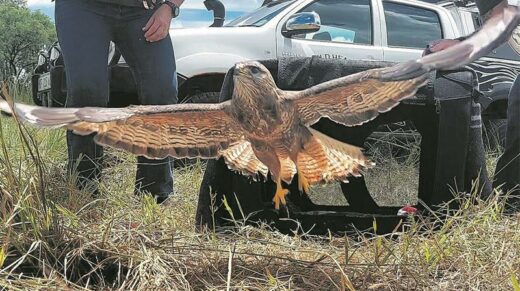
Another memorable case was a Spotted Eagle Owl that arrived covered in velcro grass, unable to open its wings.
Dr Marina Bredell from Kranskop Dierekliniek sedated the owl to have the grass removed. Now recovering well, it eats six mice a night. One of the most astonishing patients, however, was a Black-Chested Snake Eagle from Baltimore.
The bird was soaking wet, and initially suspected of having a broken wing. After an hour in the de-stressing chamber to dry its feathers and stabilise its temperature, the team discovered an 80 cm boomslang lodged in its throat.
After removing the snake, the eagle was treated for shock and pain. Once fully recovered, it was released, soaring into the sky with its impressive 1.7-m wingspan and making a final turn before heading home.
The Wild Heart Wildlife Foundation relies on donations to continue its vital work.
Anyone who loves animals and wishes to contribute can contact the centre via WhatsApp at 083 588 3550 or 072 478 1808.