
Mafefe asbestos fears reignite as health concerns grow
Renewed concerns over asbestos exposure in Mafefe have raised questions about Limpopo's decades-old asbestos legacy.
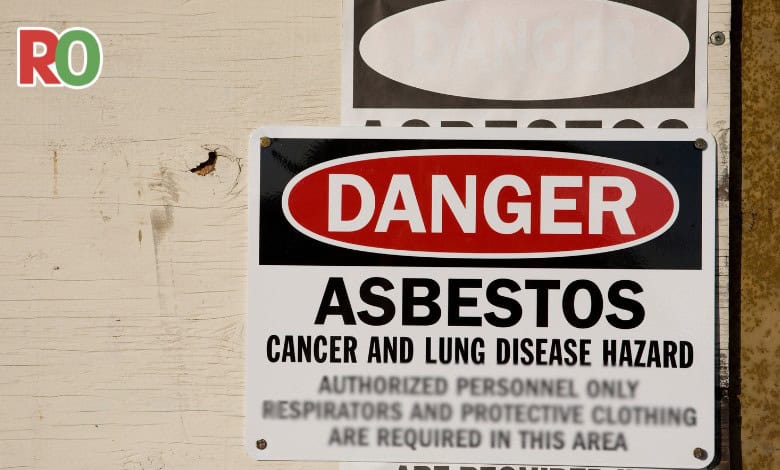
LIMPOPO – Renewed concerns over asbestos exposure in Mafefe have prompted the DA to question how much progress government has made in addressing Limpopo’s decades-old asbestos legacy.
The DA’s Limpopo economic development, environment and tourism spokesperson, Jacques Smalle, said the recent asbestos-related death of a member of the local royal family, which prompted a community health-screening programme, had raised wider questions about the safety of communities affected by former asbestos mines.
Smalle said the party would seek a full provincial account of asbestos-affected sites, including their rehabilitation status, remaining contamination, health monitoring, outstanding work, budgets and deadlines.
The DA argues that rehabilitating a former mine does not necessarily mean that asbestos has been removed from the surrounding environment or communities.
The party has also called for information on the current environmental and health status of affected communities, including post-rehabilitation monitoring and asbestos-related illnesses and deaths.
A problem that goes back decades
Mafefe’s asbestos problem is not new, as it was one of Limpopo’s major asbestos-mining areas.
Asbestos mining took place here for decades, with mining activities eventually leaving behind contaminated mine sites and asbestos-containing material in parts of the surrounding community.
Government-linked asbestos rehabilitation efforts were already under way by the early 1990s. While a digital copy could not be accessed, multiple independent later sources cite the 2000 Asbestos Prioritization Report as estimating that about R95.3m was needed to rehabilitate asbestos sites nationally.
By 2015, government developed a Secondary Asbestos Remediation Plan and said that rehabilitation projects were under way.
Now, in April 2026, SABC reported that water from the Mohlapitsi and Ngwaname rivers had allegedly tested positive for asbestos in testing commissioned by the community.
Residents rely on these rivers and streams for water, while livestock also drink from them.
As recently as this week, the Department of Mineral and Petroleum Resources said it has sent a team to investigate after residents raised concerns about ongoing exposure.
Why asbestos remains a concern
Asbestos is a group of naturally occurring mineral fibres that were widely used because they are strong, resistant to heat and relatively resistant to chemical damage.
The problem arises when asbestos-containing material is damaged, disturbed or deteriorates, potentially releasing microscopic fibres that can be inhaled.
According to the World Health Organisation, all forms of asbestos are carcinogenic to humans. Exposure can cause diseases including lung cancer, mesothelioma and asbestosis, a form of lung fibrosis.
These diseases can take decades to develop after exposure. This means that people exposed while asbestos mining was active can still develop asbestos-related disease many years after mining has stopped.
The issue can also persist after mining ends because asbestos-containing material can remain in buildings, roads, soil and mine waste. When such material is disturbed or deteriorates, fibres can potentially become airborne.
What happens next?
The DA says it intends to seek answers on what has been completed in Mafefe and other asbestos-affected areas, what remains outstanding and why.
The party has also raised concerns about other Limpopo communities associated with former asbestos mining, including Penge, Ga-Mathabatha, Streatham, Steelpoort, Mashupaloni, Kleingeluk, Lot 301 KS and Morgendal 215 KS.
Meanwhile, the renewed health-screening programme in Mafefe provides an opportunity for authorities to assess whether residents who may have been exposed require further monitoring or medical care.