
Home schooling is a viable alternative
Parents who commit to home schooling their children take on a lot of responsibility, but the results can be worth it.
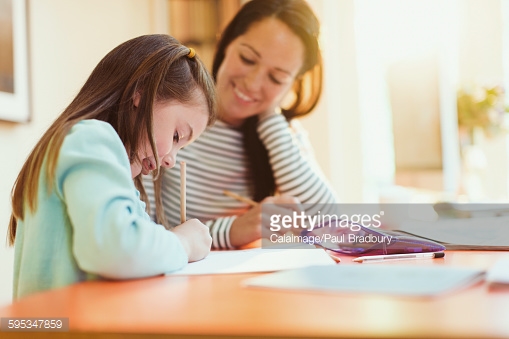
HIGHVELD – There has been much debate over the past few years about the quality of mainstream education and the virtues of home schooling.
A local mother who chose to home school her three children, explained how a typical day works for them.
“I have three children who are home schooled and they are respectively 12, 14 and 16 years old.
“We begin the day with breakfast, after that we do basic chores like tidying bedrooms, vacuuming and cleaning bathrooms.
“We try to be in the classroom before 9am and begin with Bible studies.
“Then the kids move on to maths that they do on their own.
“While they do this, I usually do the laundry and begin preparing lunch.
“Before lunch we tackle their social subjects, moving on to languages later.
“Usually we break for lunch around that time, and then finishing up the day with reading aloud or reading, depending on the work schedule for the day.
“Depending on the amount of work, we try to finish at 3pm.”
With the various options available when it comes to the curriculum, there is a whole world to choose from to teach your children.
There are South African orientated programs that focuse on local history and others with a greater focus on cultivating a love for reading.
“There are even programs that are primarily hands on for those kids who learn through doing and online programs to facilitate learning through the Internet.”
Many of these programs are elective in nature, allowing parents and children to work together and build a curriculum that suits each child and that progress at the right speed for each child’s abilities.
Home schooling is not without its challenges.
“The biggest challenge a parent usually faces is to learn who her kids are, how they learn best and how to be consistent and set down rules so it is easier on both parent and child.”
Regardless of these challenges, her own experience with home schooling has been an overwhelmingly positive one.
“My kids love school!
“Sometimes we are not finished with the day’s work, and then they grumble and complain, wanting to finish or asking for another chapter to be read.
“Science and biology are their favourite subjects.
“My youngest is a walking encyclopaedia and is always with his nose in a book, trying to figure out how the world around him works.
“My eldest is a typical artist, but she still works hard and excels academically.
“My middle child is a mathematician.
“All three my children are vastly different and home schooling allows us to work towards giving each of them a tailor made education.”
The cost of home schooling can vary wildly as this depends on the curriculum program the parent chooses.
“Some subjects can be completed by making use of free downloads from the Internet, and other programs can cost anything from R7 500 to R15 000 per year, depending on what you work with, what subjects you choose and how you plan to teach.”
Even at these prices, it still costs less to home school than it costs to put a child through mainstream education.
“With home schooling there is no travelling cost, no school uniform, no compulsory field trips or camps, no need for pocket or lunch money, but it still remains a very personal decision.”
Home schooling gives parents who relocate often or parents with children with specific needs a viable alternative to main stream schooling and a chance to take hands on responsibility for their children’s education.
Home schooling is however no longer just an option for parents who need to adjust to their child or circumstances.
Even parents of children who could be educated in a main stream school with ease often choose to home school as there is the perception that the quality of education is higher.
“The decision to home school should not be entered into lightly.
“You take responsibility for every aspect of your child’s development academically, socially and spiritually.
“Success relies on your ability to be consistent in your discipline, but also enrich your child’s world experience.”
Socially children who are home schooled can also be taught to not only socialise with their own peer groups, but to get along with anyone, regardless of the generation gap.
Home schooled children are also able to participate in various different sports activities.
“Some local schools will allow a home schooled child to participate in activities and home schooled children will also often participate together and compete against one another, allowing for a good dose of physical activity and healthy competition.”
According to recent developments in legislature, all pupils must be registered with the Department of Education from the year they enter into Grade 10 until they complete their national certificate examinations in Grade 12.
This registration of home schooled pupils goes hand in hand with inspections performed by the Department of Education.
Alternatively a pupil can complete the Cambridge International Examinations (CIE) A Level program.
This program functions independently from the Department of Education and local as well as international universities recognize this certification and will allow a pupil to enrol for tertiary studies.
“With these many options available to parents, there is a way for each child to learn in a way that best suits him or her.”