Secunda Amateur Radio Club launches High Altitude Balloon
The high altitude balloon launched on Saturday is usually used to collect data and do experiments.
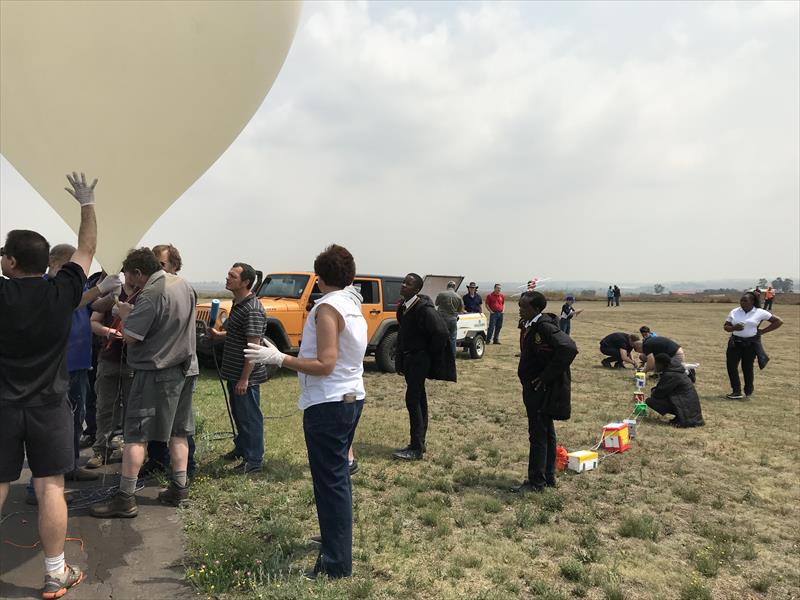
The Secunda Amateur Radio Club launched a high altitude balloon, also known as a HAB, from the Radio Control Flying Club at Trichardt on Saturday, 21 October.
The high altitude balloon was launched at around 10.28am and burst at around 11.43am at an altitude of 29 455m.
The balloon travelled a maximum horizontal speed of 182,2km/h.
The initial rate of descent, before the parachute opened, was a quite fast 357,5km/h.
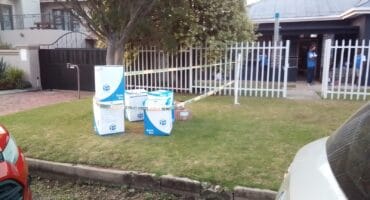
The parachute and payloads (around 11 boxes with different companies’ and individuals’ electronics) were recovered at around 1pm near Ermelo.
The predicted flight path and the actual flight path was never far off.
The payload totalled around 9kg, a box of electronics should not weigh more than 500g, unless it is the “main box” containing the main electronics used for the gathering of important statistics and releasing the parachute.
Also read: Secunda radio amateurs succesfuly launch balloon
The balloon can go from around two meters in diameter when inflated on the ground and can reach up to 11 meters in diameter at the time it explodes in the stratosphere.
The most common type of high-altitude balloons used, are weather balloons.
The high altitude balloon launched on Saturday is usually used to collect data and do experiments.
Various electronic equipment such as radio transmitters, cameras, videos or satellite navigation systems, such as GPS receivers are secured in a lightweight, robust box that can withstand the low temperatures, low air pressure, fall and impact with earth.
Lees ook: Eksperimentele ballon is soek
Read the complete article in the Echo newspaper on our website here.
For free daily local news in the South, visit our sister newspapers Highvelder, Standerton Advertiser
For more news and interesting articles, like us on Facebook, and follow us on Twitter and Instagram