20/20 Vision for 2020
If your optometrist says you have 20/20 vision, it is perceived as if you have “perfect” vision.

The year 2020…or 20/20 – all of us will remember this year for different reasons.
For the eye care industry, this year is special. 20/20 means so much more to us.
If your optometrist says you have 20/20 vision, it is perceived as if you have “perfect” vision.
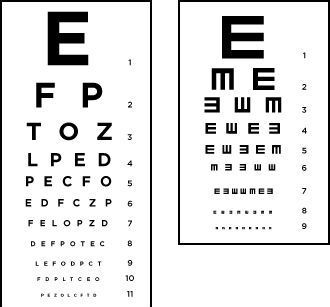
It comes from the US notation meaning that what the average person sees at 20 feet, you also see at 20 feet.
In South Africa we note it in meters, so we will talk about 6/6 vision. 20 feet = 6 Meters.
Easier explained: If your vision is 20/30 or 6/9, you will see at 20 feet (6m) what the norm will see at 30 feet (9m). So, you then have a reduced visual acuity. This can be
due to uncorrected visual errors or because of eye/systemic diseases.
The near vision chart is slightly different. You can do a quick near vision screening yourself.
Hold the chart on the page at 35-40cm to see if our near vision is still good. Please note that the contrast and printing of the newspaper may cause a false error.
Short-arm syndrome
Presbyopia (aka short-arm syndrome) comes from the Latin name actually meaning “old eyes”.
Sorry Mkhulu, jammer Tannie, when they say old eyes, take it as a complement – I firmly believe that it is a privilege to grow old.
So if you experience that your arms are too short when you want to read something, remember that you have lived about 45 years on our wonderful planet and have seen with your “old eyes” the miracles of this world. And yet your time is not over yet.
Technology is a wonderful thing. There are various options to help you read the fine print again.
Single Vision lenses: These are the lenses they fit in reading glasses. In short, the power remains the same irrespective where you look through the lenses. If used for reading only, you won’t be able to have clear vision at distance and will have to remove your specs to see distant objects.
The younger population also uses single vision lenses, but their eyes can still adjust the focus so that they can see near objects. So before the age of about 45 years most people don’t need bifocal or multifocal lenses.

Bifocal lenses: the word “Bi” means two. So these lenses have two areas of power.
Easily recognised by the line in the lens. The top part will be for distance and the bottom part will be for near. Advantages include a full visual field range at the top part and a distinctive change in the near and distance part of the lenses.
Multifocal lenses: these lenses have multiple focal points. Also known as progressive lenses referring to the power that progressively increases at the bottom part of the lens.
These lenses have no lines as compared to the bifocal. There are thousands of different designs of multifocals and different manufacturing processes.
This is the main reason that there is a price difference between different multifocals.
Advantages include easier for work on desktop computers and cosmetic appearance, hiding the fact that your eyes are aging. Remember again it is a privilege to grow old, so wear your spectacles with pride, Grandma!
Digital Eye Strain
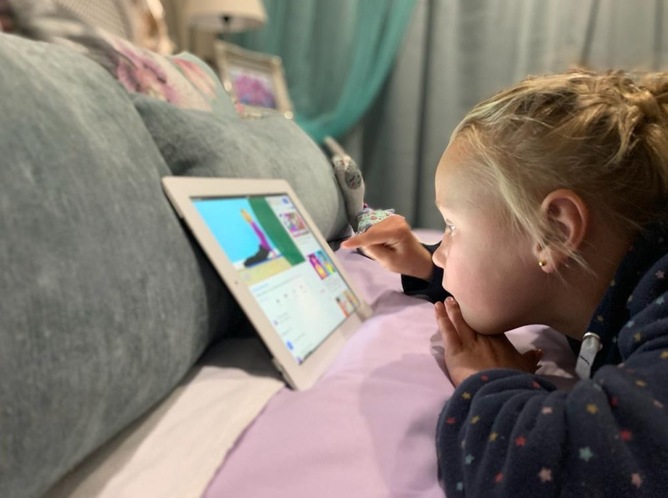
As all of us have spent much more time on our digital devices during the first half of 2020. Lockdown, working and studying from home, keeping the kids indoors- whatever the reason might have been, the future came early….and our eyes could not adapt.
More screen-time might lead to the eyes feeling tired. Even our younger generation begin to suffer.
Our eye muscles were not created to focus on screens the whole day long. These prolonged periods on our digital devices (or reading), may lead to headaches, burning of the eyes or intermittent blurring at distance or close-up.
Another reason is also that digital screens emit blue light that causes eye strain.
Reduced blinking associated with digital screen use can also leave the eyes feeling dry.

Options available:
Reading spectacles or the so called anti-fatigue lenses may provide less stress on the visual system.
Anti-reflective and blue blocker coatings on lenses will help with glare and blue light control.
Artificial tears for dryness.
Think 20/20/20. After 20 minutes of working on digital devices, have a glance at an object 20 feet away for 20 seconds.
Disclaimer: Only a comprehensive eye examination can detect other visual system abnormalities and eye or systemic diseases.