
Family evicted; RDP-housing deals in Morgenzon cause outrage
“Even in a situation where a party may have secured an eviction order from the Magistrate’s Court, the Covid-19 Alert Level 3 guidelines do not allow for evictions to be effected.”

RDP-housing going south in communities has made for vociferous outrage.
The incident where a 91-year-old woman was evicted from a house in Morgenzon, was condemned by the South African National Civic Organisation (Sanco) and the Department of Human Settlements in Mpumalanga took to urging communities to refrain from selling and buying government-subsidised houses.
A senior citizen, Gogo Elizabeth Ndhlovu, bought a RDP-house in 2010 and has been living there, with her grandchildren, before a forced removal.
According to Sanco, the seller allegedly repudiated on the sale agreement and she began paying R500 rent monthly, using her old age grant.
Sanco said the house was fully paid in 2010, but allegedly later sold again to an employee of the Lekwa Municipality in Morgenzon.
Their statement read that the original seller and the municipal employee, accompanied by police officials, evicted the Ndlovu family and demolished their house.
The Standerton Advertiser contacted the communications manager of the Lekwa Municipality, Ms Thobeka Mtshiselwa, on 22 January, asking the following questions: 1) Is Lekwa aware about the possible involvement of a municipal employee in the eviction; 2) Has any formal documents been received as regards possible suspension/removal?; 3) What is Lekwa’s position on the buying and selling of RDP-houses? and 4) Has Lekwa made plans to help the family in any way?
Ms Mtshiselwa replied the same day that the municipality is aware of possible involvement by a worker, but that the employee was acting in his personal capacity as he was not delegated by the municipality on this matter.
She said Lekwa is investigating the issues around the selling of the house and as a general principle, government-subsidised houses can not be sold or rented out by a beneficiary.
“This is further enforced by the restrictive conditions found in the title deeds of RDP houses, which prevents the selling of same within a period of eight years, which is calculated from the transfer date of ownership in the name of a particular beneficiary.
“However, it is widely understood that after the expiry of the eight year period, a beneficiary can dispose of the house if he/she desires to do so.”
Ms Mtshiselwa added that the requirement is that a beneficiary must first afford the Department of Human Settlements a first right of refusal before disposing same to any other party.
“This however, doesn’t happen in practice.
“In respect of the eviction referred to, the rule is that arbitrary evictions aren’t lawful.
“An eviction order must first be obtained from the Magistrate’s Court pursuant to a legal process, which affords the party to be evicted an opportunity to put forth their side of the story.
“Even in a situation where a party may have secured an eviction order from the Magistrate’s Court, the Covid-19 Alert Level 3 guidelines do not allow for evictions to be effected.”
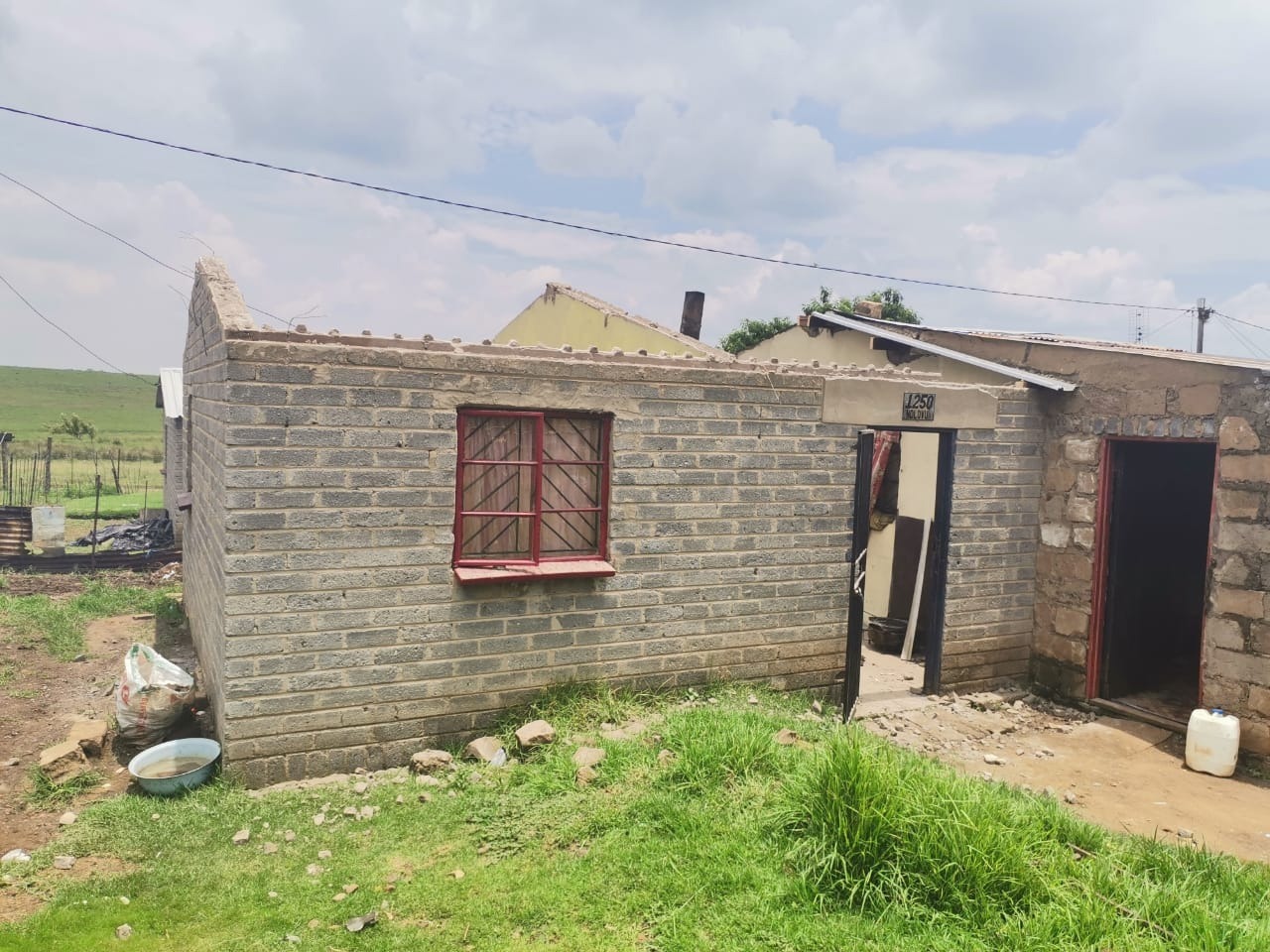
The MEC of the Department of Human Settlements in Mpumalanga, Ms Norah Mahlangu, also referred in a press statement of last week to a duplicate selling of a house at stand 1250, Sivukile Extension 3.
“The department set itself to a fact-finding mission and resolved that the whole saga is a fraudulent case,” the statement read.
The statement cited the Housing Amendment Act, that permits the selling of RDP-houses after the period of eight years,
Ms Mahlangu recommended the involvement of lawyers in the above cases, saying any unscrupulous and clandestine selling of a RDP-houses, to the exclusion of lawyers, is bound to cause problems for both the buyer and the seller.
She also referred to a recent case where a RDP-house was apparently sold by its initial owner to two people.
“Our interim investigation indicates that the initial owner was approved to get the housing subsidy at the above-mentioned stand.
“It then emerged that she sold it to two people.”
A case has been opened at the Morgenzon Police Station.
“We hope the police will deal with this matter expeditiously and swiftly to enable all parties involved to closure and lasting solution on the matter,” she added.
According to the statement, the police is one of the key stakeholders of the newly formed RDP Fraud Management Committee.
The statement concluded with citing victims such as children and the 91-year old woman, where support is given to them to afford them decent shelter.
The department’s WhatsApp-number 064 641 6333 can be called during office hours or their offices can be visited.
Sanco in Morgenzon issued a statement on Monday, 18 January as well.
Mr Sifiso Zacarias, chairman, stressed that Gogo Ndhlovu’s pension money must be recovered from the individuals involved.
Her grandchildren include a six-month-old baby.
Sanco called on the Minister of Police, Gen Bheki Cele, to investigate the actions of the police, will bring a complaint with the Independent Police Directorate (IPD), and is trying to organise psychological support, from the Department of Social Services, for the family.
Ms Trudie Grové-Morgan, DA spokesman on human settlements, called on Ms Mahlangu as well, to investigate the eviction.
The Standerton Advertiser was then alerted to another case on Friday, 22 January.
Mr Bafana Tshabalala, a teacher in Ermelo who taught at Nqobangolwazi Secondary School in Morgenzon, also fell prey to these practices.
He visited the newspaper, showing all the documents pertaining to his dilemma.
A stand in Ext 4 in Sivukile, Morgenzon was sold for R40 000.
“I am not the first person to have bought the house,” Mr Tshabalala said.
A bank transfer of R10 000 was made to the seller’s account and the Tshabalalas stayed in the house for two months, without electricity.
According to Mr Tshabalala, the owner approached him and the truth dawned.
He went the legal route of the small claims court.
“In which way can I get my money back,” Mr Tshabalala asked the seller.
The reply was, according to him, only once the house is sold.
Mr Tshabalala handed the keys over.
According to him, the seller did not comply with the rules of the court to pay the money within 10 days.
The seller allegedly claimed that she is unemployed and has two children to support.
Mr Tshabalala paid R200 to the sheriff to deliver a court letter to her.
The case will be heard in the Magistrate’s Court in Morgenzon on Tuesday, 26 January.