Tumi and team make baskets from water hyacinth
Making this baskets without the assistance of hand tools takes about eight hours per basket to complete.
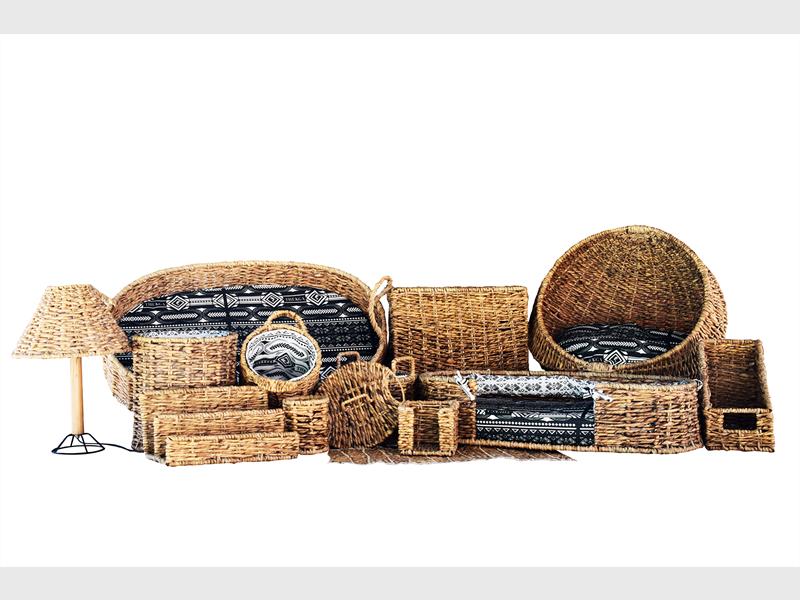
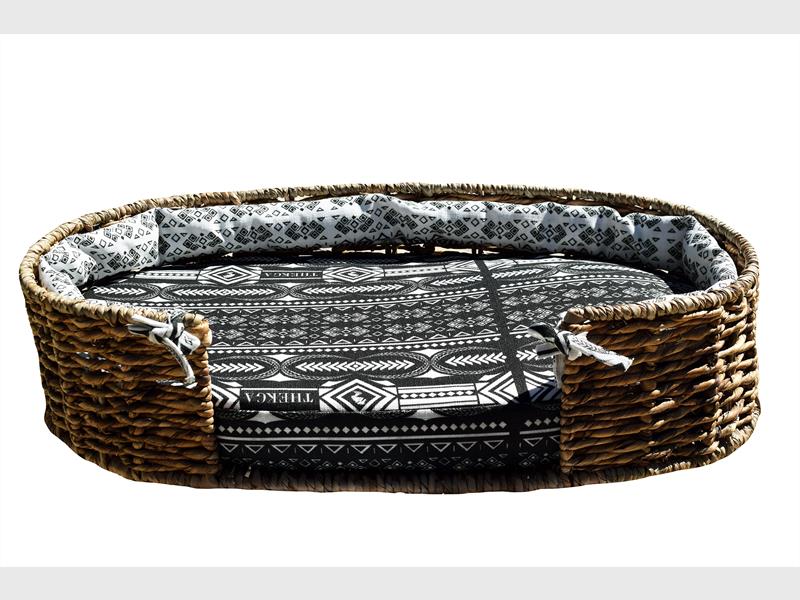
Social entrepreneur Tumi Mphahlele recycles Blesbokspruit Wetlands water hyacinth to make baskets, rugs, office accessories, pet furniture, and homeware accessories.
Taking hands with Cara Stokes, they plan to also begin servicing the Bronkhorstspruit water bodies.
“My journey with water hyacinth began with my frustration with the alien invasive species, from a cosmetic perspective. I was concerned with the condition of the appearance of invaded water bodies. As I explored the water hyacinth, I gained insights into the problem at an ecological level and its effect on the ecosystem,” said Mphahlele.
Apart from her environmental activism and inspiration, she is an alumnus of the Technology Innovation Agency (TIA).
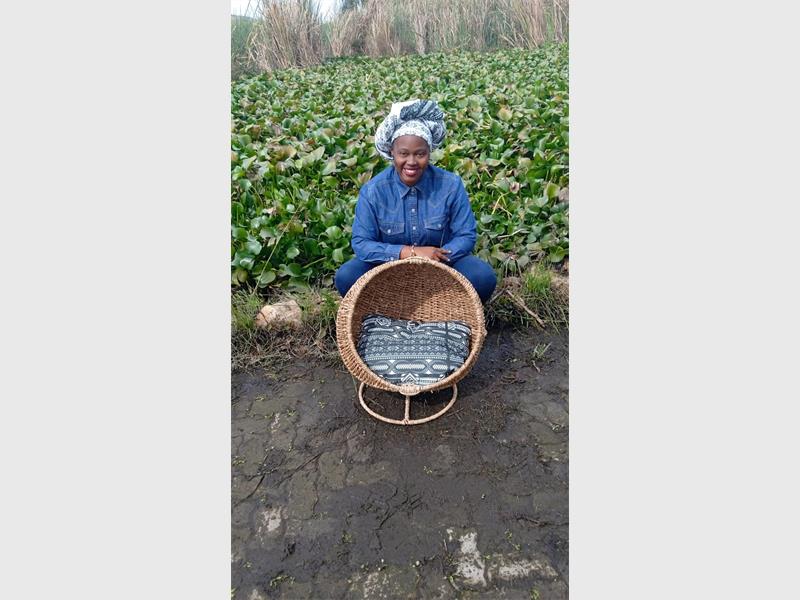
As such, she was trained to solve problems by applying innovation and varied applications of technology to solve environmental and socio-economic problems.
As she became more conscious of the water hyacinth, she noticed an influx of imported woven water hyacinth products in department stores.
Mphahlele’s passion for product development and problem-solving fuelled her to begin an R&D initiative.
“However, I cannot separate my passion from my pillars of support therefore it is important to note that I was encouraged and supported by Dr Duncan Macfadyen, the head of Oppenheimer Research and Conservation and Debbie Muir from the Department of Environmental Affairs (DEA) as well the Blue deal South Africa to action my ideas and set them in motion,” she explained
These products are known as Thekga, which means “to support” in Sepedi.
Conventional weaving technology in South Africa focuses on rattan weaving.
Hyacinth weaving is a novel technique in South Africa, given the restricted access to the biomass as per previous regulations from the Department of forestry, fisheries and the environment (DFFE).
Once Mphahlele received authority to access the water hyacinth biomass from the DEA, the fun began.
“I explored different techniques which proved to be very difficult as the material, metaphorically speaking, is quite fickle,” she added.
After a lengthy R&D exercise to explore modern methods, as a scholar of indigenous knowledge systems (IKS) herself, her logic caused her to revert to indigenous methods of weaving used by her forefathers namely, looming.
This was coupled with modern technology – steel fabricated frames for structure.
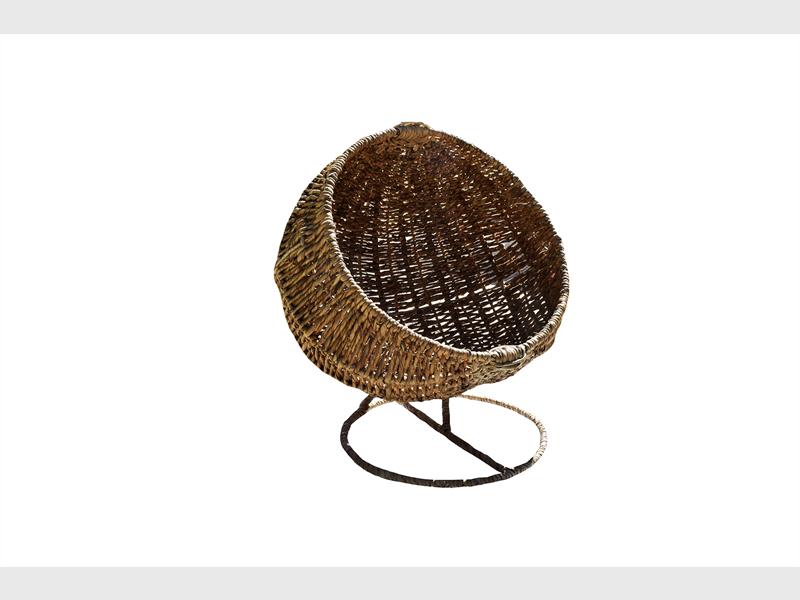
Ever since Mphahlele has been actively creating products out of the water hyacinth that the community has removed from the nature reserve.
The woven products are hand-braided and hand-loomed, however, there are hand tools that they are procuring to assist with primary processing in braiding.
“We too are prototyping another briquette technology using the offcuts from the weaving as well as other alien invasive species such as wattle and sawmill waste,” she explained.
They will introduce their briquettes towards the end of the year with an estimated capacity of 40 tons a month.
The water hyacinth is harvested, the leaves and roots are cut and discarded, and the stems are sun-dried and then graded by size.
They are then bundled and cleaned and stored for secondary processing.
Secondary processing involves braiding in which they splice the stems to create long bundles of rope.
“Once we have converted the stems into rope, we then use that rope as yarn to begin looming the baskets,” Mphahlele said.
“The idea came from the chance to contribute towards water conservation, uplift communities, while simultaneously paying homage to our African ancestry who bestowed ancient wisdom and indigenous technology upon my creative team and I,” she said.
Many hyacinths are needed to complete a basket.
Each bundle contains 150 stems of water hyacinth.
A small basket would typically use three bundles.
That is 450 stems of water hyacinth on average.
Making these baskets without the assistance of hand tools takes about eight hours per basket to complete.
Mphahlele believes the different patterns are inventive.
Her team of creative freelancers comprise industrial designers and a green architecture graduate for technical support.
The team has a complete range of 11 line items at the moment and has not yet launched its brand.
“For now we just completed our R&D phase with respect to the weaving division.
“Our model will focus on B2C pre-orders while we establish distribution channels to service wholesale orders, ” Mphahlele concluded.
Since 2014, this was something she is passionate about but she had to archive her ideas and research when she was unable to solicit a permit due to legislative provisions at the time.