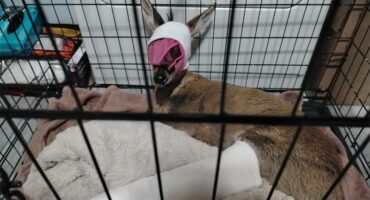
Prof Ray Jansen from Rayton endeavours to save pangolins
In the early 2000s Jansen was still oblivious to the huge impact pangolins would have on his life and vice versa.
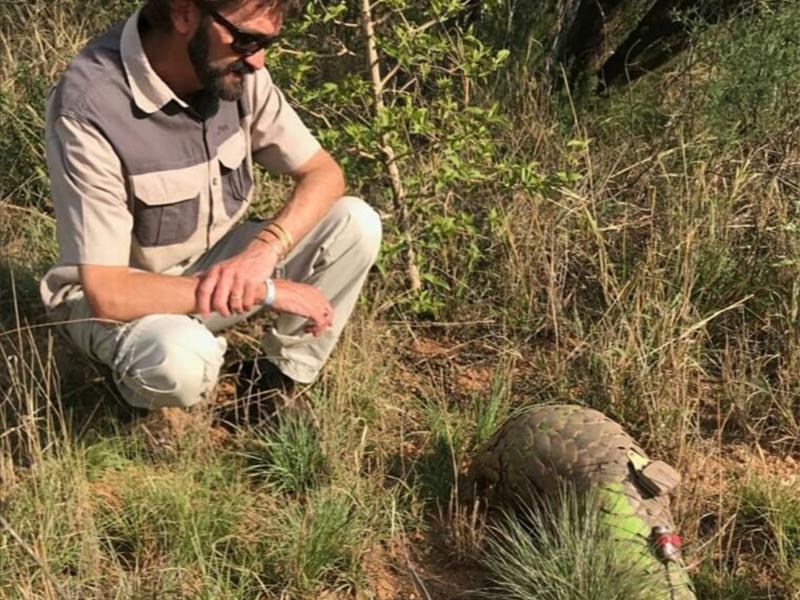
Mention the word pangolin, and Prof Ray Jansen (53) lights up.
He has a passion and a reverence for these scaled ant-eaters.
This resident in the Rayton-area plays a leading role in the fight against the illegal trafficking of pangolins in South Africa. His work to conserve pangolins has global reach and he is internationally acknowledged as a pangolin consultant.
“Pangolins are the most illegally trafficked mammals on the planet. If the poaching and trafficking continue at the current rate, all eight species of pangolin will be extinct within 20 years,” explained Jansen.
Originally a “bird man”, Jansen’s academic career began at the University of Port Elizabeth where he graduated cum laude with honours in Zoology in 1994 and then obtained his PhD in 2001 through the Percy FitzPatrick Institute of Ornithology at the University of Cape Town.
“My thesis was on the grassland francolins in the highlands around Dullstroom and on the Swainson’s spurfowl in the savannah of the Springbok flats where I pursued these game birds with my English pointers and Peregrine falcon.”
After completing his studies, Jansen taught at Penryn College in Nelspruit for three years.
He became a senior lecturer at the Department of Environmental Science at Tshwane University of Technology (TUT) in 2005.
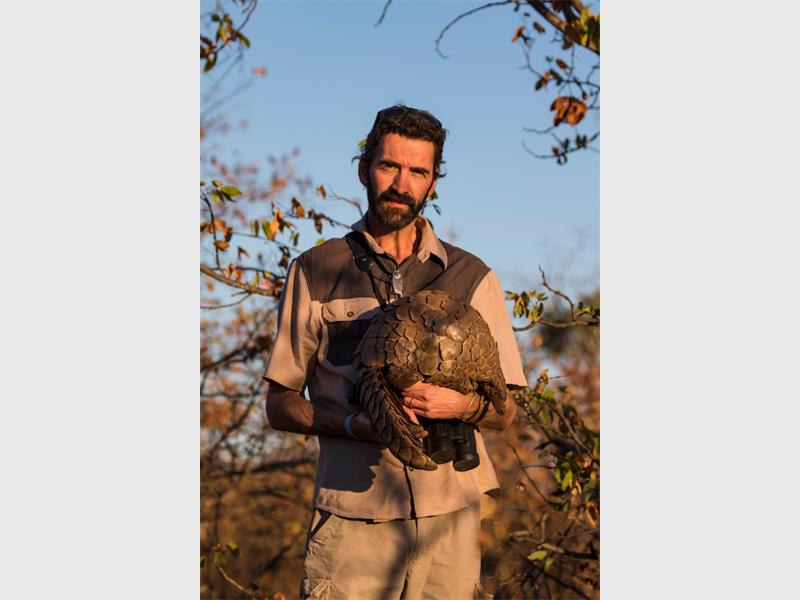
Jansen was later appointed to Head of Department from 2008 to 2014. He was promoted to associate professor in 2009 and to full professor in 2016.
“My research focus was initially on mountain grasslands and the impact of grazing and burning management on fauna and flora diversity with a focus on birds, invertebrates (spiders in particular) and vegetation communities,” he said.
He was instrumental in the founding research of the endangered giant girdled lizard of the Free State (Sungazer or Ouvolk) and moved the first captive population of this species in the world to the National Zoo in Pretoria.
Jansen also spent a number of years with his students studying the Southern ground hornbill and, for about 10 years, he served as a board member on the Mabula Ground Hornbill Project.
At the time, Jansen was still oblivious to the huge impact pangolins would have on his life and vice versa.
“My work on pangolins began while supervising a master’s student on the ecology of pangolins in the Kalahari.
“I realised these mammals are charismatic, enchanting, spiritual and very rare and nothing was being done to reverse what seemed to be an imminent extinction. I knew I was that someone who had to do something.”
Jansen then founded the non-profit organisation the African Pangolin Working Group and held the position of Chairman until late 2021.
He was also invited in 2012 to be a founding member of the International Union for the Conservation of Natures (IUCN) species survival pangolin specialist group.
According to Jansen’s biography, he presented his research at numerous national and international conferences and published in excess of 50 scientific journal articles in acclaimed international journals.
Of these, he has published 13 journal articles and four book chapters with a focus on Africa’s pangolin that includes topics such as their evolutionary history, genetics, parasitology, bush meat use, illegal trade, cultural use and belief systems, ecology and behaviour in both West and Southern Africa.
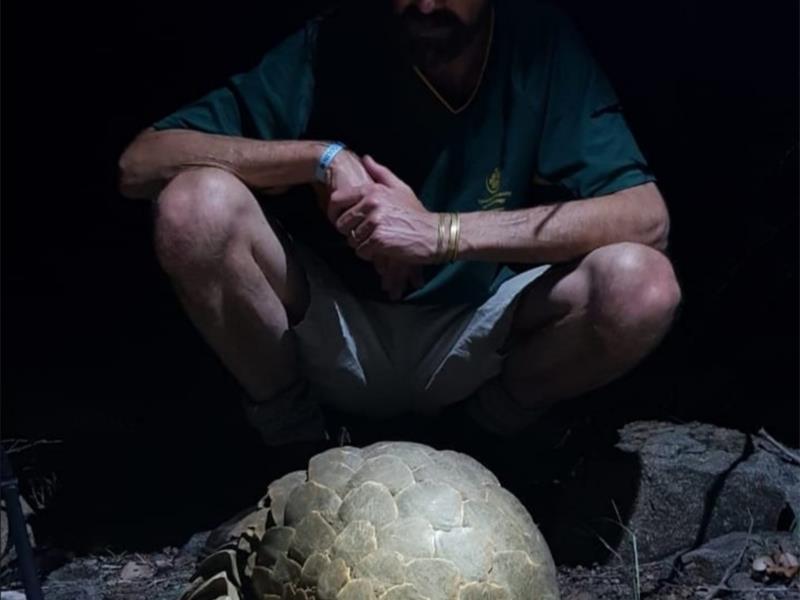
Jansen acted as an agent in about 150 intelligence-driven police operations to recover pangolins from the illegal wildlife smuggling networks and played a key role in the conviction of these traffickers.
He has testified to aggravated circumstances in dozens of court cases. He also readily speaks to the media and anyone who can convey the plight of the pangolin to the rest of the world.
Jansen also created a collaborative national law-enforcement counter-poaching network across all provinces.
According to Jansen, the illegal trade of pangolins is fast evolving into an organised crime where greed is the sole motivator. The trafficking is mostly committed by impoverished South Africans and citizens from neighbouring countries who poach and traffic the animals. They are usually the ones being caught. Thankfully the courts are now beginning to impose harsher sentences on these perpetrators.
“However, the head of the snake is China where pangolin scales fetches top dollars and is used for almost all kinds of medicinal and spiritual purposes.”
Jansen admitted to the emotional toll these cases take.
“Seeing these highly intelligent animals curled up into a ball, dehydrated, hungry, ill, stressed and scared, breaks my heart. It also makes me so angry.
“If they survive, they suffer from post-traumatic stress.”
Jansen said pangolins’ intelligence is equivalent to that of border collie and it is remarkable to see their reactions when they know that they have been saved.
“The last decade battling the pangolin trafficking trade, running all aspects of the NPO and media was incredibly taxing and stressful.
“It impacted directly on my relationship with my family and on my physical and mental health.”