Animal activists head to parliament for animal breeding regulations
A draft of breeding regulations was presented to the Department of Agriculture committee at parliament in Cape Town.
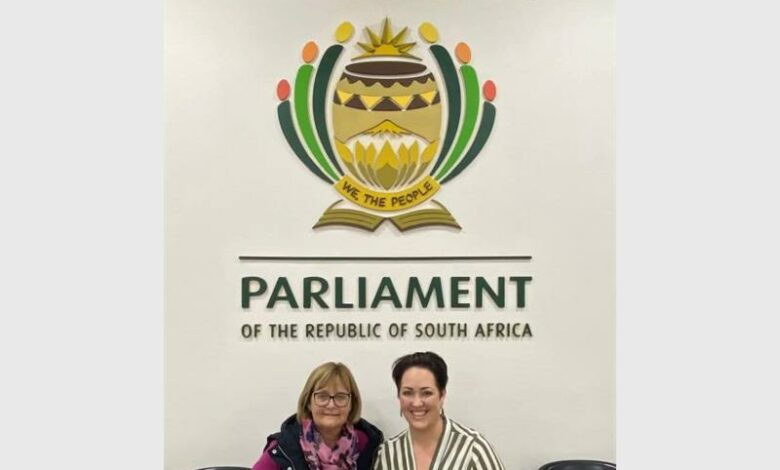
Something has to be done about the influx of companion animal breeding in South Africa, even if it means heading to parliament. That is what Secunda resident Ancois van Zyl of The Paw Company and Cheryl Gaw of Pug Rescue South Africa have recently done.
A draft for breeding regulations was developed by a team comprising animal protection organisations, activists, veterinarians, and legal representatives. Van Zyl joined this team in 2023.
“There is a massive overpopulation crisis of companion animals like cats, dogs, exotic birds, rabbits, and other animals,” said Van Zyl.
Overpopulation has led to an increase in stray animals, which raises the risk of disease transmission and dog attacks, overwhelms veterinary services and animal welfare organisations, and results in unsustainable levels of euthanasia.
“We had a positive interaction with the agriculture parliamentary committee. Our draft regulations propose that anyone with an unsterilised companion animal, whether they intend to breed or not, has to be registered. Just as if you want to drive a vehicle or sell food, you need a licence. We want the same for breeding companion animals,” said Van Zyl.
Although breeders claim a right to breed, the Constitution can limit it, according to Van Zyl
“Producing more litters adds to the problem. We cannot afford to have more companion animals,” said Van Zyl.
The only viable long-term solution is a proactive national regulatory framework governing breeding practices, trade and sale of companion animals, and responsible pet ownership.
This framework would protect public health and safety, reduce pressure on shelters and veterinary services, minimise environmental harm caused by mass euthanasia, support ethical breeders and eliminate exploitative practices, enhance consumer protection and confidence in pet ownership, and promote animal welfare and responsible citizenship.
The Department of Agriculture committee is reviewing the draft regulations.
“Animals and organisations are suffering because of the economic crisis, and donations are down. The number of animals being surrendered is rising, and organisations are operating beyond capacity. We cannot allow unregulated breeding while we are in this crisis, even if you are a registered breeder,” said Van Zyl.
She said the only way the numbers can be brought down is through the passing of the proposed regulations.
“The consequences of the overpopulation fall on the shoulders of private sector rescuers and organisations. It does not fall on the government. The government does not fund these organisations. Hence, we need the government’s support on paper.
“We are not saying that people cannot breed, but if you breed, you have to be registered, tax compliant, and abide by certain codes of conduct protecting animals,” said Van Zyl.
She said the situation is so dire that long-standing no-kill shelters now have to start euthanising for space, or stand at risk of closing down.
‘Free to a good home’ remains a problem for organisations, as many of these animals end up in the wrong hands. Van Zyl said there are over 300 different breeds of dogs.
“Unregulated cross-breeding is also a problem. There are no tangible solutions. We cannot adopt, sterilise, or educate ourselves out of this problem. There needs to be regulations,” said Van Zyl.
“You are not allowed to sell animals on any Meta (social media) platforms. The public must report to group admins first and then to Facebook itself. Facebook allows registered animal welfare organisations to advertise adoptions. However, being a registered organisation does not always make it a legitimate one,” said Van Zyl.
She said that although Meta allows ‘free to a good home’ advertising, they have submitted a proposal to Meta to change this. A female dog can have two litters a year, but males can impregnate multiple females. Cats can have three to five litters a year.
“We need the public’s support. For now, you can request wellness checks with inspectors or your local SPCA. If there is a concern, report it,” concluded Van Zyl.
Should you have concerns regarding an animal’s welfare, contact inspector Marius van Reeuwyk of the South African Animal Welfare Inspectorate Association (SAAWIA) on 067 858 9719. SAAWIA depends on the public’s donations.
Apology and Retraction: This article has been updated. It previously contained unverified statistics, stating: “around 94% of animals surrendered to SPCAs do not walk out” and that “since 2018, 17 SPCA branches have shut down.” Furthermore, Ridge Times failed to obtain the National Council of SPCAs’ (NSPCA) response to these statements. As a result, Ridge Times unreservedly retracts the above statements and apologises for publishing the unverified figures, as well as for failing to obtain NSPCA comment prior to publication.
ALSO CHECK: VLU Delmas-tak bemeester die eeu-oue kuns van smokwerk
ALSO CHECK: Bronkhorstspruit community demands justice for young rape victim