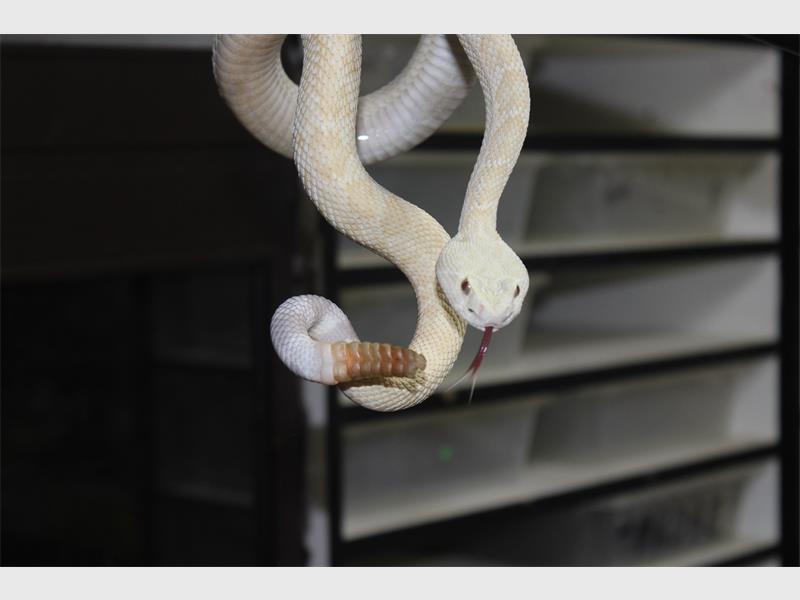
Secunda’s snake-man has a passion for reptiles and other critters
Zacharias Coetzer has had a couple of bites from venomous snakes, but continues with his love for the slithering creatures.
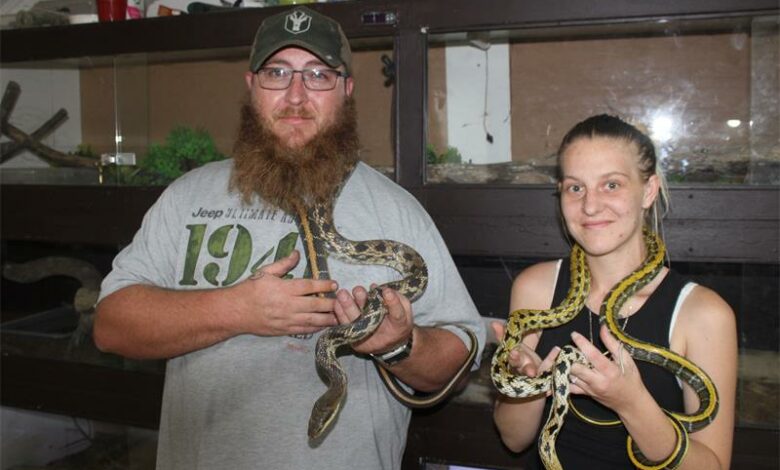
It was love at first bite for Zacharias Coetzer when he encountered a rinkhals 18 years ago. A rinkhals plays dead, and although he knew this, his hand was too close for the snake’s comfort and it bit him.
The Teks area is known for the rinkhals, and its venom is both cytotoxic and neurotoxic, causing severe pain, swelling, blistering, and tissue damage.
This was not the first, nor the last time Coetzer got bitten. In January, he was bitten on his finger by a baby white-lipped tree viper.
It felt like his heart was going through his hand, throbbing and within seconds, extreme swelling in the finger and then the hand, followed by extreme pain.
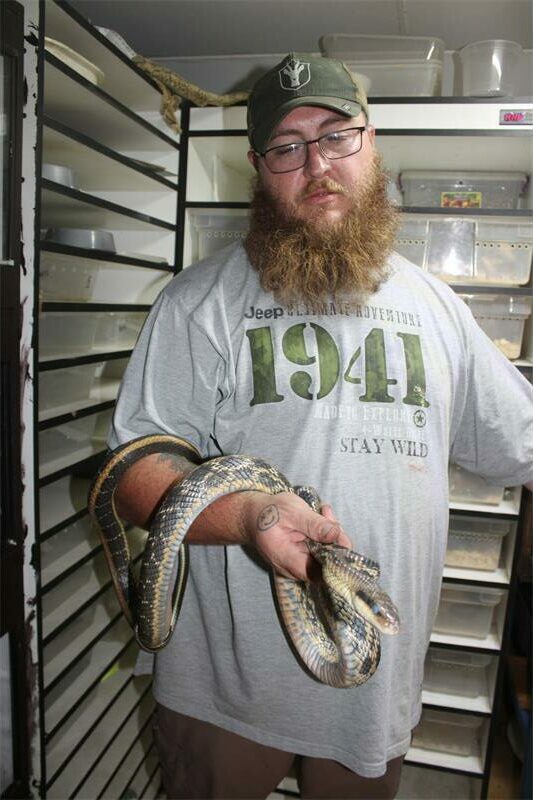
Coetzer is a permit holder, which allows him to house any indigenous or exotic snakes, and he says it is a gamble when handling any snake.
He met his wife, Patricia, in November 2022. She shares the same interest in reptiles and had Mexican black king snakes.
“My lifelong dream was to house a pair of white-lipped snakes. I had browsed through Facebook and came across a man who had rescued a western diamondback rattlesnake, a blood python and an anaconda. I made an offer on the python,” said Coetzer.
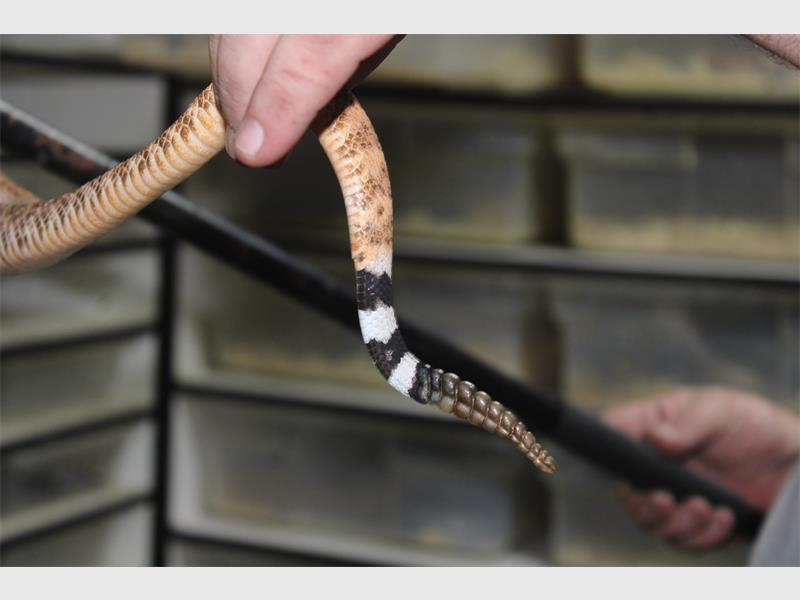
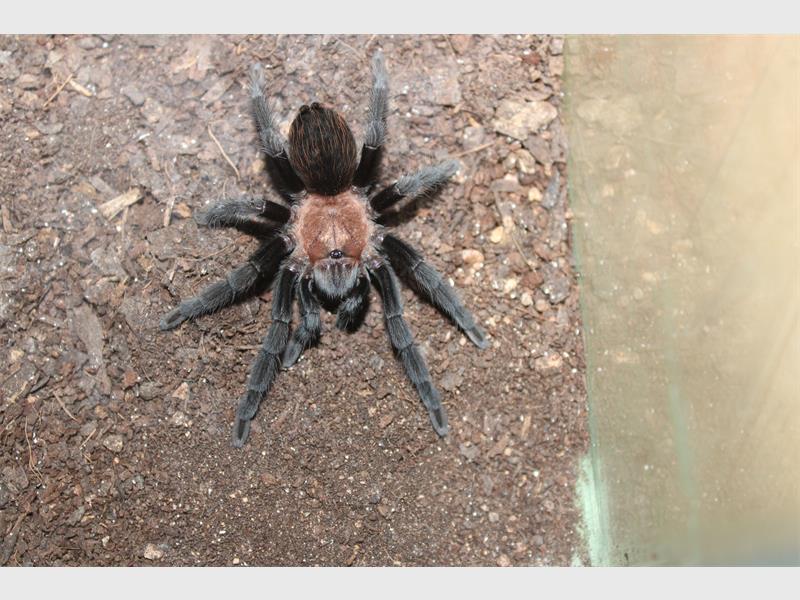
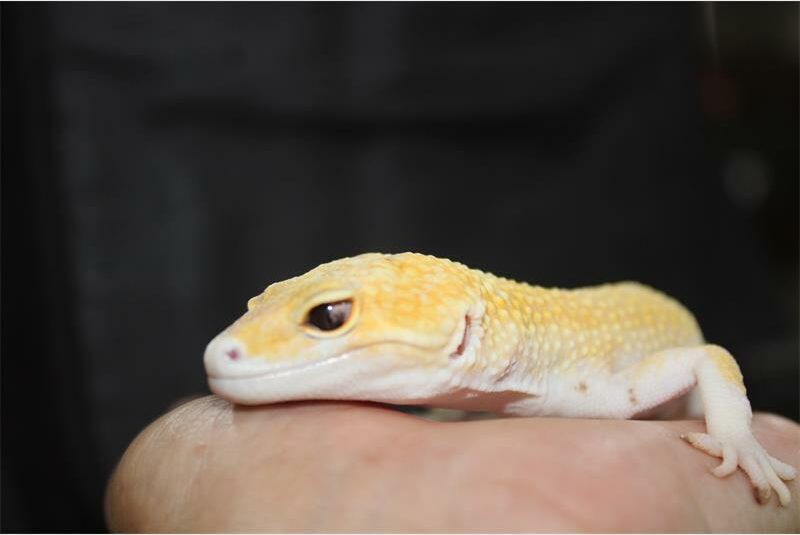
Today, he owns around 300 reptiles, ranging from venomous to non-venomous, as well as lizards and tarantulas. He currently has 15 western diamondback neonates (babies) and eight white-lipped tree viper neonates.
He can’t pinpoint exactly what it is about reptiles he loves, whether it is the adrenaline of handling them, the fascination with the different species, their behaviours and markings, or the danger they pose.
One thing is for sure: he is allergic to venom and the anti-venom. However, this does not deter him from housing or handling them in the safest possible manner.
“My response to people who say I put my life in danger is that we risk our lives getting into a vehicle every day. There are risks of an accident,” said Coetzer.
He has a routine feeding schedule, with feedings ranging from weekly to monthly, depending on the snake species. He generally feeds them with pinkies, mice and larger rodents.
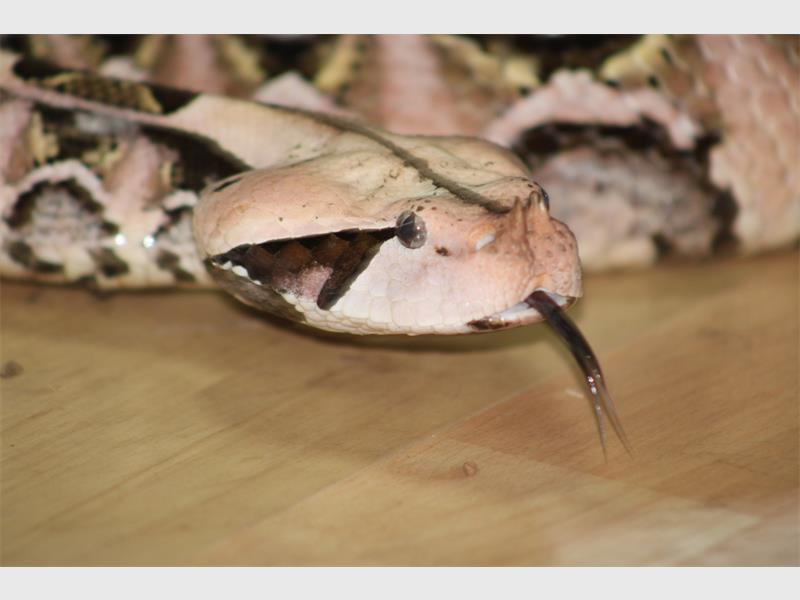
“My pride and joy, Gaboon vipers, are fed monthly due to their slow digestive rate,” said Coetzer.
A Gaboon viper is a master of ambush, using camouflage and can remain motionless for days. It also has one of the fastest strikes and has the longest fangs out of venomous snakes.
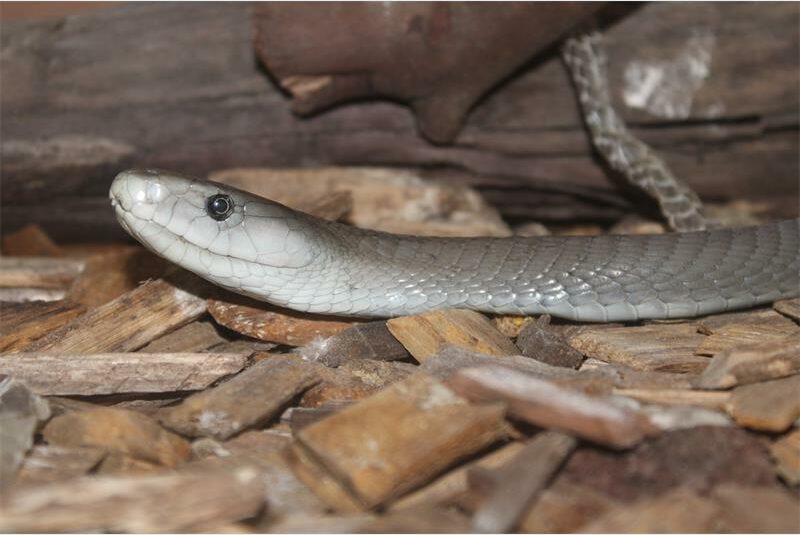
It has cytotoxic venom that can destroy living cells and tissue. Coetzer has a rescued black mamba, Hope. She is around three meters long.
According to Coetzer, a black mamba is a shy, scared reptile that would rather flee than attack humans. The black mamba, however, would react defensively when cornered or threatened.
They strike with lightning speed, and their venom contains powerful neurotoxins and cardiotoxins that affect the nervous system and the heart.
“If you come across any snake, leave it. No snake will attack for no reason, unless threatened. If you see a snake and need it to be removed, call a professional snake handler for the safe removal and do not attempt to catch it yourself,” said Coetzer.
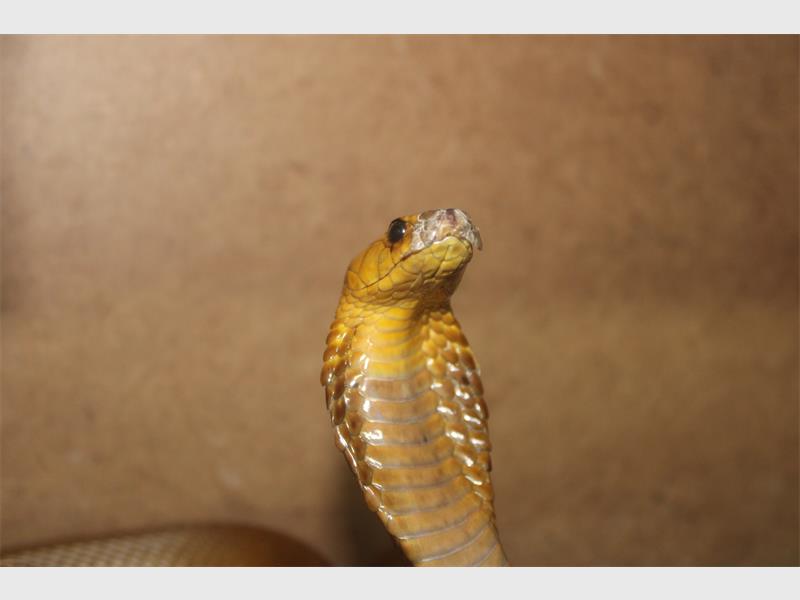
Among other snakes, he has the boomslang, a purple-speckled Cape cobra, diamondback rattlesnakes, white-lipped tree vipers, a banded snouted cobra, a boa constrictor and more.
“I have a passion for reptiles and love sharing my interest with others,” said Coetzer.
According to Coetzer, in Mpumalanga, a permit is required for indigenous snakes and not for exotic snakes. Such indigenous snakes include black mambas, green mambas, puff adders, Cape cobras, snouted cobras, Heralds snake, and brown house snake.
Permit requirements are generally more relaxed in KwaZulu-Natal, while the Western Cape is often cited as having the strictest rules, where you need a permit for all types of snakes, both indigenous and exotic.
“There is a lot to take into consideration when getting a snake or reptile. Do your research before you commit yourself,” said Coetzer.
Coetzer also has a YouTube channel called Ultimate Pure Venom. Common snakes in the Teks area are the rinkhals, brown house snake, Herald snake and Skaapsteker.
Advice if you encounter a snake:
• A snake won’t hunt you but will defend itself if cornered;
• Upon seeing a snake, do not panic. Step back to a safe distance outside its striking range;
• Avoid shouting, making sudden movements or trying to touch or capture the snake;
• Keep pets and children away;
• Keep track of the snake’s movements to help the handler find it;
• Do not kill the snake because they die slowly, and even a severed head can bite and inject venom for up to 24 hours;
• Call a snake handler for safe removal;
• If bitten, seek professional medical care. A photo of the snake will help doctors identify the appropriate treatment.
For the safe removal of snakes, call an experienced snake handler:
Coetzee on 072 972 2265, Oosie Oosthuizen on 076 051 0710, Thiemo Pösch on 082 225 4264 or Hein Albert on 082 291 5344.