
Dialysis helps Delmas siblings waiting for kidneys
Cecillia and Grewar Biermann are regulars at the Pulsmed Dialysis Centre in Delmas.
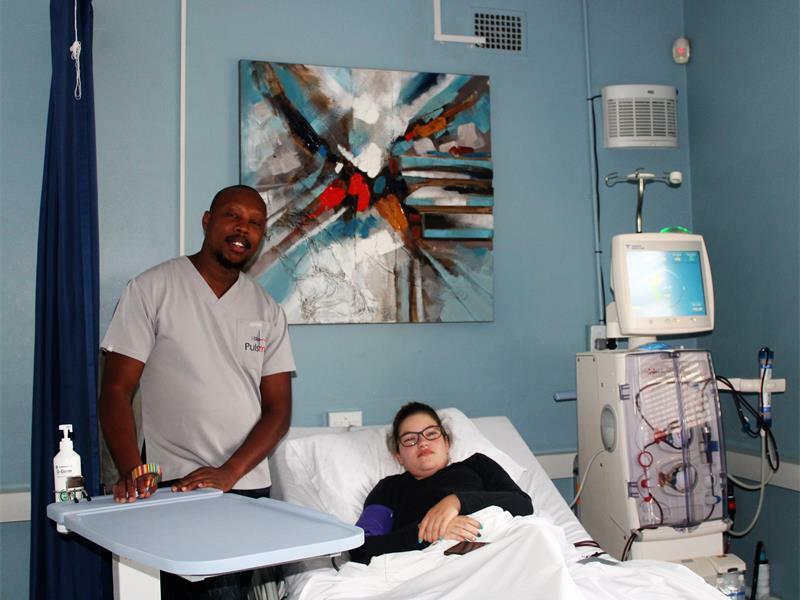
With only 14% kidney function left, resident Cecillia Biermann (24) depends on the three sessions of dialysis she receives weekly.
Streeknuus (September 23, 2022) reported on Cecillia and the urgency of a kidney transplant to prolong her life.
Since then, her sibling and older brother, Grewar Biermann (28), also depends on the lifeline of dialysis twice a week.
World Kidney Day (WKD) is a joint initiative by the International Society of Nephrology and the International Federation of Kidney Foundations.
WKD was celebrated on March 9.
The day aims to create an awareness of the importance of our kidneys to our overall health and reduce the frequency and impact of kidney disease and its associated health problems.
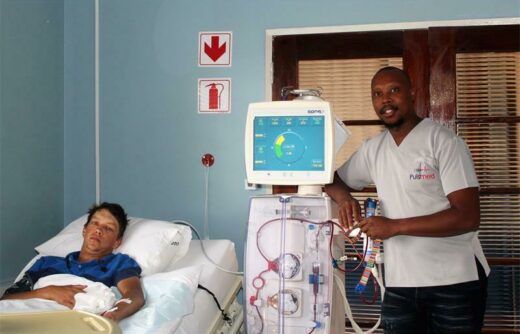
March is also National Kidney Month, a global campaign to bring awareness to kidney health, encourage people to support kidney disease research, and take steps to keep their kidneys safe and healthy.
The Pulsmed Dialysis Centre in Delmas has become a familiar spot for the Biermann siblings, and it remains their beacon of hope.
Steering the facility is Silinoile Makaepea, better known as ‘Slee’, a registered nurse specialising in nephrology.
He is passionate about patients suffering from chronic kidney diseases and the subsequent failure of the kidneys.
He is well-known in Delmas and its surrounds for going to patients’ homes to administer dialysis in emergencies.
He told Streeknuus that many factors contribute to kidney disease and the failure of the kidneys, but the three main contributing illnesses are hypertension, diabetes and HIV Aids.
“Illnesses are not the only contributing factor. Other events like trauma, external injuries and vehicle accidents are also contributing factors.
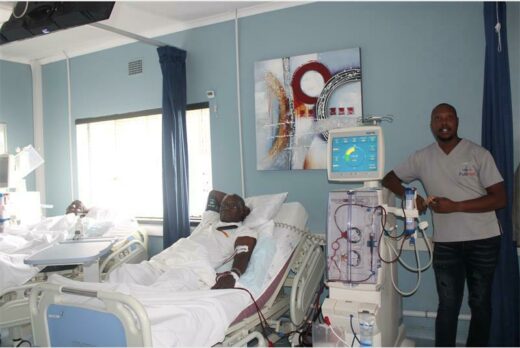
At Pulsmed, patients receive dialysis in the comfort of their town. According to Makaepea, dialysis is for people whose kidneys are failing.
“When you have kidney failure, your kidneys do not filter blood how they should. As a result, waste and toxins build up in your bloodstream. Dialysis does the work of your kidneys, removing waste products and excess fluid from the blood,” said Makaepea.
He explained there are five stages of kidney disease.
“In stage-five kidney disease, healthcare providers consider you to be in end-stage renal disease or kidney failure.
“At this point, the kidneys are carrying out only about 10 to 15% of their normal functions. You may need dialysis or a transplant to stay alive.
“In the case of the Biermann siblings, they undergo dialysis while waiting for much-needed transplants. Both have extremely low kidney function.”
There are two types of dialysis – haemodialysis and peritoneal dialysis – and both perform normal kidney functions.
The principle of dialysis is the movement or diffusion of solute particles across a semi-permeable membrane that removes blood from a needle in your arm and circulates it through the dialyser filter, which in turn moves waste into a dialysis solution.
“This cleansing liquid returns filtered blood to your body through a second needle in your arm. The Biermann siblings have begun the long wait before they can receive kidney transplants.
“The waiting list for brain-dead donors’ kidneys is extremely long, and with Covid-19, it is now even longer,” Makaepea explained.
ALSO READ: Foundation in eMbalenhle wants to help others fights depression and suicide
“It is, therefore, much more desirable to find suitable live donors.”
Makaepea told Streeknuus that once suitable donors are found, the pre-donation process can begin.
Donors must be willing to commit to the pre-donation process, the surgery and the burden of recovery.
“Donors must also be in good health, be psychologically sound, have normal kidney function, and their blood type must match that of the recipient.”
In the meantime, Cecillia and Grewar continue to receive dialysis under the watchful and caring eye of Makaepea and the other personnel at Pulsmed.
With regular visits to their specialist doctors, they can continue life.