Wongama encourages pupils to consider scarce skills
“Having no money to go to the university was the most stressful time in my life and I never wish to experience it again.”
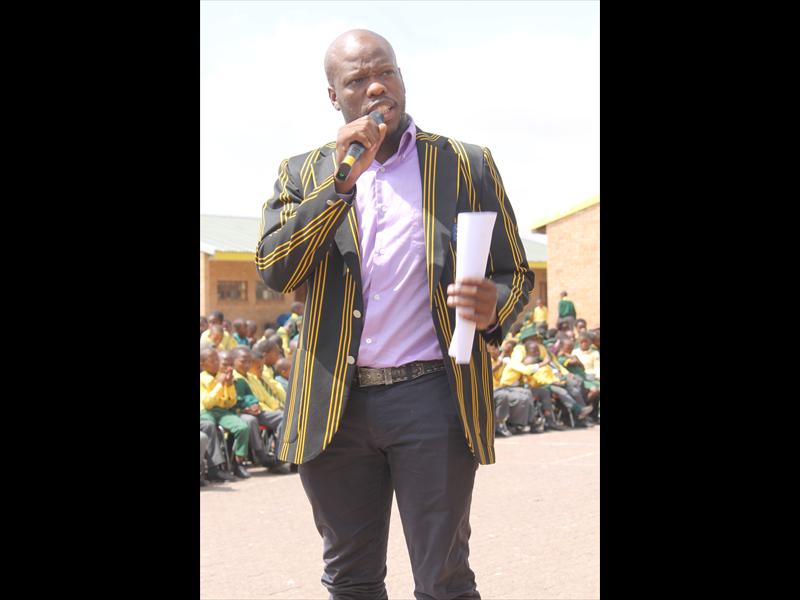
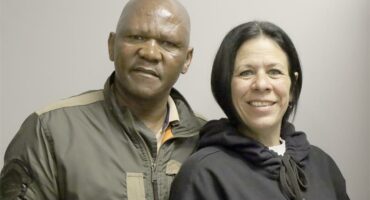
eMBALENHLE – Mr Wongama Tengela is one of the very few remote sensing technologists in our country.
He works for the South African National Space Agency in Pretoria.
Mr Tengela’s upbringing was not fancy, but that did not deter him from becoming a role model for the young people in science-related fields.
Growing up without a father and spending four years doing odd jobs because of a lack of money to study further Grade 12, were some of the challenges he was facing.
“Having no money to go to the university, was the most stressful time in my life and I never wish to experience it again,” said Mr Tengela who ones worked as a “dagga boy”, mixing sand and cement for builders.
Mr Tengela said his grandmother did not want him to do that job, because she always believed he was a bright young man who deserved better.
During his years of not studying, some of the friends who he had assisted with maths, visited him driving cars and that made it more difficult to accept his situation.
He then worked for a catering company as a handyman, carrying big pots and other heavy equipment.
“We used to wake up at 4am and that was when I got my breakthrough,” added Mr Tengela.
A man recognised his hard work and asked him why he was not studying.
His response was that he did not have the money to study further.
After that, Mr Tengela was assisted and got a bursary, as well as a R800 stipend per month.
He lost his mother in his third year and went to live his grandmother.
His monthly savings of R800 helped him to study further for his honours degree and he also used some of the money to build his grandmother a better house.
Mr Tengela said he was also one of the delegates who went to Japan to obtain skills.
He also worked as a GIS database analyst at the office of the premier of Eastern Cape.
Some of the duties of a remote sensing technologists, include managing or analysing data obtained from remote sensing systems to obtain meaningful results, analysing data acquired from aircraft, satellites or ground-based platforms, using statistical analysis software and image analysis software or Geographic Information Systems (GIS).
They also process aerial or satellite imagery to create products such as land cover maps, design or implement strategies for collection, analysis, or display of geographic data.
They also integrate other geospatial data sources into projects.
Mr Tengela said through remote sensing, they are able to see service delivery progresses, assist with crime analysis and commercial farming information which helps farmers to know in advance whether they will have a dry or wet season.
Mr Tengela, who holds a masters degree in remote sensing, urged young people to consider a career in remote sensing because it is one of the scarce skills in the country.
The GIS and Remote Sensing is offered by universities such as Fort Hare, University of Pretoria, University of Cape Town, Stellenbosch, Wits and the Venda University of Technology.
Mr Tengela would love to see himself as a consultant in space science one day.