Live demo highlights lithium-ion battery fire hazards
What should you do when a battery catches fire? A recent demonstration taught attendees the dangers of these fires and how to handle them better.
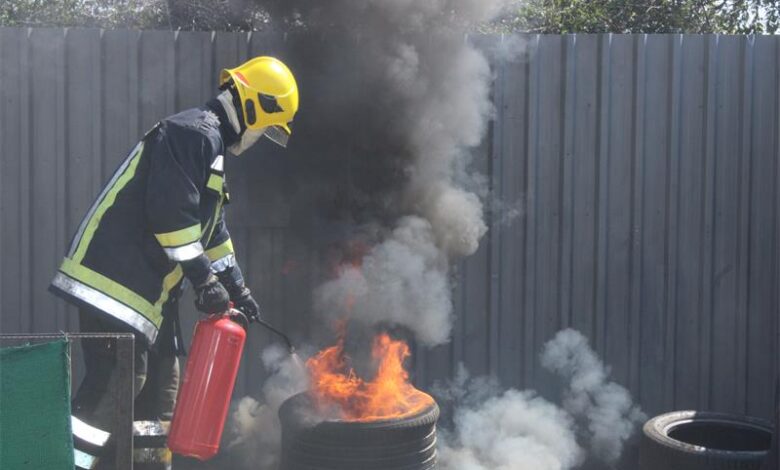
Local emergency responders warn that traditional water and standard ABC extinguishers often fail or cause violent reactions during solar power blazes.
Muldersdrift residents are being urged to understand the fire risks associated with lithium-ion batteries as more households install solar panels, inverters and battery systems to maintain power during electricity interruptions.
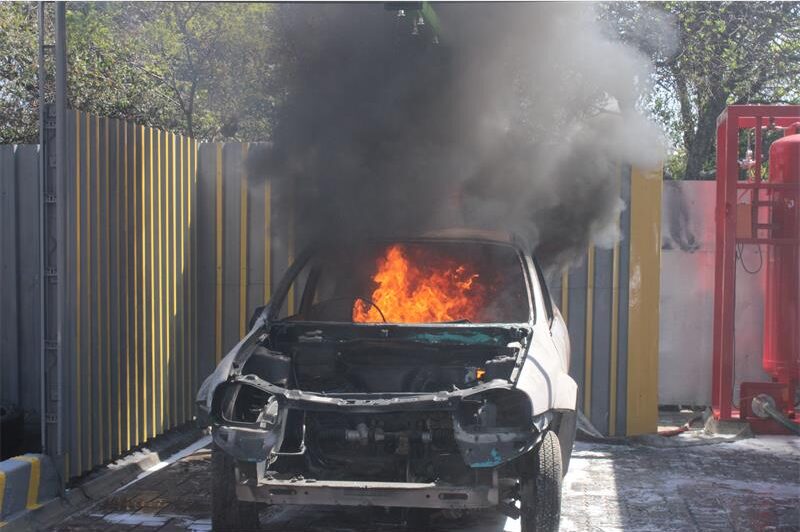
Fire-protection company Fireblock demonstrated the risks on Friday, August 28, during a live firefighting demonstration featuring the controlled ignition and extinguishing of a lithium-ion battery at their offices in Muldersdrift.
Attendees saw how the battery reacted when ignited and how the fire was brought under control. The programme also included a presentation on safety measures for containerised battery storage units, alongside a separate controlled fire involving a vehicle, shade cloth and grass, where different firefighting equipment was used to extinguish the flames.
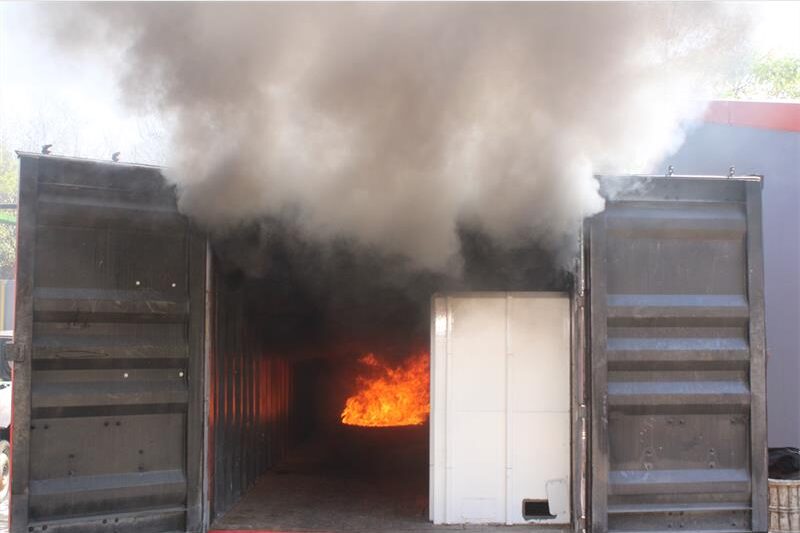
Thermal runaway risks
Speaking during the demonstration, Fireblock director Louis Koekemoer explained why lithium-ion battery fires behave differently from conventional fires.
“Conventional fires rely on external oxygen and standard combustion, but lithium doesn’t work like that. It has its own oxygen and doesn’t need external oxygen to burn. It is a chemical fire inside the cell,” he said.
According to Koekemoer, a conventional fire can be controlled by removing heat, fuel or oxygen, while a lithium-ion battery can continue generating heat through a chemical reaction inside its cells. This creates a particular concern for households with solar and battery backup systems, as well as businesses using larger battery installations.
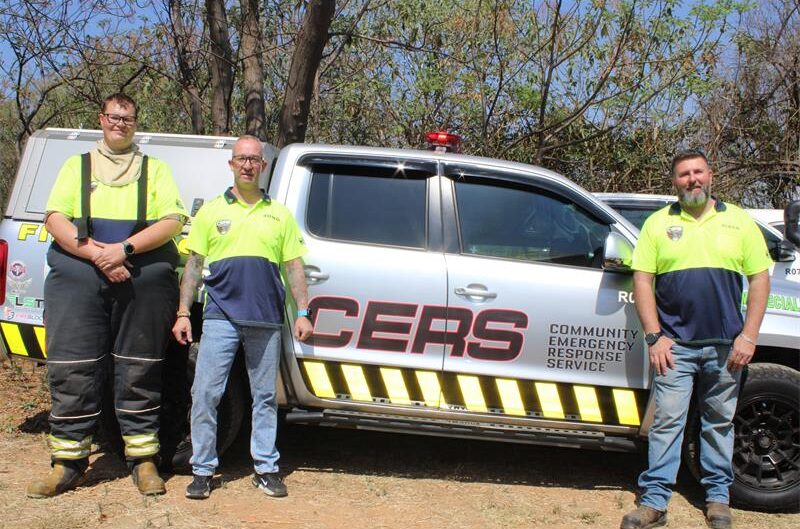
Among the guests at the event was a team from Community Emergency Response Service (CERS). The CERS director, Jonathan Martin, said the growing use of solar, inverter and battery systems has already resulted in emergency responders encountering lithium-ion battery incidents.
“Lithium batteries involve a self-sustaining chemical reaction called thermal runaway. When a lithium-ion cell enters thermal runaway, it generates heat internally,” he said. The heat can spread to neighbouring cells, causing them to fail and potentially resulting in further fire or reignition hours or even days after the flames were put out, especially since traditional water and standard ABC extinguishers often fail or cause violent reactions.
Thermal runaway can also release hot, toxic and flammable gases. Putting out these fires requires specialised agents and equipment to properly handle them.
Maintaining safety and professional installation
For residents with solar installations, Jonathan said switching off the mains or inverter does not necessarily mean the entire system is electrically safe.
“Solar panels can continue generating electricity while exposed to sufficient light, meaning residents should not approach a damaged or burning system without understanding the electrical risks,” he said.
Koekemoer said professional installation is also important, particularly for larger battery systems to avoid the risk of fire incidents.
“Get a professional company to do it, because people take shortcuts,” he said, adding that incorrect wiring can create heat and contribute to battery problems.
Since lithium-ion batteries are not only found in solar systems but are also used in everyday items such as mobile phones, laptops, power banks, toothbrushes and children’s toys, residents were warned to remain vigilant at all times.
Koekemoer advised that during a fire incident, residents should follow the Stop, Think, Observe and Proceed method to deal with the situation.