Consistent approach needed to address vagrants
The RWA chairperson Kevin Thomson told Northsider that this was no usual clean-up involving residents who attend with the sole purpose of beautifying the greenbelt.
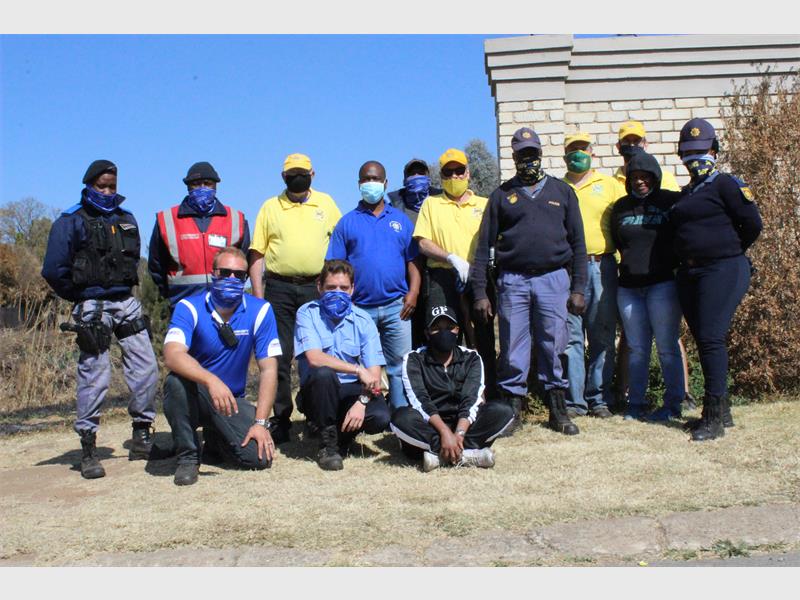
A stronger and consistent approach is what the RiverWel Residents Association (RWA) and Honeydew Police Station intend to implement in future to deal with stubborn vagrants occupying the greenbelt.
On Sunday 16 August, the RWA in collaboration with Community Support Services (CSS) and various police units tackled the greenbelt in a bid to get rid of the problematic vagrants who have found themselves homes in between the dense reeds.
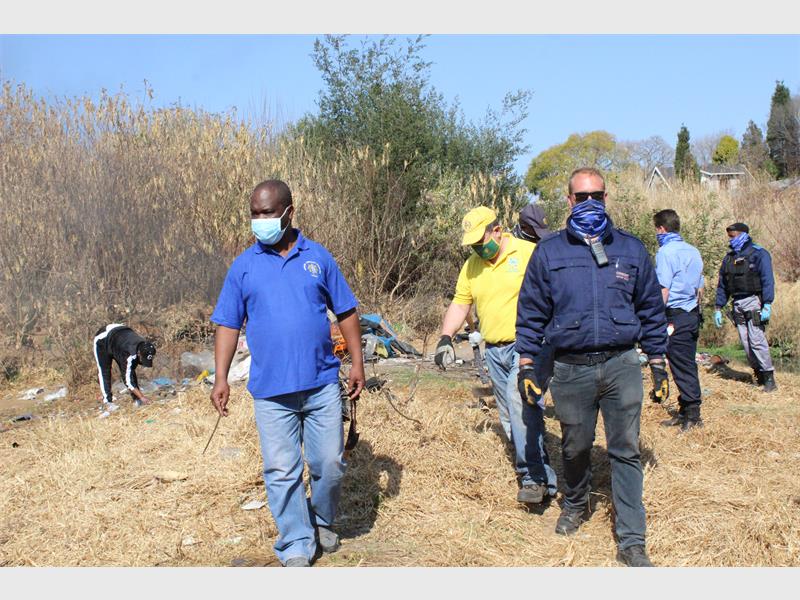
However, the brave participants found empty makeshift shacks and scattered litter, which they destroyed in an effort to deter the vagrants from returning to the greenbelt. The RWA chairperson Kevin Thomson told Northsider that this was no usual clean-up involving residents who attend with the sole purpose of beautifying the greenbelt.
“This clean-up was more crime-orientated, which is why we had a strong presence of the police, our contracted security company, the committee and few residents because we were concerned that the vagrants that live in the area could be belligerent while the members do the clean-up,” he explained.
Thomson emphasised that this unique clean-up was intended to address crime more than anything. “The main purpose was to steer the vagrants away from causing secondary and main crimes because they live in the area,” he said.
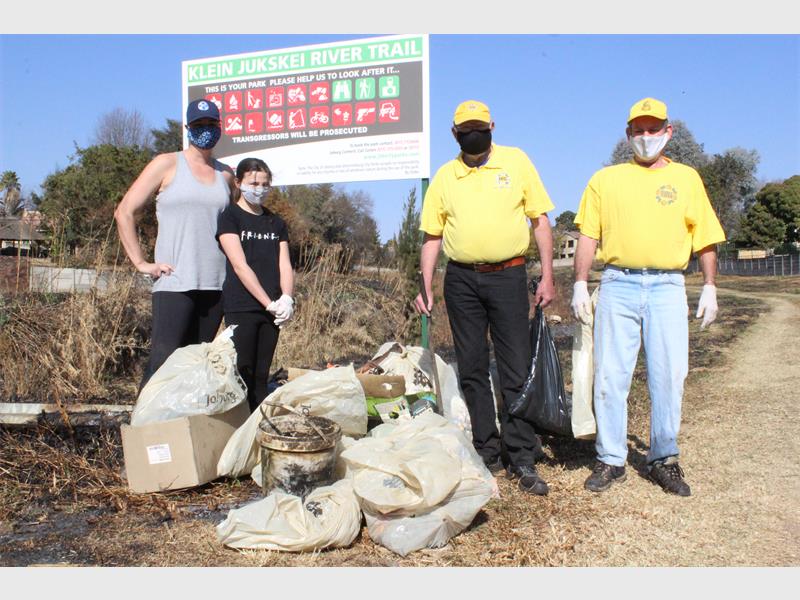
Complexes bordering the greenbelt have been prime targets for criminal activity, and the residents have reason to believe the perpetrators are the vagrants, judging by the appliances that are discovered during the clean-ups. Honeydew Police Head of Social Crime Prevention, Sergeant Mamasedi May, who was joined by the Sector 2 manager, Warrant Officer Nicholas Makhura and the Mounted Unit, alluded to the fact an annual clean-up was not enough to limit vagrants in the area.
“We need to do this on a regular basis in order to address the problem of vagrants. I believe twice or thrice a year would yield better results than what we are seeing currently,” she pointed out.