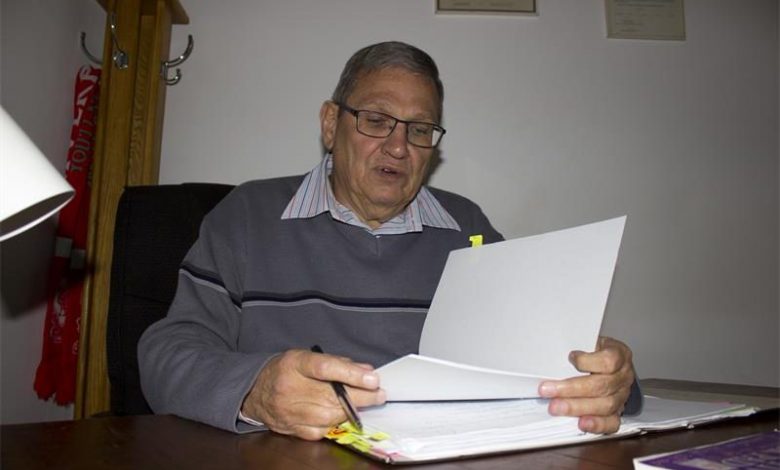
When Krugersdorp Police Head Detective, Colonel Luke Enslin arrived at his office on the morning of Wednesday, October 7 in 2015, he had no idea his life was about to change radically.
There were voices down the hall and as he explained it, he loudly announced from his office that they were in the wrong building.
It turned out that they were looking for him, though they confused Colonel Enslin with the station commander at the time.
Also read: Station reshuffled after top cop’s suspension
The South African Police Service (SAPS) has a clear and very important structure. Enslin was the head of the Detectives branch in Krugersdorp and hardly the man you would go to to open a criminal case. But, this family had somehow made their way to him and soon Enslin had five people in his fairly small office.
At 09:04 on Tuesday, October 5, 2015 a man died in Chris Hani Baragwanath Hospital in Diepkloof, Soweto, approximately 30km from the Kagiso township on the West Rand. The family, who were now in Enslin’s office, wanted to open a docket which they were told they needed before the hospital would release their relative’s body, whom we will refer to as the ‘deceased’ in this story.
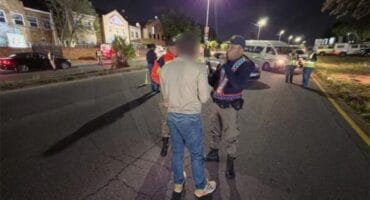
The story doesn’t start here, but four days earlier in Wentworth Park, Krugersdorp. The deceased was travelling with a friend, hereafter referred to as the ‘witness’, just after midnight on Saturday, October 3, 2015 when another vehicle allegedly rear-ended the two men’s small bakkie near a garage and a school on Main Reef Road (now known as Albertina Sisulu Road). The witness claimed that an argument between the two vehicles’ occupants ensued. Thereafter, another vehicle arrived on scene which, according to Enslin, the witness claimed was a white Toyota Fortuner, although much later it was identified as a far smaller profile Jeep.
Enslin explained that the witness claimed the third vehicle had a visible blue light and the men wore jackets which displayed the word ‘police’. Enslin realised the claim was serious and that an investigation was required.
“At that stage, no case had been reported. I asked them whether I was the first person they’ve spoken to, and the answers was ‘Yes, you are the first’. “I had their statement taken and I did see the dossier, although I can’t remember where and when. I said it was serious and I would help.
“At the mortuary, the family told them that the police had assaulted the deceased. They wanted to take the body but the mortuary said no, they needed a case number. Now I, from the police’s side, had to make sure that what they told me was the truth. I wasn’t there and it was five days after the incident. Everyone’s repeating what the witness said who was with the deceased.”
“I told them that I would attend to it and would contact them the following morning and give them a case number.”
After almost 40 years of service in the police, Enslin knew the rules for registering a case correctly.
Early the next morning, instead of waiting for Enslin to contact them, the family arrived at the police station and requested the case number at the Community Service Centre (CSC) aka charges office. Enslin didn’t know that they were at the police station and was attending to other matters for most of the day.
When he returned to his office, he found the family waiting for him. Parked outside of the building were CPF vehicles and, Enslin noted, their jackets were draped over the car seats. The witness pointed out the CPF vehicles to his family and claimed that occupants of similar vehicles had attacked the deceased on August 5. According to Enslin, the family incorrectly made the assumption that he, by now, knew what had happened and was attempting to cover up the CPF’s involvement. But, Enslin explained that the CPF was at the police station for other matters.
Also read: Local police politics explained
The men whom the witness first claimed were police officers were later said to be CPF members. The witness claimed that at about 00:30 on Saturday, October 3 the CPF asked them what they were doing in the street, sprayed them with pepper spray and while the witness ran away, the deceased stayed to talk to the CPF but was hit by one of the members and then fell to the ground.
The problem here comes down to two very important words: ‘Causal connection’. Enslin explained that after the alleged assault, the man (the deceased) and the witness went home to Kagiso and only later, when the deceased told the witness that he felt unwell, he was taken and admitted to Leratong Hospital at 02:37.
Enslin said he was discharged from Leratong on Sunday, October 4 at an unknown time. On Monday, October 5 at 08:40, the deceased returned to Leratong and was transferred to Baragwanath Hospital at 16:30. On Tuesday, October 6 at 09:04 the man passed away at Baragwanath. On Wednesday, October 7 the deceased’s relatives made the request in Enslin’s office for a dossier to be opened.
Enslin explained that because the men didn’t wait for police or medical services on the scene of the supposed assault, but rather drove home, and the fact that he was later discharged by the hospital, causal connection was broken, meaning that it could not be said, with certainty, that the deceased sustained injuries because of the supposed assault on Main Reef Road, or whether it was sustained at a later point, possibly on the drive home or at another location. Unfortunately, the deceased and witness also could not provide the names of anyone on the scene, nor took down any of the other cars’ registration numbers. The witness also confessed to both of them being intoxicated during the incident.
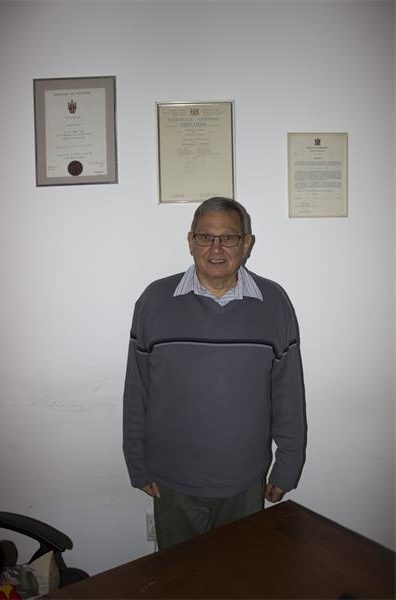
Enslin’s voice turned more sombre as he said, “I received and looked at the dossier. The police at the CSC wrote ‘murder’.” The docket was not yet registered on their system, and Enslin knew they were obligated to note the correct complaint.
Because causal connection was broken and considering the many other factors already mentioned, Enslin decided to change the incident description from ‘murder’ to ‘assault common’. At that stage, no investigation could be conducted since the crime was reported less than a day earlier.
“The complaint of murder they had written there in the CSC could not be murder for the simple fact that he was discharged from the hospital.”
His superior at the time, a general in the police, called him when he arrived at his office, telling him that she heard that he was not helping the people at his office. Enslin said he explained the situation and was urged to register the docket that very day.
Enslin said the family claimed they were told by the hospital to report the incident to the police station in the area where the supposed assault occurred, which Enslin said was not the correct procedure. Because the deceased died at Baragwanath, his death should have been reported to their local police. If members at that police department realised that there had been a supposed assault in Krugersdorp days earlier, an investigation could be opened by the Krugersdorp Police – not for murder but for assault. The assault would then stand as a crime of its own.
Enslin realised that he could not tell this to the distraught family, and sent them to another police station to open a case, and decided to help them as best he could.
Sergeant Koos Cronjé, whom Enslin asked to finalise the docket and who was witness to Enslin’s phone call with the general, helped the family register the docket and organised for a post mortem, which would help determine what kind of investigation was needed.
On November 16, 2015 Enslin received a letter requesting him to explain why he’d changed that initial change from ‘murder’ to ‘assault common’.
In his written reply he said, “The victim in this matter was discharged from hospital after the alleged assault, and there is no link between the assault and the death of the victim until such time that a medical opinion is received from a post mortem and if positive a murder charge can be registered, as another separate charge or as part of this charge if a medical link exists”.
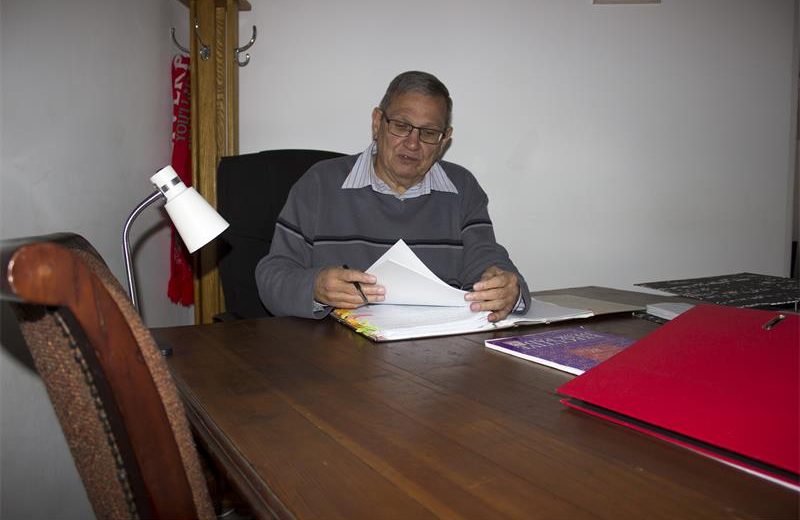
In January 2016, Enslin received a suspension of duties and was told that a criminal case had been opened against him. He was informed that he would undergo a disciplinary hearing, during which other complaints against him were added. Enslin was finally discharged from the police service.
Five years later, to the day, Enslin told his full story to the News, revealing its final outcome.
From November 27, 2017, Enslin’s case was heard by the Safety and Security Sectoral Bargaining Council (SSSBC), which in essence resolves disputes between employer (police) and employees.
“I find, on a balance of probabilities, that the respondent dismissed the applicant [Enslin] substantively unfairly and procedurally fairly. The applicant requested to be re-instated. However, it is common cause that the applicant was dismissed seven months before reaching retirement age. I would have had no hesitation to reinstate the applicant with back pay, however as he had already reached retirement age that would not be a proper award to issue. The respondent, the South African Police Service must pay to Mr Luke Enslin compensation representing 12 months’ salary. The respondent is further ordered to restore the benefits entitled to the applicant in relation to medical aid and pension fund to that of an employee who had reached normal retirement age in the South African Police Service,” noted SSSBC panellist Johann Pretorius on February 16, 2019.
Enslin currently lives in Roodepoort, and works as a private investigator. He is often called to testify in court on past cases.